How to compare charter offers: what to check before you book
Comparing charter offers? Check the total price, deposit, charter day hours, equipment and cancellation terms before you pay the booking advance.

Two charter offers with the same daily rate can differ by hundreds of zlotys on the final bill and by a whole class in trip comfort. To compare them fairly, looking at the price and the photos is not enough: you need to check what the price includes, what the surcharges are, how the deposit works and what happens if your plans fall apart. Below is a checklist you can run through in fifteen minutes on any offer before paying the advance.
The listed price is only the start of the bill
The first number you see is usually the daily rate at the lowest point of the season. The real cost builds up from there: final cleaning, bed linen, engine and fuel, local tax, a pet on board, sometimes gas or the last refuelling billed separately. An honest offer lists these items openly with prices; a suspicious one hides them in the terms. So compare not the daily rate but the total for your whole trip in your dates, with every surcharge that applies to you. Charter prices in Poland are ranges that depend on the boat, season and operator, and we collected indicative brackets in our article on how much a yacht charter costs.
Deposit and cancellation: two clauses you only read after the damage
The deposit is sometimes collected in cash at pick-up or held online on a card: the second form is more convenient and leaves a trail. Check the amount, the form and the return deadline, plus what exactly the deposit covers. We break down the rules in our guide to the charter deposit. The second clause is cancellation: until when can you withdraw at no cost, how much is forfeited after the deadline and whether the operator allows moving the dates instead of a refund. The differences between the two Polish advance payment types and typical thresholds are covered in our article on cancelling a charter booking.
The charter day: when your trip really starts
A week of charter rarely means seven full days on the water: you usually pick the boat up in the afternoon and return it in the morning, because the operator needs a window for cleaning and inspection between crews. Offers differ in pick-up and return hours, and those hours are your actual trip time. How it works and what to ask about is explained in our article on the charter day.
Equipment and boat condition: standard or surcharge
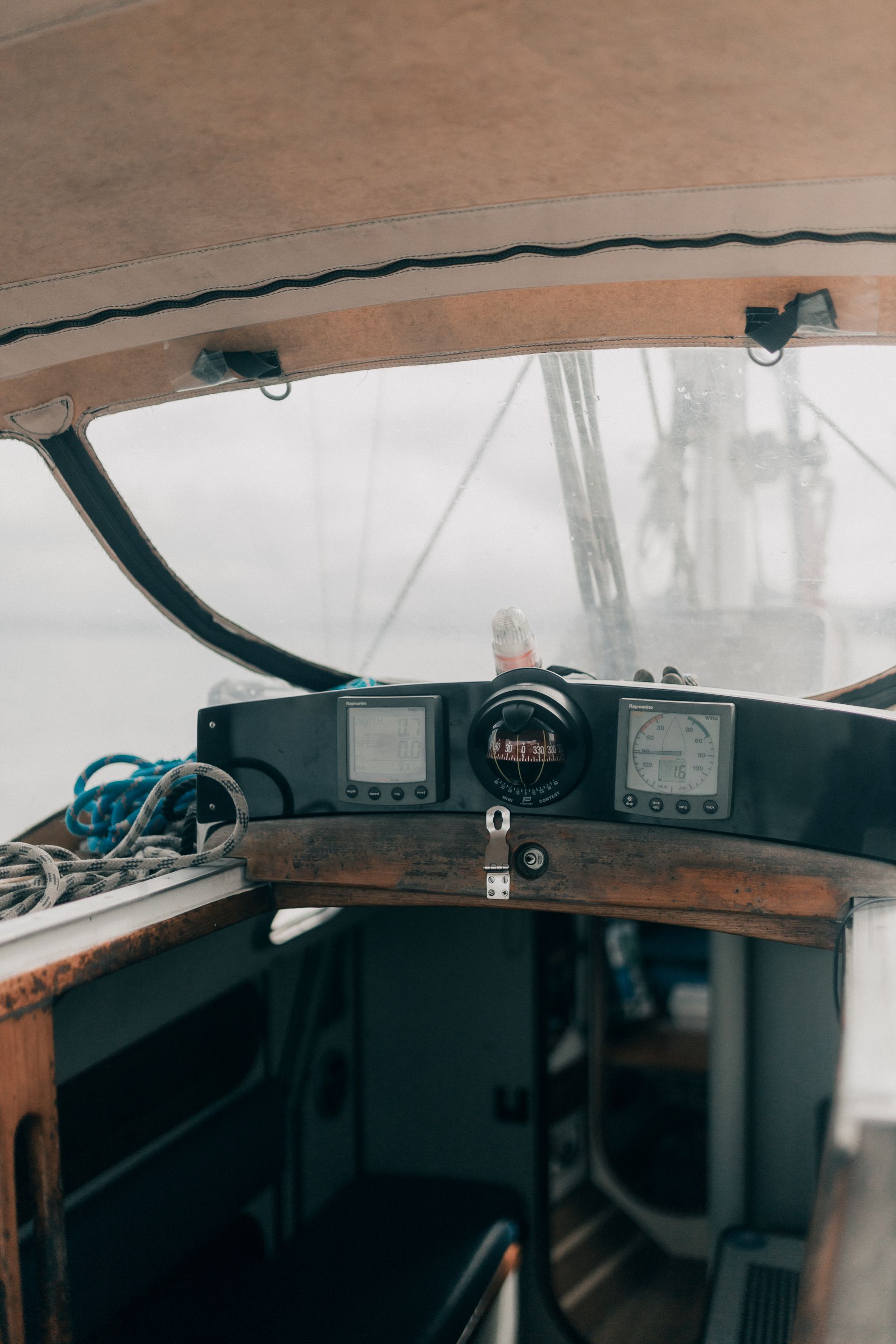
The same boat can be spartan or complete. Check what comes as standard and what costs extra: a dinghy, an engine, a depth sounder, heating, a galley with a fridge, life jackets in your crew's sizes. The list of things that should be on board and the typical surcharges are collected in our guide to charter yacht equipment. A boat's age says less about comfort than its servicing: a well-kept 2015 yacht often beats a worn-out newer one.
Operator credibility and the booking process
The last filter is the operator itself. Read reviews for how the company reacts to problems, not just the average rating: the way it answers criticism says the most. Also check what booking looks like. A modern operator shows availability and the full price online and lets you pay for the booking by card, BLIK or Przelewy24, with automatic email confirmation: that is the flow we describe in our article on booking a yacht online. An enquiry form and a request for a transfer to a private account are not red flags by themselves, but the fewer traces a transaction leaves, the more carefully you should read the rest of the offer.
Offer comparison checklist
| Offer element | What to check | Red flag |
|---|---|---|
| Total price | The sum for your dates with all surcharges | Surcharges revealed only at pick-up |
| Deposit | Amount, form of collection, return deadline | Cash-only deposit with no receipt |
| Cancellation | Deadlines, costs, option to move the dates | No written terms at all |
| Charter day | Pick-up and return hours | Hours set only after payment |
| Equipment | Standard list and surcharge price list | Photos of a different boat than in the contract |
| Contract and protocol | Contract template before payment, protocol at handover | No contract, settlement without a protocol |
Before you sign, read the contract in full: what to look at point by point is covered in our guide to the charter contract.
The best moment for questions is the offer stage, not boat pick-up. An operator who answers five questions matter-of-factly before the booking will most likely react the same way when something goes wrong on the water.
Frequently asked questions
What matters most when comparing charter offers?
The total price for your dates with all surcharges, the deposit and cancellation terms, the charter day hours and the standard equipment list. These four things account for most post-booking disappointments.
Does a lower daily rate mean a cheaper charter?
Not always. An offer with a lower daily rate can end up costing more after cleaning, bed linen, engine and final fees than an offer with a higher rate but everything included. Compare final totals, not rates.
How do I check whether a charter operator is credible?
Read reviews for how the company reacts to problems, check the website with prices and availability online, and ask for the contract template before paying. A booking paid by card, BLIK or Przelewy24 leaves a transaction trail, which protects you further.
Is booking through an enquiry form instead of online worth it?
The form works but stretches the process: you wait for a reply, a date confirmation and transfer details. Online booking with instant confirmation and electronic payment secures your dates immediately and documents the whole transaction.
When is the best time to compare and book offers?
The widest choice of boats is in winter and early spring, while late summer and September bring lower prices. The closer to peak season, the smaller the choice, so start comparing a few months before the trip.
Operators using Portivo show full prices, availability and terms online, so you compare offers without writing emails. See what it looks like from the customer's side or write to us.