Safety on the Water: Rules and Equipment for a Charter
Safety on the water in practice: life jackets and rescue gear, the rules on a lake, emergency numbers and the role of the handover protocol before a trip.
Water forgives less than land, but a prepared sailor has almost everything under control. Most accidents on a lake come from small things: a missing life jacket, an ignored forecast, gear that nobody checked before the trip. In this guide we gather the basic safety rules and the equipment that genuinely protects a crew.
Life jackets and rescue gear: the first line
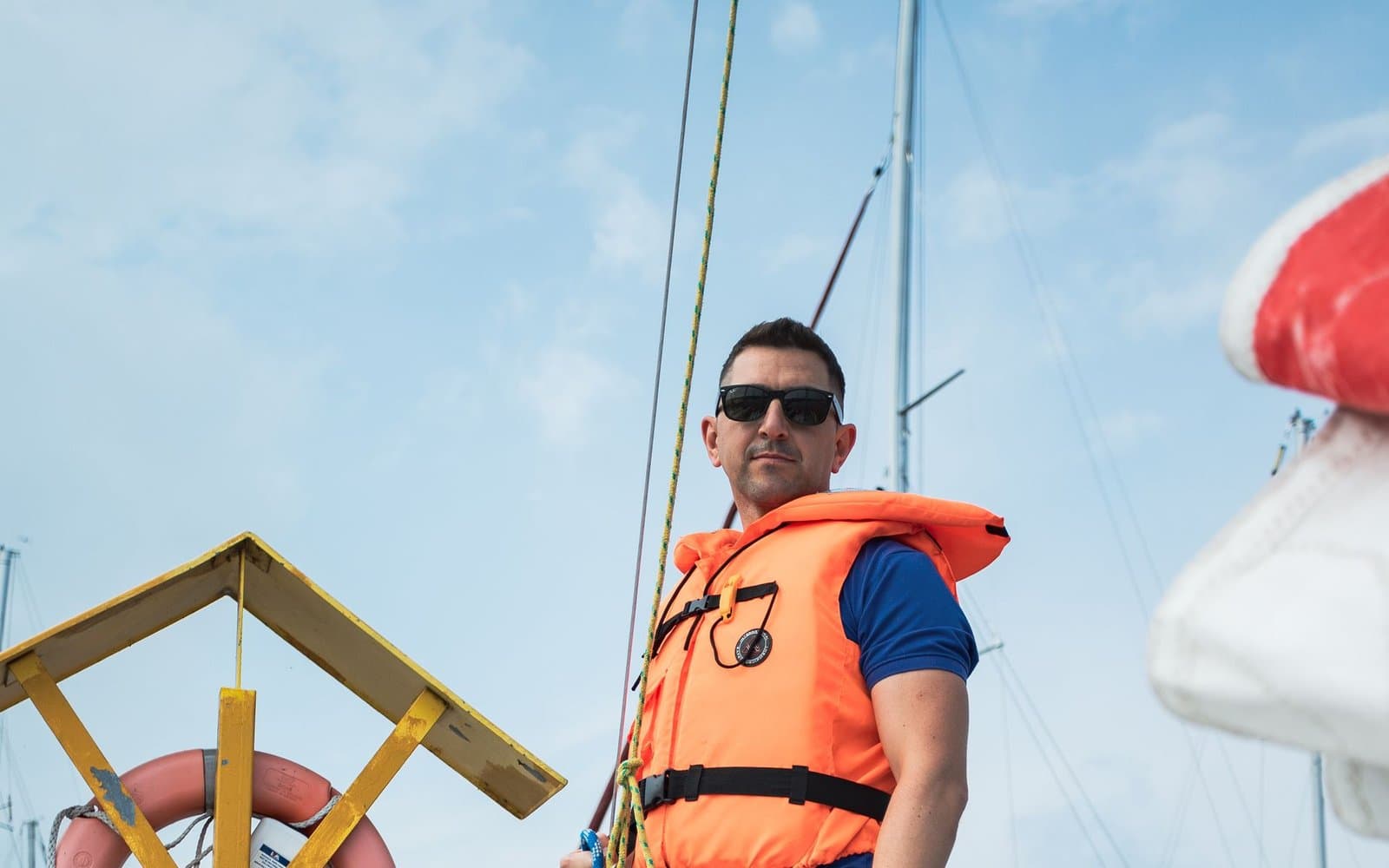
A life jacket is the most important piece of equipment and the only one that works only when it is on you. Match it to weight and height, and before leaving port adjust all the fastenings so it does not slip off in the water. A lifejacket has greater buoyancy and turns a person face up, even when unconscious, which is why for children and weak swimmers it is a better choice than a lighter buoyancy aid.
| Gear | What it is for | Note |
|---|---|---|
| A life jacket for everyone on board | keeps you on the surface | adjust the fastenings before setting off |
| Ring or horseshoe buoy | thrown to a person overboard | keep within reach of the helm |
| Boat hook and heaving line | reaching a hand from the deck | check they are complete |
| Onboard first-aid kit | first aid | top up with the crew's own medication |
| A charged phone in a waterproof case | calling for help | numbers saved before the trip |
Rules that save a trip
Safety begins before you cast off. Check the forecast for the whole day and have a plan B if the weather is about to change. Tell someone on shore where you are going and when you will be back. Agree who on board does what in case of trouble, and stick to a few simple rules:
- on open water and in stronger wind everyone wears a life jacket, not just the children,
- alcohol and helming a boat do not mix, just as behind the wheel,
- in bathing areas and near the shore slow down, motorboats here are subject to statutory limits,
- do not overestimate your strength: a shorter route with a time reserve is safer than an ambitious plan into the evening.
Save the water emergency number 601 100 100 and the general emergency number 112 in your phone before you set off. In a crisis there is no time to look for them.
Working gear is the operator's responsibility
Part of safety does not depend on you, but on the state in which the operator hands over the boat. Complete life jackets, working lights, functioning pumps and a fire extinguisher in place are the rental company's duty. A good operator does not leave that to chance: before the trip they go through a handover protocol with the customer, recording the state of the boat and its equipment.

Operators using Portivo run their handover protocols electronically, with an equipment list and photos, signed by both sides. As a result, any shortcomings come to light when the boat is handed over, not in the middle of the lake. For the customer it is a simple signal: if an operator does the protocol properly, they probably look after the gear just as well.
Before you set off: preparing the crew
Safety is also the right qualifications and real knowledge of the waters. Check what you may helm without a licence in our piece on chartering without a licence, and do not take on difficult, open water without experience. Poland's largest lake can be demanding, which we write about in our piece on chartering on Sniardwy. Before packing, also look through the list of what to take on a charter, because warm layers and sun protection are part of safety too. We gather the whole business of planning a break on the water in our pillar on holidays on the water.
Frequently asked questions
Do you have to wear a life jacket on a lake?
A life jacket for every person on board is a standard and a duty. It is worn without exception on open water and in stronger wind, and children and weak swimmers always put one on.
What is the emergency number on the water?
On the water call 601 100 100 (the water rescue number) or the general emergency number 112. Save both in your phone before the trip and keep the phone charged in a waterproof case.
Who is responsible for the rescue gear on a charter?
Handing over the boat in good condition is the operator's responsibility. The state of the equipment is confirmed by the handover protocol when you collect the boat, so it is worth going through it carefully and reporting any shortcoming right away.
What should I do if a storm is coming during a trip?
It is best to avoid it in advance by following the forecast. If a storm catches you out, head for the nearest sheltered harbour or bay, have the crew put on life jackets, reduce sail and avoid open water and tall, isolated objects.
Run a rental company and want to document the state of your boats electronically? See who Portivo is for, or book a meeting.