Payment policies in charter - deposit or full amount
How to set payment policies in a boat rental company: deposit and balance, full amount upfront, deadlines, an online security deposit and payment methods.
A payment policy decides when and how much the customer pays for a charter, and as a result your cash flow and the number of abandoned bookings. A well-set rule protects against empty dates and at the same time does not scare the customer off with a high entry threshold. This guide breaks down payment models, balance deadlines and the security deposit.
Three basic models
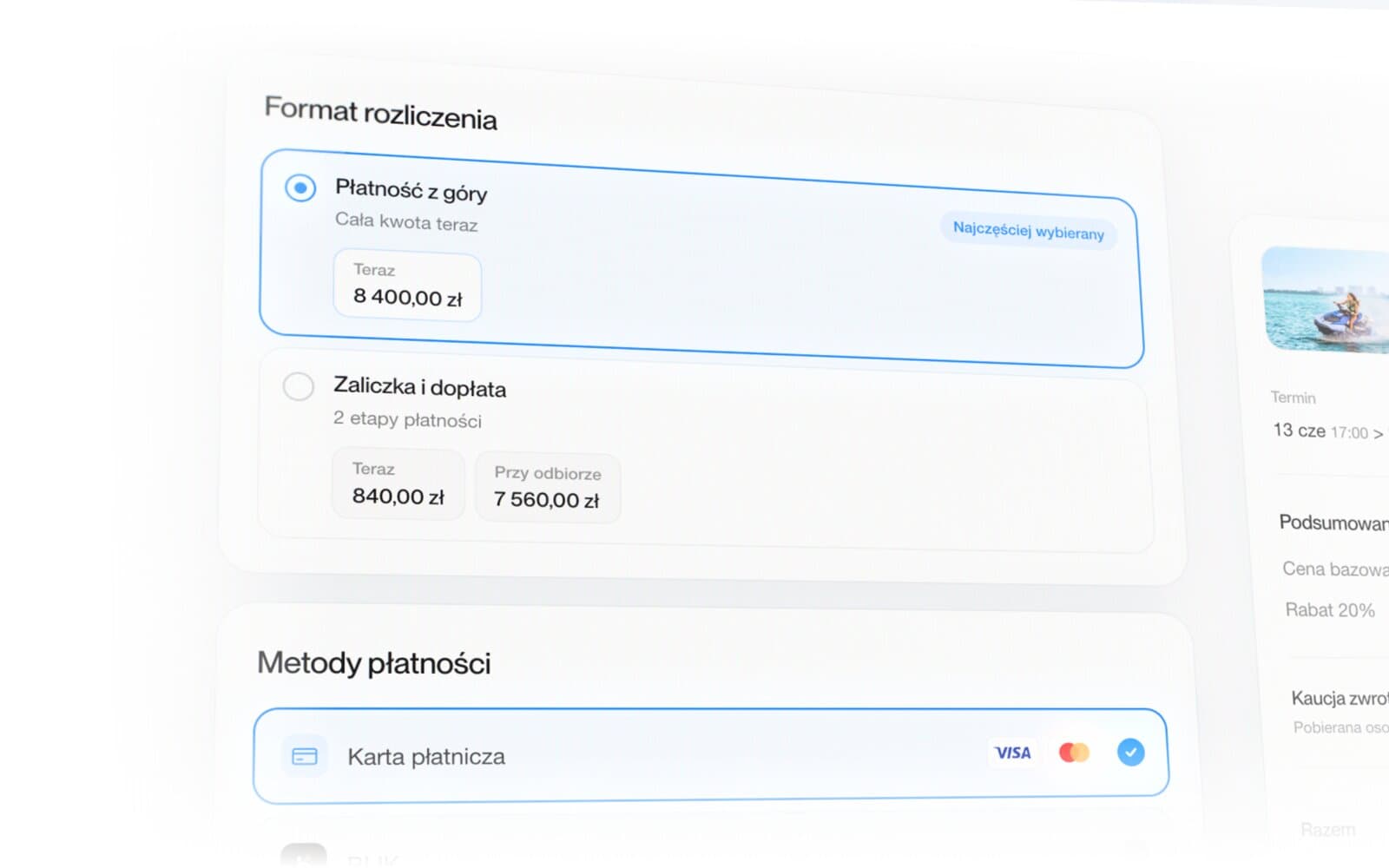
In practice it all comes down to three models, which differ in how much the customer pays right away and how much later. The choice depends on the length of the trip, the season and how firmly you want to secure the date.
| Model | Pays now | Pays later | When to use |
|---|---|---|---|
| Full amount upfront | 100% | nothing | short dates, last minute |
| Deposit and balance | part | the rest before the start | most bookings |
| No deposit | nothing | the whole amount before the start | regular, trusted customers |
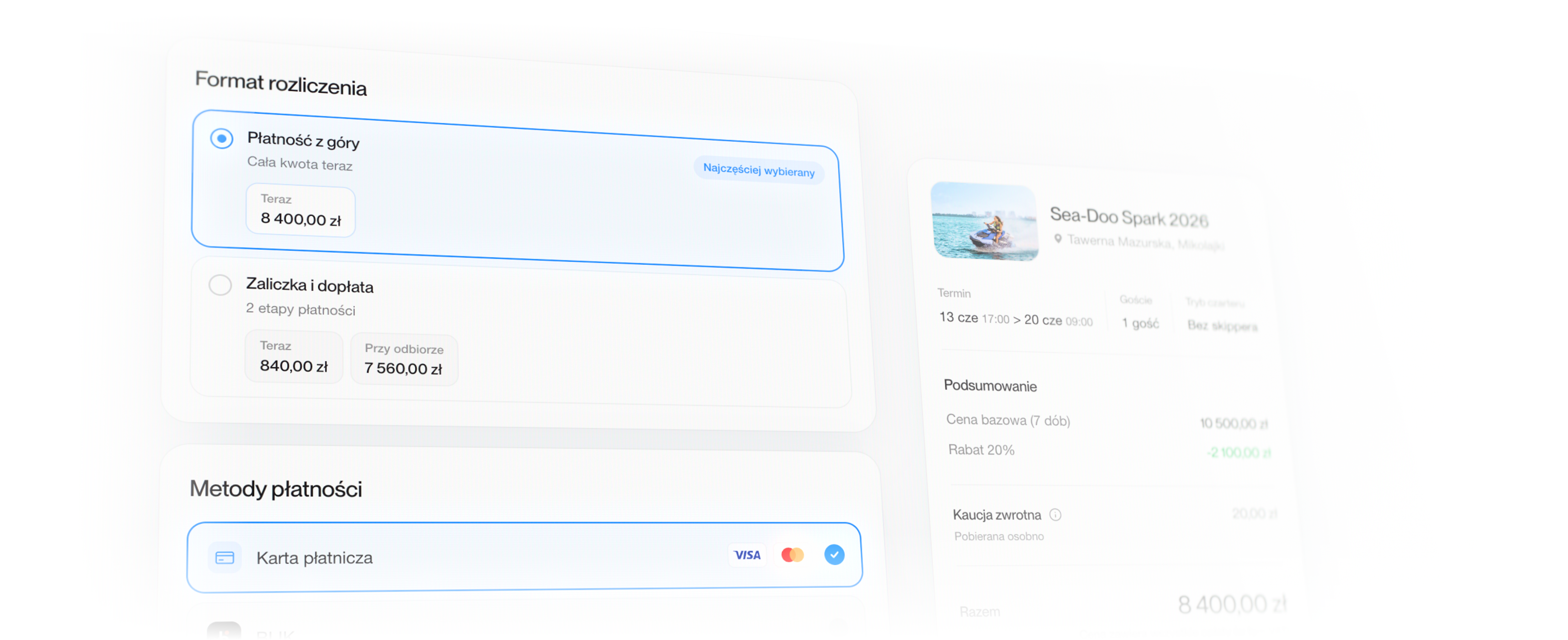
Most often the deposit model works best: the customer confirms the booking with a real payment and pays the rest by an agreed deadline before the trip. That way the date is firmly taken, and the customer does not have to put down the whole amount months before setting off.
Balance deadlines and automatic charges
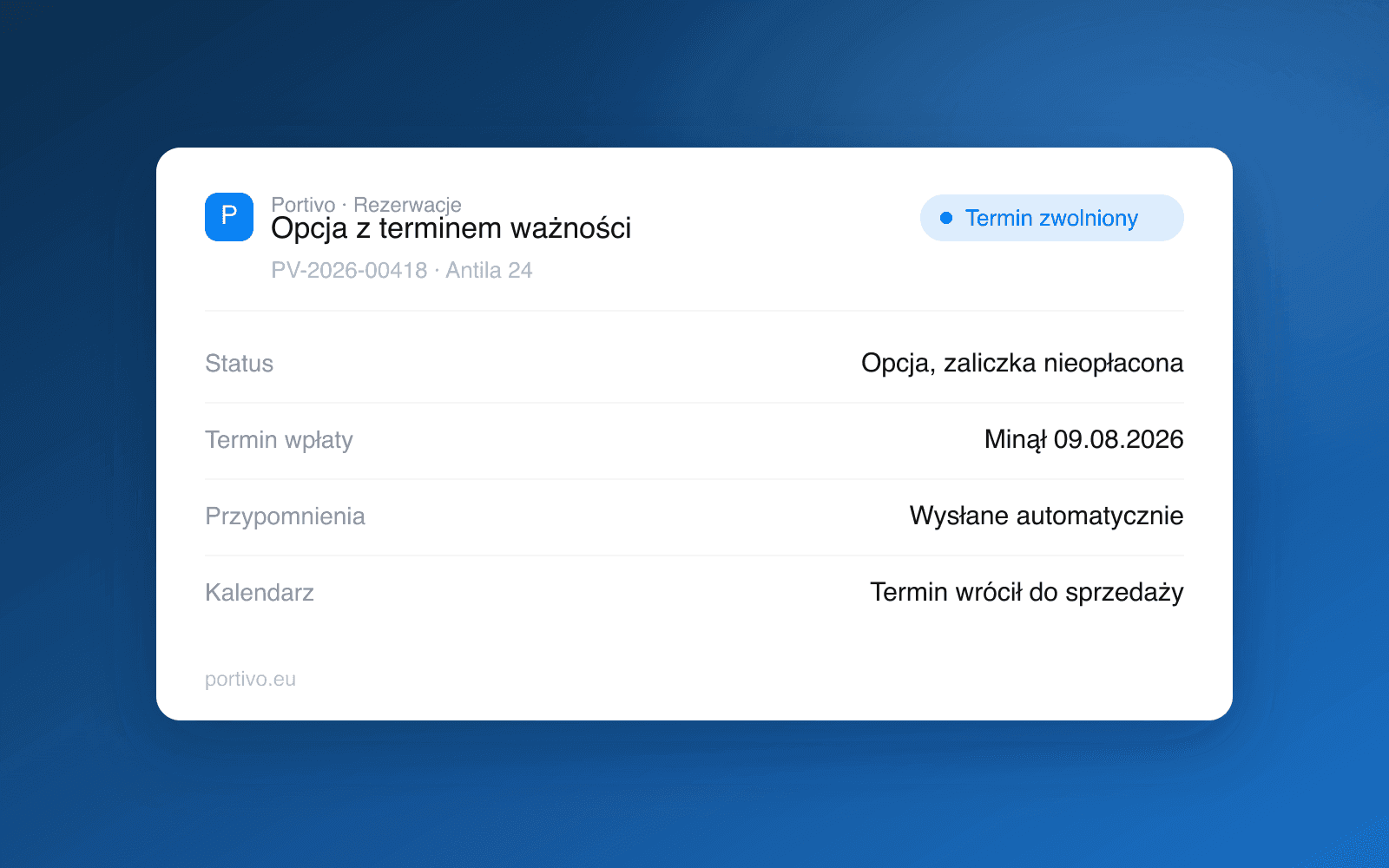
The second layer is the deadlines. The balance can be collected just before the start of the trip, a set number of days before it, or on collection of the boat. The key is not to track those deadlines by hand. In online payments you set the rules once, and the system reminds about the balance and collects it on schedule. That is what the "less time on admin" promise really means: instead of watching transfers in a calendar, you look after the fleet.
Security deposit: card hold or cash
Separate from the charter price stands the security deposit, a refundable safeguard against damage. Here you have two routes. The first is an online card hold, a so-called pre-authorisation: the amount is reserved but not charged, and releases after the boat is handed back. The second is cash on collection, settled on the spot. A card hold is more convenient for both sides, because it needs no counting of cash at the dock and releases automatically.
A security deposit is never part of the trip price. Show it to the customer separately, as a refundable amount, so it is not confused with the cost of the charter.
Payment methods and fees
The fewer steps between the decision and paying, the higher the conversion. That is why it is worth giving the customer the methods they actually use. Portivo supports card, BLIK, Przelewy24, bank transfer and cash on arrival, so the customer pays in whatever way suits them. You also decide who bears the transaction fee on an online payment: you as the operator or the customer. All of this logic is part of one dashboard together with bookings, which we cover in the guide on charter fleet management.
Frequently asked questions
Deposit or full amount upfront?
For most bookings a deposit with balance is best: the customer confirms the date with a real payment and pays the rest before the start. The full amount upfront is worth taking for short dates and last-minute bookings.
When should the balance be collected?
Most often a set number of days before the start of the trip. It helps when the system reminds about the deadline and collects the balance automatically, without manually watching transfers.
How does an online security deposit work?
It is a card hold, a pre-authorisation: the amount is reserved but not charged, and releases after the boat is handed back. The alternative is a security deposit in cash on collection.
Which payment methods should I offer the customer?
Ideally the ones they actually use: card, BLIK, Przelewy24, bank transfer and cash on arrival. More payment methods mean fewer abandoned bookings.
Want to match payment policies to your fleet? Check the pricing or book a meeting, and we will show how to set it up for you.