No-Shows and Unpaid Bookings: How to Stop Losing Dates
Unpaid bookings and customers who never show up: how to set payment deadlines, reminders and option expiry so dates return to sale automatically.
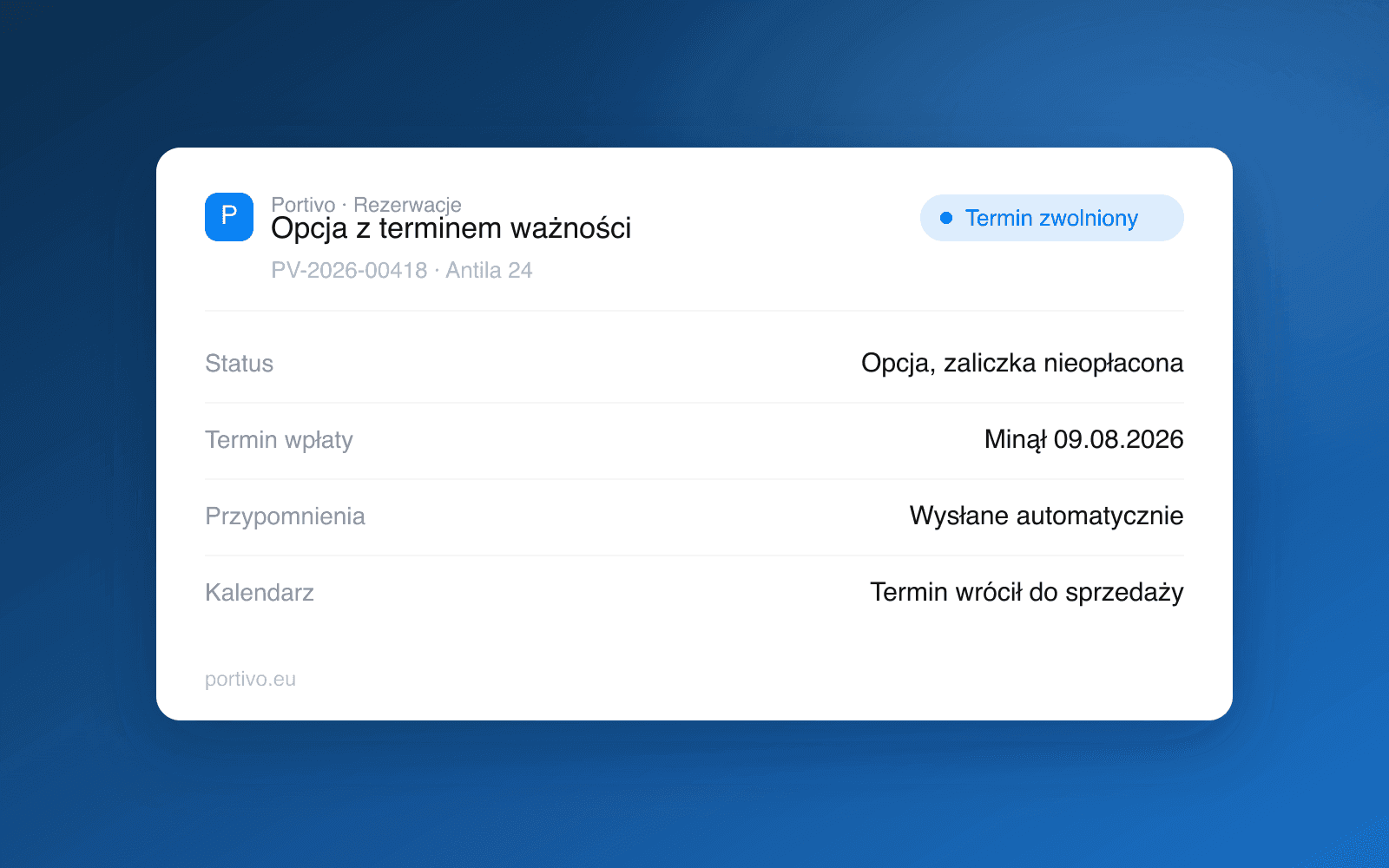
The most expensive booking at a charter company is the one that blocked a boat for three weeks and was never paid for. The date dropped out of the calendar, other customers were told "unavailable", and in the end nobody turned up. This guide shows how to set up your booking process so unpaid dates return to sale on their own, instead of waiting for someone on the team to remember them.
A no-show is not the same as a cancellation
It is worth separating three situations, because each one costs something different and needs a different response. A cancellation is when the customer deliberately gives up and reports it before the date: you have time to sell the slot again. An unpaid booking is a date blocked on the basis of an enquiry alone, where the prepayment never arrived: the boat sits free, but the calendar shows it as taken. A no-show is the worst case: the customer has a paid booking but simply does not appear on pickup day, so the whole date is lost.
| Situation | When it happens | What you lose | Operator response |
|---|---|---|---|
| Cancellation | customer reports withdrawal before the charter | part of the margin, a date to resell | clear refund policy, quick republishing of the date |
| Unpaid booking | prepayment does not arrive within the agreed time | a date blocked with nothing behind it | automatic option expiry |
| No-show | customer does not arrive on pickup day | the entire date, boat preparation | retained deposit per the contract |
An option with an expiry date instead of an open-ended block
The key change is simple: a booking without payment should not be treated like a confirmed booking. In practice that means three states instead of two. An enquiry is customer interest that blocks nothing. An option is a provisional booking with a specific expiry date, after which the slot automatically returns to sale. A confirmed booking is a date with the payment already recorded. Without that middle state, every enquiry is either ignored or blocks a boat indefinitely.
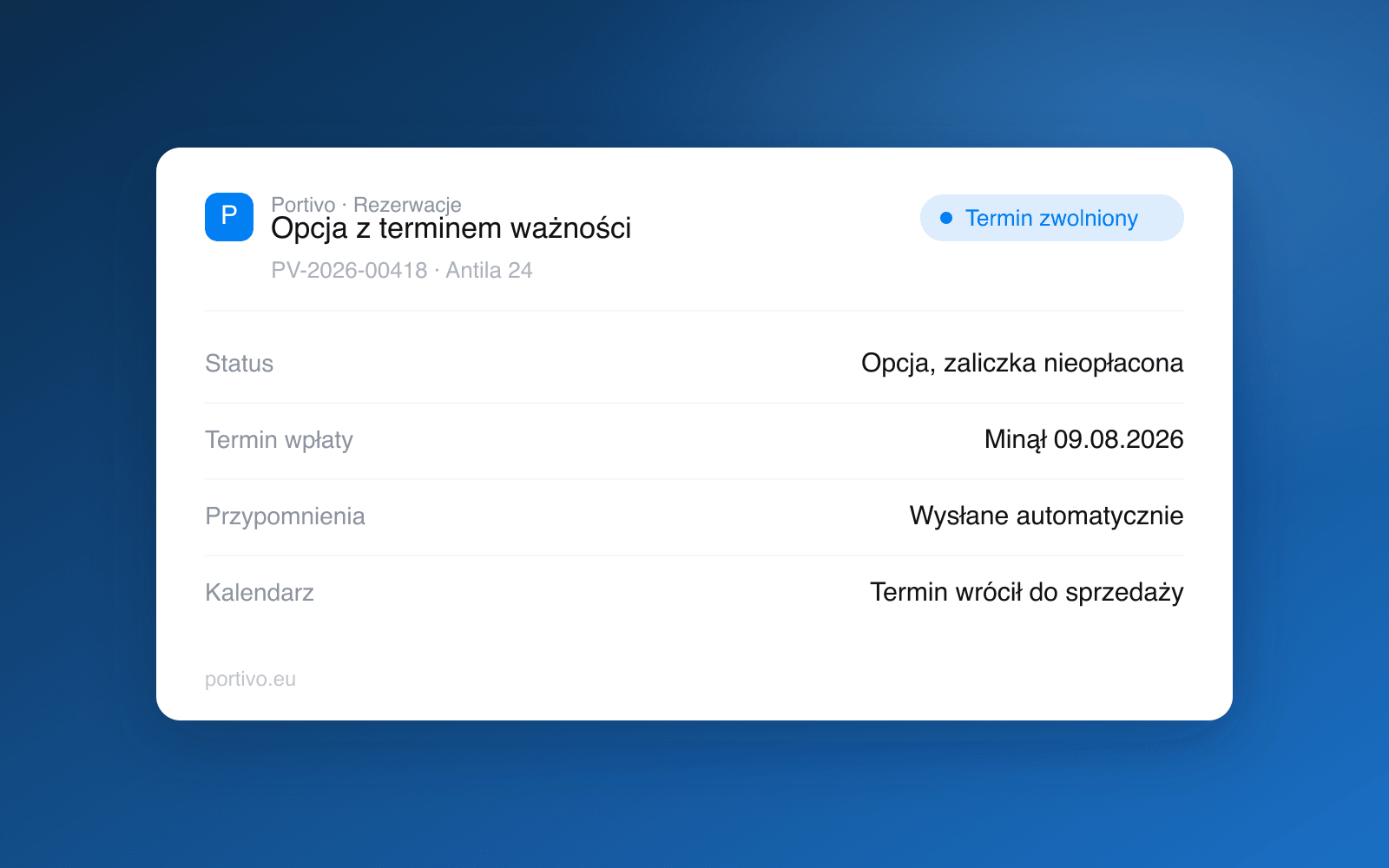
The option expiry is set once, per booking type, not negotiated with every customer. At peak season a short window makes sense, for example 48 hours, because several people are asking about the same week. Off season you can allow more time, because the cost of a blocked date is genuinely lower. The same logic drives the rest of your payment policy, which we cover in our guide to payment policies in charter.
Deposits and prepayments: what actually protects against a no-show
What you call the payment in the contract has legal weight. A prepayment (zaliczka) is refundable in practice, because it is simply part of the price for a service that did not take place. A deposit (zadatek) works differently: if the customer fails to show up through their own fault, the operator may keep it, and if it is the operator who fails to deliver, the customer may claim double. So with a no-show, what matters is not how much the customer paid, but how that payment was named in the contract and the terms. We break this down in detail in our guide to charter booking cancellations.
The second layer of protection is the moment the money is actually collected. If the customer pays online by card, BLIK or Przelewy24 right at booking, the unpaid-date problem largely disappears: the slot is only blocked once the money is in. Bank transfers and cash on pickup leave a time gap in which the boat is taken with nothing behind it.
Reminders sent by the system, not by a person
A large share of unpaid bookings is not bad faith, just plain forgetfulness. The customer booked on Monday, received the account number, went away on business and the payment deadline passed. If the reminder is sent by a team member, at peak season they simply will not get to it: handovers and returns eat the whole day. An automatic reminder sent the day before the option expires recovers part of these bookings with no work from the team, and the ones that fall through at least fall through on time. We cover the wider rhythm of customer messages in our guide to customer communication in charter.
The rule that saves the most nerves: always give the payment deadline as a specific date and time, not as "within a few days". The date in the message and the date in the system must be the same date.
What to do with a date that has just been freed up
A date recovered three weeks before the charter can still be sold, but only if it returns quickly to your website and sales channels. This is where a list of customers who asked about the same week and were turned away pays off: it is the cheapest sales channel there is, because those people already wanted to sail with you. Freed-up dates on a short horizon are also the natural place for a last minute offer, which we describe from the customer's side in our guide to last minute charter. How to measure and raise fleet utilisation systematically is covered in our guide to charter fleet utilisation, and the whole process is tied together in our charter fleet management guide.
Frequently asked questions
How much time should a customer get to pay the prepayment?
At peak season a short window works well, usually 24 to 48 hours, because several people ask about the same date at once. Off season you can allow a few days. More important than the length itself is that the deadline is a specific date and that the option genuinely expires once it passes.
Can I keep the payment if the customer did not show up?
It depends on how the payment was named in the contract. A deposit (zadatek) can generally be retained when the charter did not happen through the customer's fault. A prepayment (zaliczka) is refundable in practice. There is one condition: the clause must be in the contract and terms before the customer books.
How do I reduce unpaid bookings without putting customers off?
Online payment right at booking works best, because the customer settles it in one step instead of coming back to a bank transfer the next day. Portivo supports card, BLIK, Przelewy24, bank transfer and cash on pickup, so the customer picks a convenient method and you see the payment immediately.
Is it worth blocking customers after a no-show?
A permanent block rarely makes sense, because the reason is often accidental. The practical solution is to flag that customer in their history and require full prepayment on their next booking, instead of the standard partial one.
How much does a system that handles this cost?
Pricing depends on fleet size and is confirmed at a meeting, so you will find the details on our pricing page or we can settle them in a conversation.
Want unpaid dates to return to sale without manual chasing? See how Portivo's booking module works, check pricing that depends on fleet size or book a meeting.