Charter fleet occupancy: how to measure it and raise it without cutting prices
Charter fleet occupancy is the key metric of the season. How to calculate it properly, which numbers to track next to it and what really fills the gaps in your calendar.
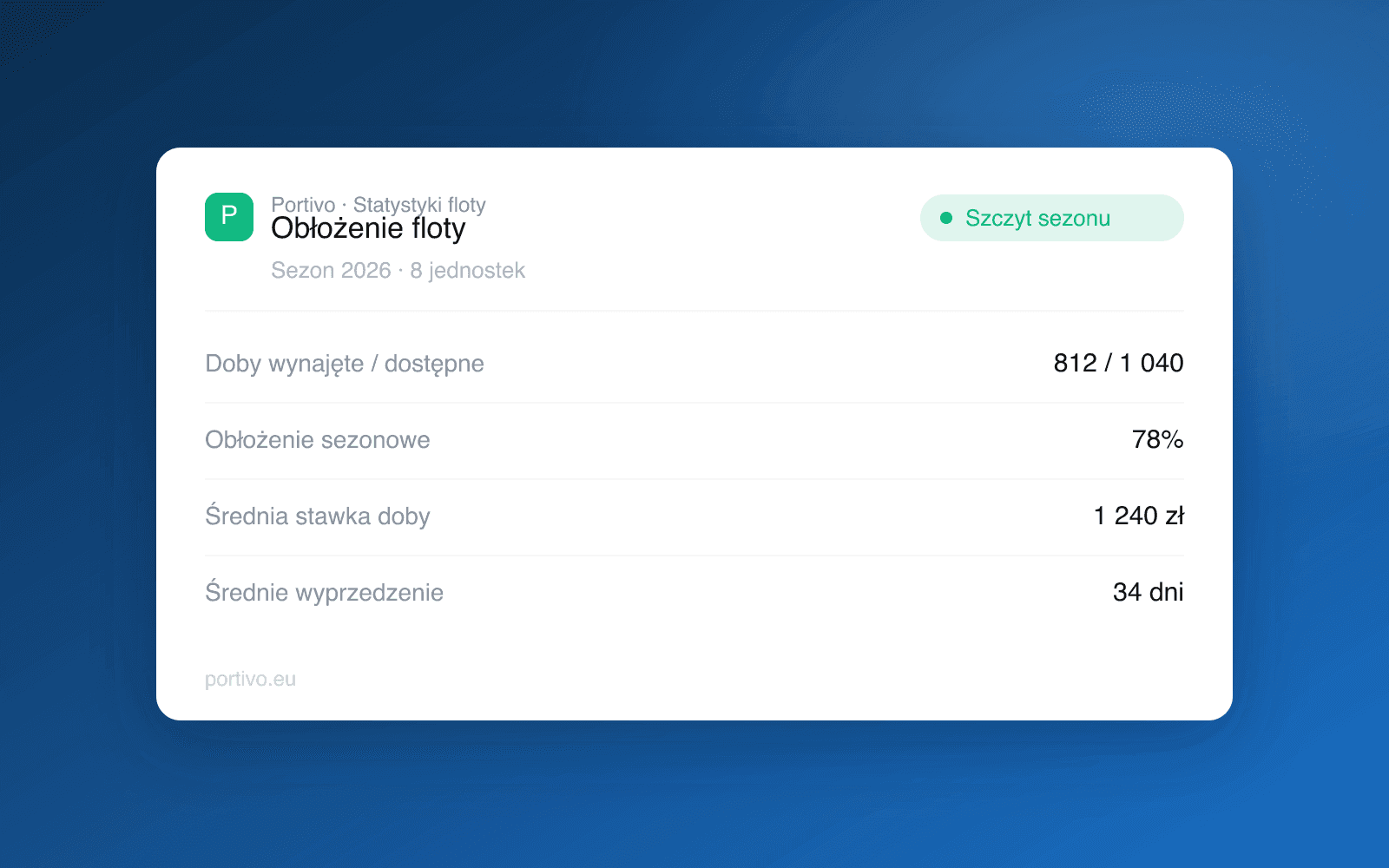
Charter fleet occupancy is the percentage of days on which your boats actually earn. It sounds trivial, but most operators calculate it from memory and only discover after the season that their best boat sat idle for three weeks while the weakest one was booked almost continuously. This article shows how to calculate occupancy properly, which metrics to keep next to it and what really fills calendar gaps before you reach for discounts.
How to calculate fleet occupancy
The basic formula is simple: days rented divided by days available, for the same period.
The denominator is what matters. Available days are not 365. In Poland a boat realistically earns from May to September, plus you lose service days and turnaround between charters. If you measure occupancy against the whole year, you will get 25% and nothing follows from it. Measure it against the season, and separately against the peak.
| Metric | How to calculate | What it is for |
|---|---|---|
| Season occupancy | days rented / days available in the season | assessing a boat's whole season |
| Peak occupancy | the same, but July and August only | this is where the money is decided |
| Average daily rate | charter revenue / days rented | whether discounts ate the margin |
| Revenue per boat | revenue / number of boats | comparing boats against each other |
| Average lead time | days between booking and charter start | when to communicate and when to promote |
The occupancy percentage alone can mislead. Occupancy of 90% at rates cut by a quarter is a worse season than 78% at full price. That is why you should always read occupancy together with the average daily rate, just as with dynamic pricing and seasonal rates.
Where the days really leak away
In practice four things eat occupancy, and only one of them is demand.
- Gaps between charters. A Saturday-to-Saturday booking leaves two or three day windows mid-week that nobody sells.
- Free dates shown nowhere. If current availability lives only in the owner's head, the customer will never see it.
- Response time. An enquiry answered after two days is usually an enquiry lost to a faster operator.
- Blocks that serve nobody. Options held without payment and "provisional bookings" for friends can freeze your best weeks.
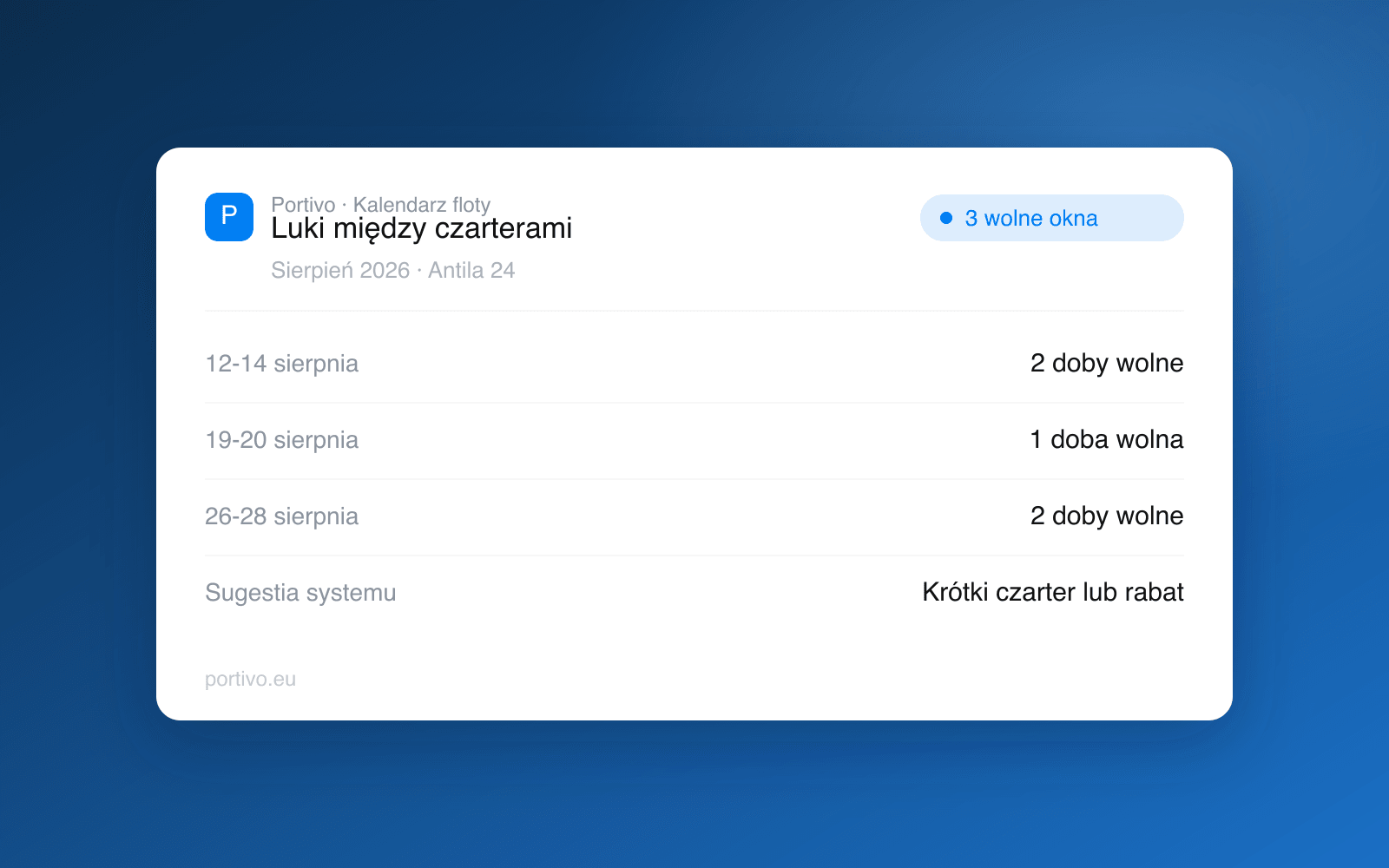
Short windows sell differently from a full week. Sometimes it is enough to accept a weekend instead of a whole week, sometimes to throw in an add-on instead of lowering the rate. What works on short dates is covered in our article on weekend charters.
Four levers that raise occupancy
- One always-current availability. Your fleet calendar has to be the same source of truth for your website, your phone and external channels. How synchronisation works is explained in our article on the channel manager for charter companies.
- Booking without a conversation. A customer who can pick a date and pay at 11 pm does not wait until morning for your reply. Portivo promises operators up to +38% more direct bookings from exactly this mechanism (that is a product promise from our site, not an audited metric).
- Flexible charter length. Rigid Saturday-to-Saturday turnarounds are convenient but leave gaps. It pays to have a rule for when you accept shorter stays and to run the numbers in the hourly versus daily rental model.
- Returning customers. The cheapest day to sell is one sold to last season's customer. How to organise that is covered in the article on marketing for a charter company.
When a discount makes sense and when it ruins the season
A discount is a date-specific tool, not a strategy. It makes sense when the date is close, the window is short and the boat would sit empty anyway. It makes no sense in March for July: you are teaching the market that with you it always pays to wait for a price cut.
Before you cut the price, check three things: whether the date is visible on every channel, whether it can be sold as a shorter charter, and whether you answer enquiries the same day. A discount should be the last move, not the first.
Customers looking for last-minute availability are a separate and fairly large segment. How to talk to them and what they expect is covered in our guide to last-minute charters.
What to measure after the season
After the season it is worth sitting down with four numbers per boat: season occupancy, peak occupancy, average daily rate and days lost in gaps. That is enough to make decisions for next year: which boat pays for itself, where to change rates and where to shorten the minimum charter. In Portivo those numbers follow directly from bookings and payments, because all sales run through one booking system instead of three calendars and an inbox. Pricing depends on fleet size and is confirmed at a meeting, so you will find the details on the pricing page or simply write to us.
Frequently asked questions
What is good charter fleet occupancy in Poland?
It depends on the region and the type of boat, but a sensible reference point is occupancy measured against the season (May to September) rather than the whole year. More important than a single number is the comparison: the same boat year over year, and boats against each other.
Does higher occupancy always mean higher profit?
No. Occupancy bought with discounts can lower revenue despite a full calendar. That is why you should always read it together with the average daily rate and revenue per boat.
How do I fill two and three day gaps in peak season?
Allow a shorter charter in those specific windows, publish them on your website as ready-made dates and offer them to returning customers before you start lowering the price.
Where should occupancy data come from?
From one source of truth about bookings. If some charters live in a paper calendar and some in a spreadsheet, every metric will be guesswork. How to consolidate that is covered in our guide to charter fleet management.