Hourly or daily rental - which model for an operator
Hourly or daily boat rental: how the two models differ operationally, how they affect pricing, turnover and handover, and how to run both in one fleet calendar.
Hourly and daily rental are two different business models, not just two lines in a price list. They spread fleet turnover differently, load your operations differently and calculate price differently. In this guide we compare the two from the operator's side and show how to run them side by side in one fleet calendar.
How the two models differ
In the daily model the customer takes the boat for full days, usually with an overnight stay on board. A charter day is most often counted from an afternoon pick-up to a late-morning drop-off the next day, and the best rates apply to weekly rentals. This is the model for houseboats and yachts with berths.
In the hourly model the customer takes the boat for a few hours on the same day. These are short recreational trips, often by motorboat or smaller boat, with pick-up and drop-off in hourly windows. Turnover is much faster: the same boat can serve several customers a day.
| Feature | Daily rental | Hourly rental |
|---|---|---|
| Unit of time | day or week | hours on the same day |
| Typical boat | houseboat, yacht with berths | motorboat, smaller boat |
| Turnover in season | lower, longer trips | high, several customers a day |
| Number of protocols | less often | frequent, at every window |
| Base price counted per | day or weekly package | hours |
Where the hourly model loads operations
Fast turnover sounds attractive, because the same boat earns several times a day. But it has its price on the operations side. Every window is a separate handover: a handover protocol, a condition check, refuelling, sometimes a short briefing. The shorter the trip, the larger the share of these tasks in the whole working day.
That is why in the hourly model the operator who gains most has a fast, repeatable handover protocol and clear windows in the calendar. Without that, the day spills into overlapping pick-ups, and the boat's condition stops being certain. In the daily model there are fewer handovers, but each is more serious, because it covers a longer trip and a larger deposit.
How each model calculates price
In the daily model the base price is counted per day or per weekly package, and the customer knows in advance how long the trip will last. In the hourly model the base is an hourly rate, often with a different threshold for shorter and longer windows. This also affects deposits and security deposits: a short hourly trip calls for a different sensible level of protection than a week-long yacht charter. How to set these rules we break down in the guide on payment policies in charter.
Market prices vary widely between operators, seasons and boat types, so there is no single table that fits everyone. You set the rates for your own fleet, and the system only makes sure they are calculated consistently at every stage of a booking.
Running both models at once
Many operators do not pick one model, they run both: houseboats by the day, motorboats by the hour. The trouble starts when each model lives in a separate spreadsheet or inbox. Then a date clash and a pricing mistake become easy.
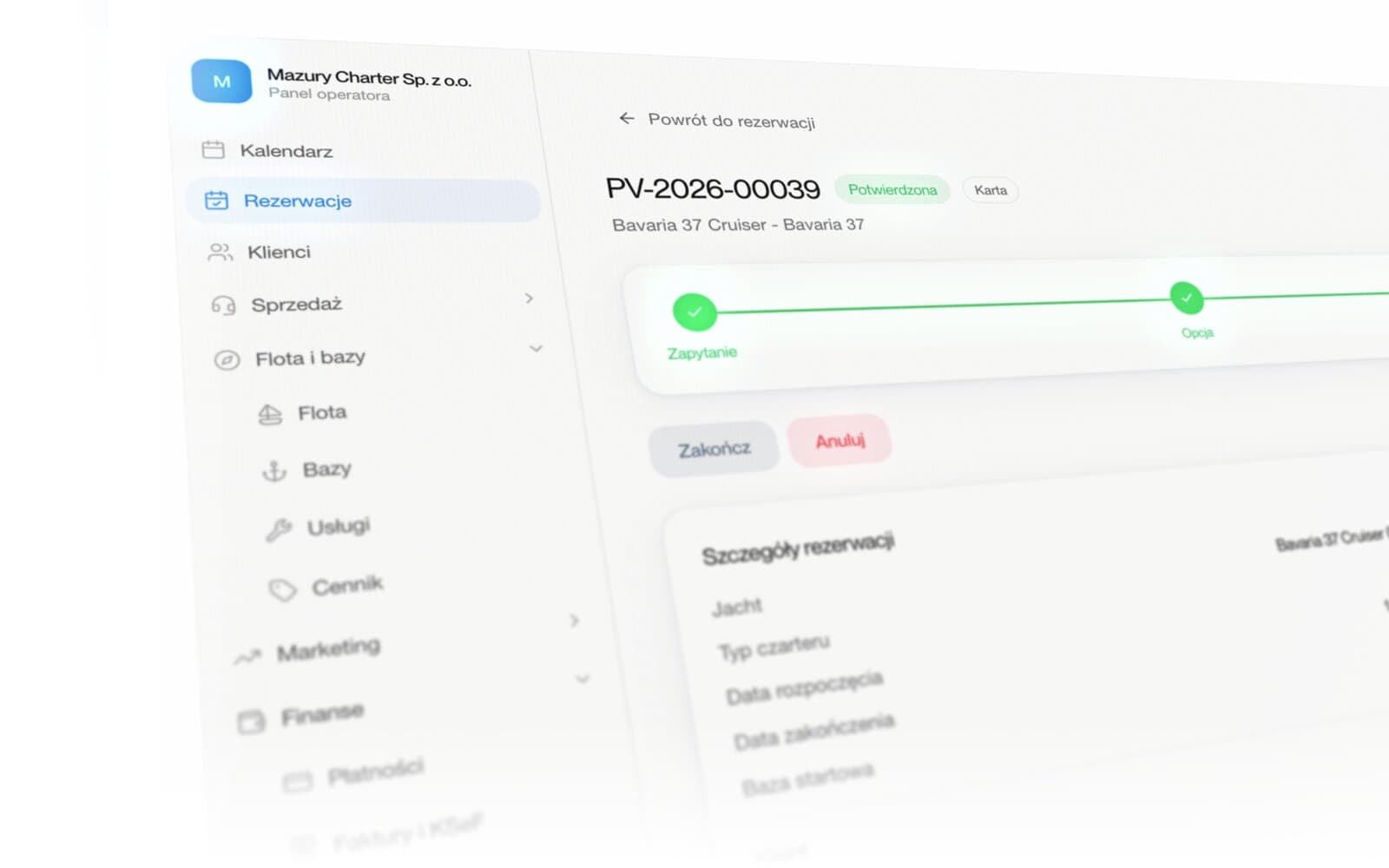
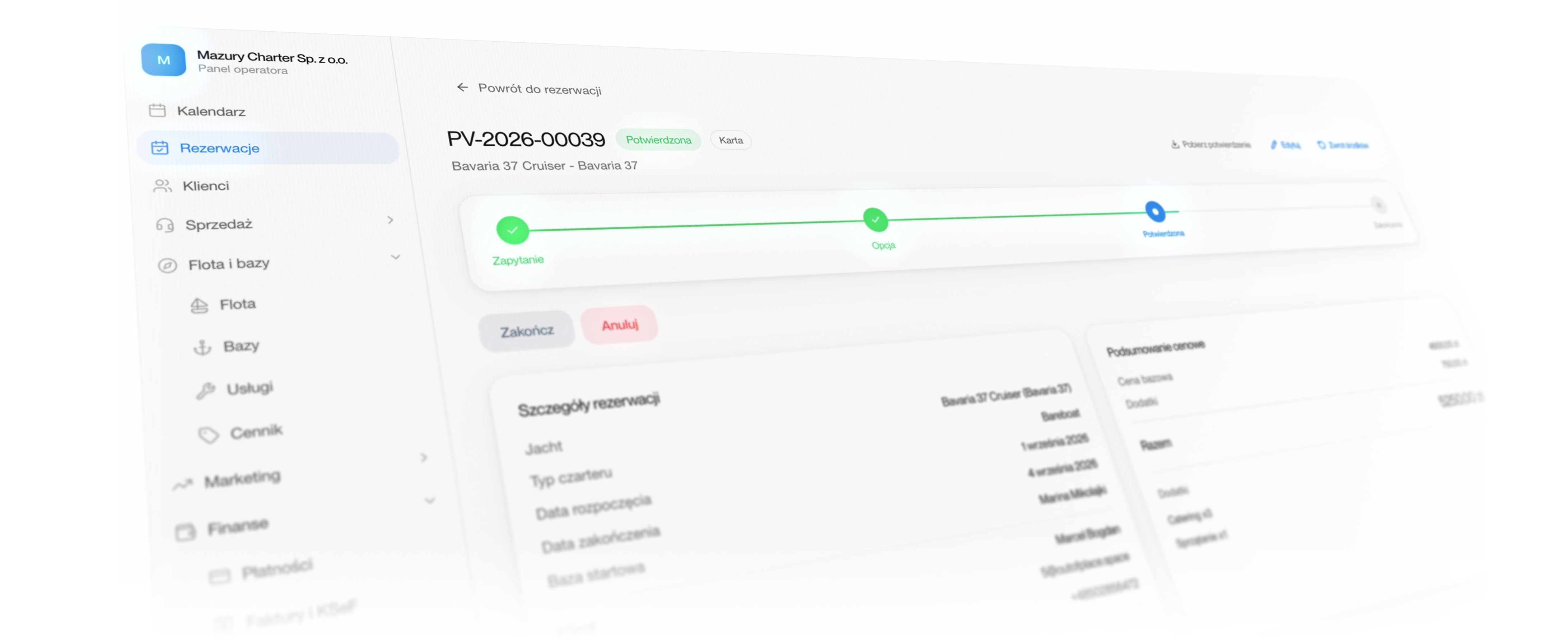
In Portivo the unit of time is a property of the booking, not a separate system. The same fleet calendar handles full days and short hourly windows, and the price, deposit and security deposit are calculated according to the model chosen for a given boat. As a result an hourly motorboat booking and a weekly houseboat charter are visible in one place, with no risk that two channels sell the same date. It is part of a wider process we describe in the guide on charter fleet management, wired to online bookings and offers.
You do not have to choose one model. You only have to run both in one calendar, so hourly turnover does not collide with daily charters.
Frequently asked questions
Which pays off more: hourly or daily rental?
It depends on the fleet. Hourly gives higher turnover and revenue from smaller boats, but more handovers and operations. Daily means longer trips with an overnight stay, fewer protocols, but lower turnover. Many operators combine the two.
How is a charter day counted?
Most often from an afternoon pick-up to a late-morning drop-off the next day, and the best rates apply to weekly rentals. The exact hours are set by the operator and shown at booking.
Can both models be run in one system?
Yes. In Portivo the unit of time is a property of the booking, so the same fleet calendar handles full days and short hourly windows with no date clashes.
Does the hourly model need a different deposit?
Usually yes. For a short trip a sensible level of protection differs from a week-long charter. You set the security deposit and deposit level separately for different boats in your payment policies.
Do you run a fleet by the day, by the hour or both? See the pricing or book a meeting, and we will match a plan to your fleet size.