Dynamic Pricing for Charter Companies: Seasonal Rates That Actually Earn
Dynamic pricing for a charter business: seasonal rates, minimum-stay rules and discounts in one dashboard. How to price your fleet so the season works for you.
Pricing is the fastest revenue lever in a charter company: the same fleet can earn noticeably more simply because the rates match the season and demand, instead of being set once for the whole year. Dynamic pricing does not mean juggling prices every day, but well-thought-out seasons, rules and discounts that the system enforces for you. Here is how to set it up step by step.
Why one rate all year round loses money
Demand in charter is extremely seasonal: July and August sell themselves, while May and September need encouragement. One rate all year means that at the peak you leave money on the table, and off-peak you scare away customers who would have come at a lower price. On the market, the differences between the peak and the shoulder season reach tens of percent, so a flat price list is never neutral: it always loses in one direction or the other.
Then there is the calendar. A well-priced high season funds the year, but it is the May long weekend, June weekends and September that decide whether the fleet sails 12 or 20 weeks. Pricing is part of the wider process we break down in managing a charter fleet.
Seasons: the foundation of the price list
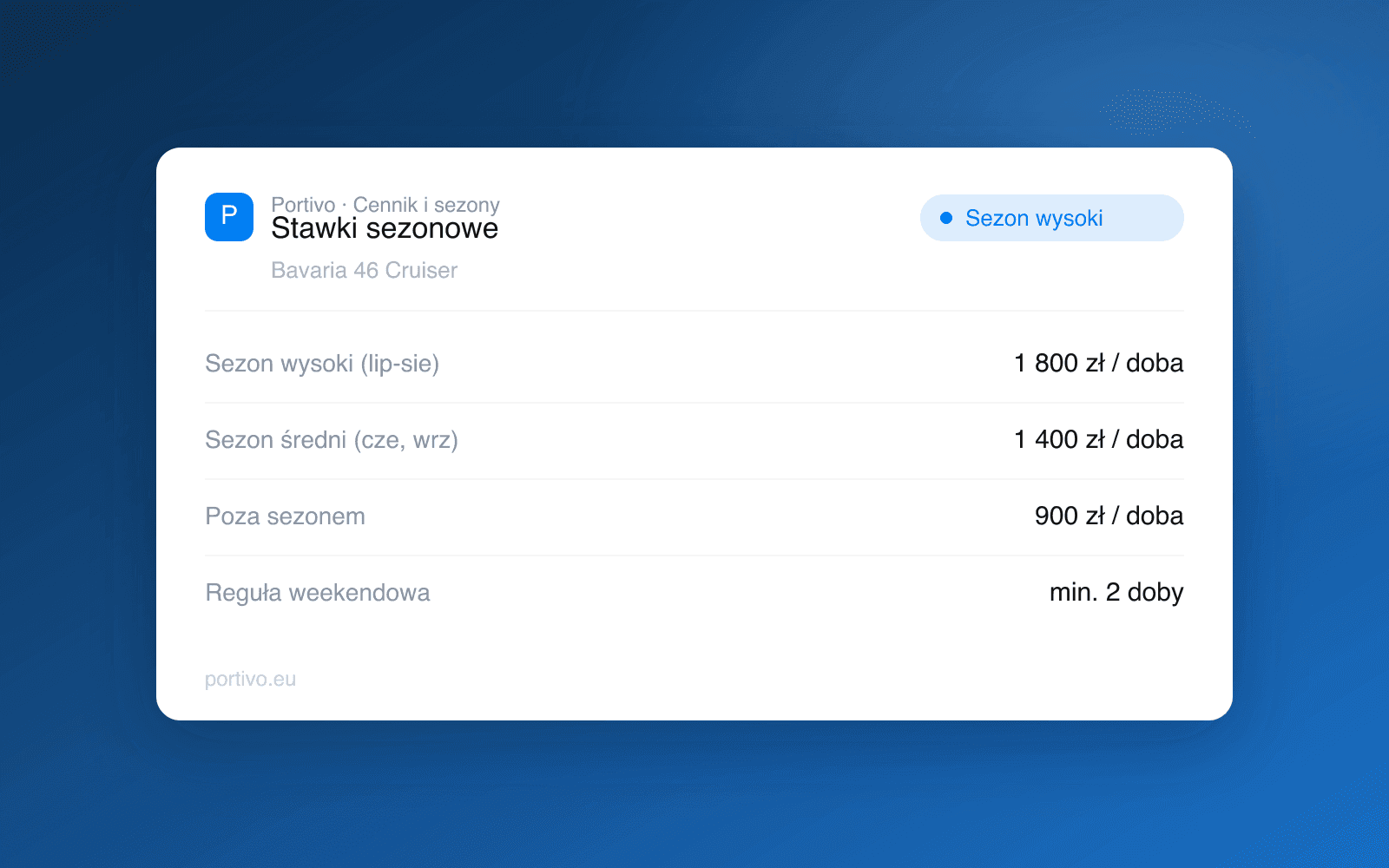
The base is splitting the year into seasons with their own daily rates for each boat. In practice a simple layout works: high season (the summer holidays), mid season (June, September, long weekends) and low season (the rest of the navigation season). Every boat gets a rate in every season, and the calendar itself shows the customer the right price for the chosen dates.
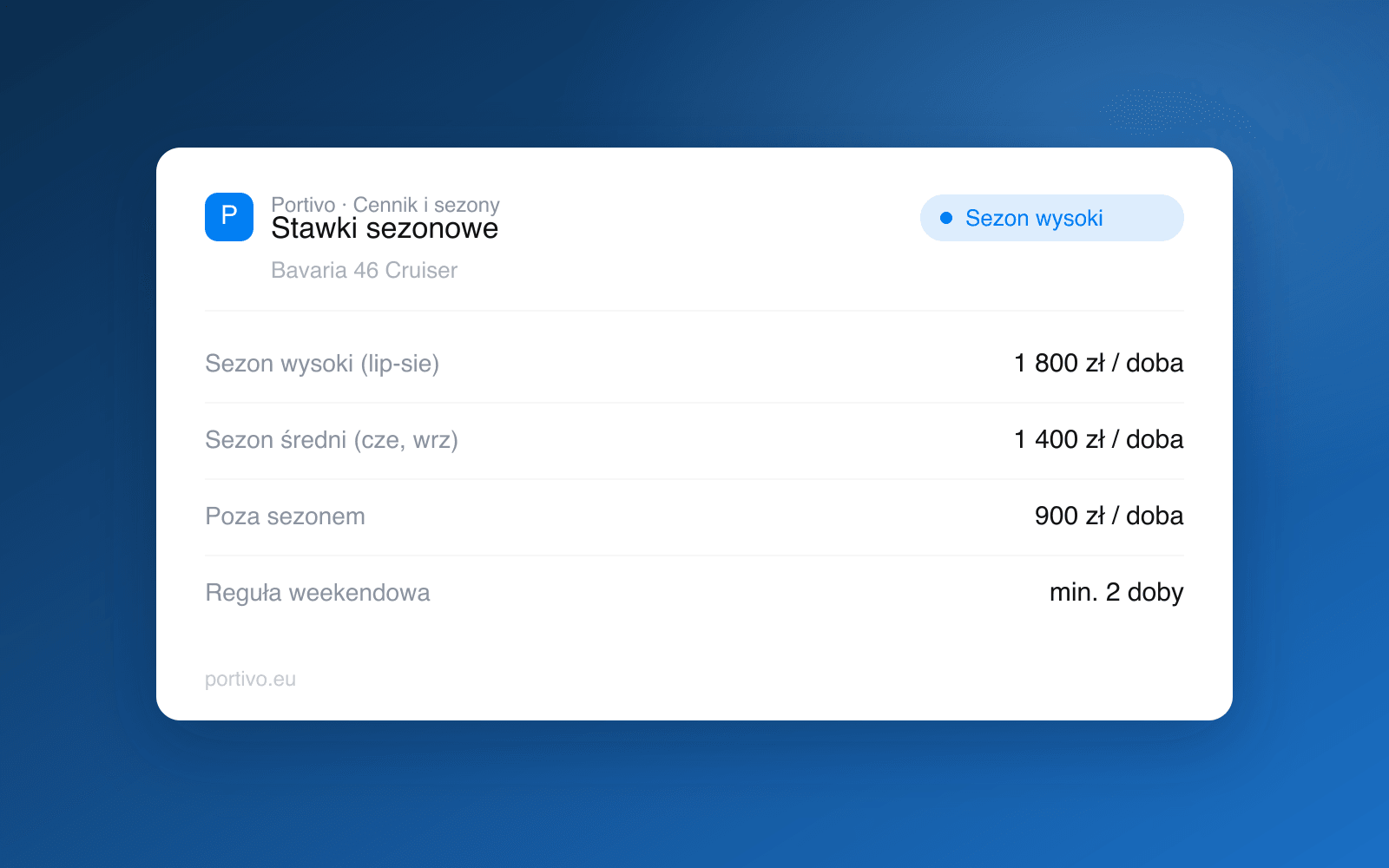
In Portivo you configure the price list once in the dashboard, and every booking is priced automatically from the right season, including trips that cross a season boundary. No more manual spreadsheet maths or explaining to a customer where the amount came from.
Rules that protect the calendar
Rates are half of the price list. The other half is the rules that keep the calendar from filling up with bookings that block better sales:
| Rule | What it gives you |
|---|---|
| Minimum stay in season | a full week at the peak instead of 2-day gaps |
| Weekend rule off-peak | short charters where a week would not sell anyway |
| Short-rental surcharge | short trips stop cannibalising long ones |
| Boat handover windows | Saturday-to-Saturday at the peak, looser outside it |
The same mechanism lets you safely open up to rentals shorter than a week when demand weakens. When that pays off is covered in hourly vs daily rental.
Discounts and surcharges without chaos
Discounts work when they are countable and automatic: first minute for early booking, a discount for a long trip, a promotion for specific free weeks. Chaos starts when every discount is a manual decision in an email, because then nobody knows what a week on a given boat really costs. Set discounts as rules in the system, and leave exceptions for individual offers, which you close anyway in offer management.
Also remember to keep the price consistent with your payment policy: the deposit, the payment deadlines and the security deposit must follow from the same settings the customer sees at booking. How to arrange that is described in payment policies in charter.
One price across all channels
Dynamic pricing only makes sense when the same price and availability apply everywhere: on your website, in the OTA channels and in offers sent by email. Price drift between channels erodes trust and generates complaints. That is why rates and rules should live in the same system that guards availability, as we describe in the guide on the channel manager for charters.
In Portivo, pricing is part of one dashboard together with bookings, payments and offers, and the customer pays right away at online booking by card, BLIK, Przelewy24 or bank transfer. The Portivo landing page speaks of a promise of closing offers 2x faster and more direct bookings: treat it as the product's direction, not a measured result, but the mechanism is simple: the less manual maths, the faster the customer sees the price and pays.
Frequently asked questions
How is dynamic pricing different from changing prices manually?
Dynamic pricing means rates and rules set up front: seasons, minimum stays, discounts. The system prices every date on its own. Manual changes are daily decisions without a system, and they end in inconsistency between channels.
How many pricing seasons should I have?
In Polish charter three are usually enough: high, mid and low. More important than the number of seasons is that their boundaries match real demand in your region and are reviewed every year.
Should I cut prices last minute?
Carefully. Regular discounts just before the date teach customers to wait. First minute for early booking and targeted promotions for specific free weeks work better than an automatic cut at the end.
How does seasonal pricing work with OTA channels?
Rates and availability should flow from one system to all channels. Then a high-season price rise applies everywhere at once, and there are no bookings at the old price in one of the channels.
Want to see what seasonal pricing looks like on your fleet? Portivo's pricing depends on fleet size: check the pricing page or book a meeting, and we will show it on your boats.