Customer communication in charter: what to send and when
Good customer communication in charter means fewer phone calls and payments on time. See the message map for every booking stage, from confirmation to review.
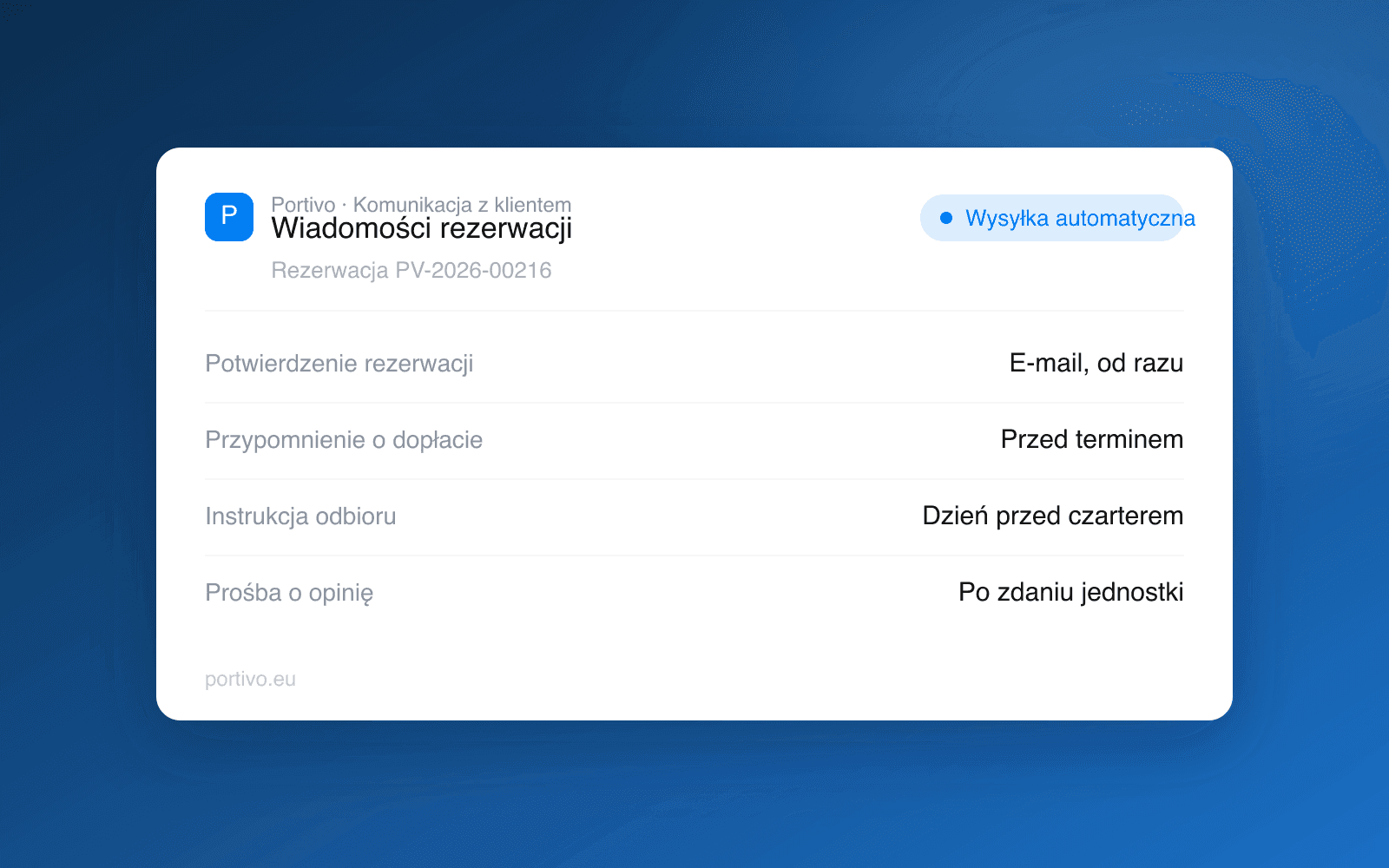
Most of the phone calls you answer in season are questions about things the customer should have received in writing: did the booking go through, when is the balance due, what time is pickup and what to bring. Good charter communication is a predictable sequence of messages sent automatically at the right moments of the booking. Below is the map of that sequence and the rules that work for operators regardless of fleet size.
Why it pays off
Every unanswered message is customer uncertainty, and uncertainty comes back to you as a phone call or, worse, a cancellation. On the other hand, every manually written message is your time in the middle of the season, when five handovers are waiting at the dock. Automation solves both problems at once: the customer knows everything on time, and you write nothing by hand. This is part of the bigger topic we covered in our guide to booking automation.
The communication map: from booking to review
| Moment | Message | Purpose |
|---|---|---|
| Right after booking | Confirmation with a summary and amounts | The customer knows the booking exists and what they pay |
| After the deposit clears | Payment confirmation | Closes the most common question of the season |
| Before the balance deadline | Reminder with a payment link | The balance arrives without calls and chasing |
| A few days before the charter | Pickup instructions: base address, time, documents, packing list | Pickup without delays and last-minute questions |
| The day before | A short reminder with the base contact | The customer knows who to call on the way |
| After the boat is returned | Thank-you and review request | Reviews build sales for the next seasons |
This sequence answers the full set of typical questions before they are asked. One important rule: one message has one goal. A confirmation is not the place for the harbor rulebook, and a balance reminder should not drown in paragraphs about the weather.
Automation instead of remembering
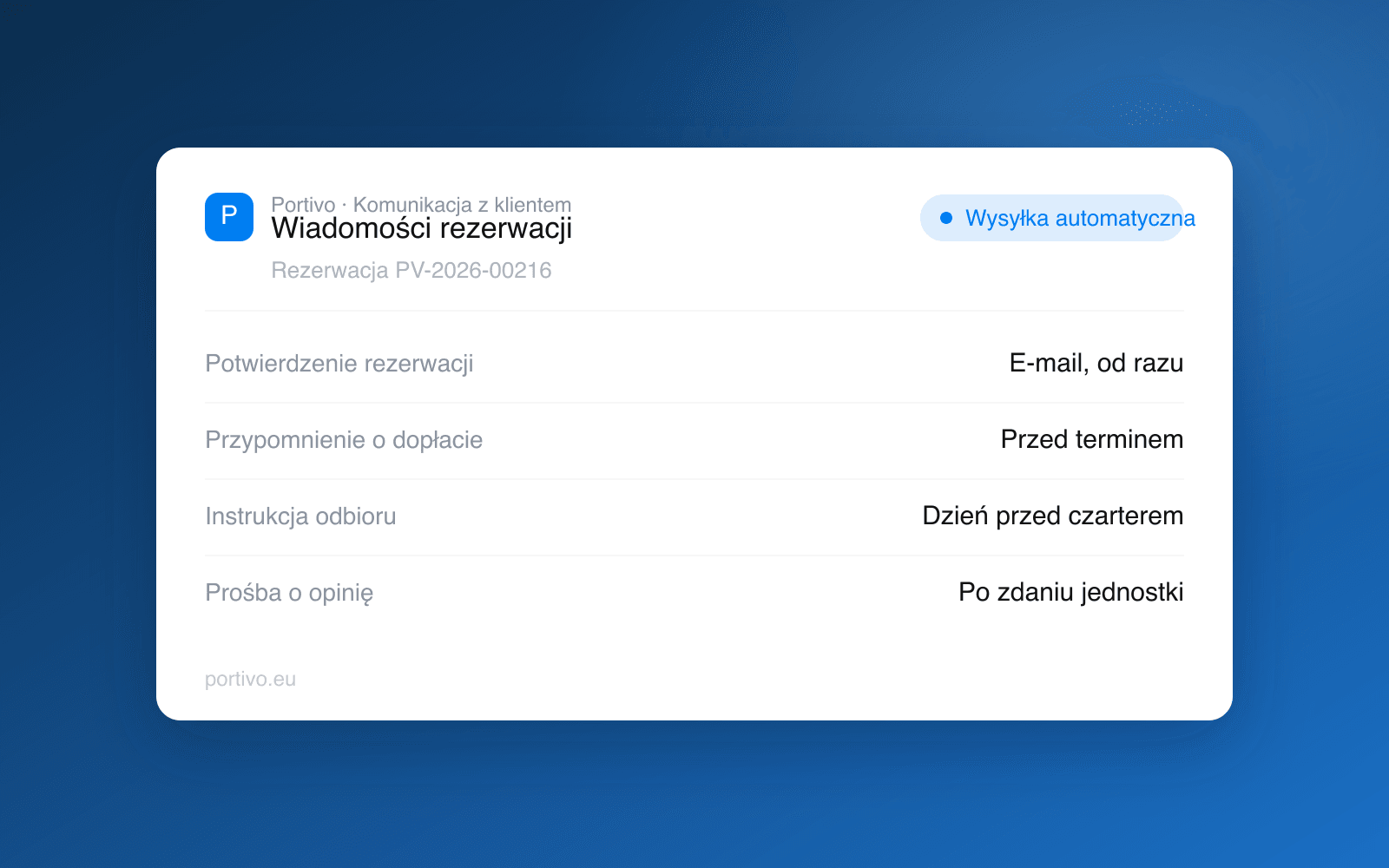
The key moments of this sequence are known to the booking system from the booking itself: charter dates, payment deadlines, deposit and balance status. In Portivo the messages send themselves based on that data, by e-mail, and the most important ones also by SMS. The balance reminder contains an online payment link for card, BLIK or Przelewy24, so the customer pays right from their phone, without logging in or hunting for an account number. The deadline takes care of itself: it is one of the things operators value most about online payments in charter.
The bookings product page shows how confirmations and reminders tie into the fleet calendar in one panel, alongside the system's five other modules.
Tone and content: short, specific, human
An automated message does not have to sound like a robot. Write briefly, in the second person, with specifics: amount, deadline, address, phone number. Avoid jargon and long introductions. The customer reads these messages on their phone, between work and packing, so the key information belongs in the first sentence and in the e-mail subject line.
The post-charter message is a discipline of its own: a thank-you plus a review request sent the day after the boat is returned, while the memories are at their best. How to turn reviews into future bookings is covered in our article on customer reviews, and returning customers more broadly in our guide to charter fleet management.
Want to see what this communication looks like on your fleet? Book a short meeting and we will walk you through the whole flow live.
Frequently asked questions
Which messages should go by SMS and which by e-mail?
E-mail is the foundation: it fits summaries, amounts and attachments. Reserve SMS for time-sensitive moments, like the balance reminder or the pickup instructions the day before the charter.
Don't automated messages sound impersonal?
They sound the way you write them. A template with the customer's name, the booking specifics and human language reads better than a message typed by hand in a rush at 10 pm.
When should I ask a customer for a review?
The day after the boat is returned. Too early and the customer is still driving home; too late and the emotions of the cruise fade. An automatic send after the handover protocol is closed hits the right moment without watching the calendar.
Where do I start if today I write everything by hand?
With the two messages that consume the most time: the booking confirmation and the balance reminder. These two automations relieve the season fastest, and you add the rest of the sequence gradually.