A website for a charter company: how to sell bookings without middlemen
A website for a charter company is your own sales channel. See what it needs so customers can book and pay themselves, without calls and emails.
Many charter operators have a website that only informs: a fleet description, a phone number, a contact form. The customer still has to call or email, wait for a reply, and only then find out whether a date is free. A charter company website that actually sells works differently: it shows live availability, and takes the booking and the payment right away, without waiting for a call back from the operator.
Why a charter company needs its own website
Aggregators and OTA platforms bring traffic, but they take a commission on every booking, and it is them, not you, who decides how your boat's listing looks. Your own website with online booking is a channel where the customer books directly with you, and you keep the full margin on the transaction. That does not mean giving up on OTAs, just adding a channel that actually converts traffic from Google, social media and referrals. We cover how to build direct bookings alongside OTA channels in our article on direct bookings without OTA commission.
What a good operator website needs
| Element | What it is for |
|---|---|
| Live fleet availability | Customers see free dates without calling the office |
| Online booking and payment | The date locks in immediately, not after an email exchange |
| A description and photos for every boat | Customers know exactly what they are booking, fewer questions before the charter |
| A foreign-language version | Access to customers from outside Poland, with no extra channel |
| Consistency with OTA channels | One availability calendar, zero double bookings |
The most common mistake is a website that looks nice but ends at a contact form. A customer who has already decided on a specific date and boat wants to book it right there, not wait until tomorrow for a reply.
What booking looks like from the customer's side
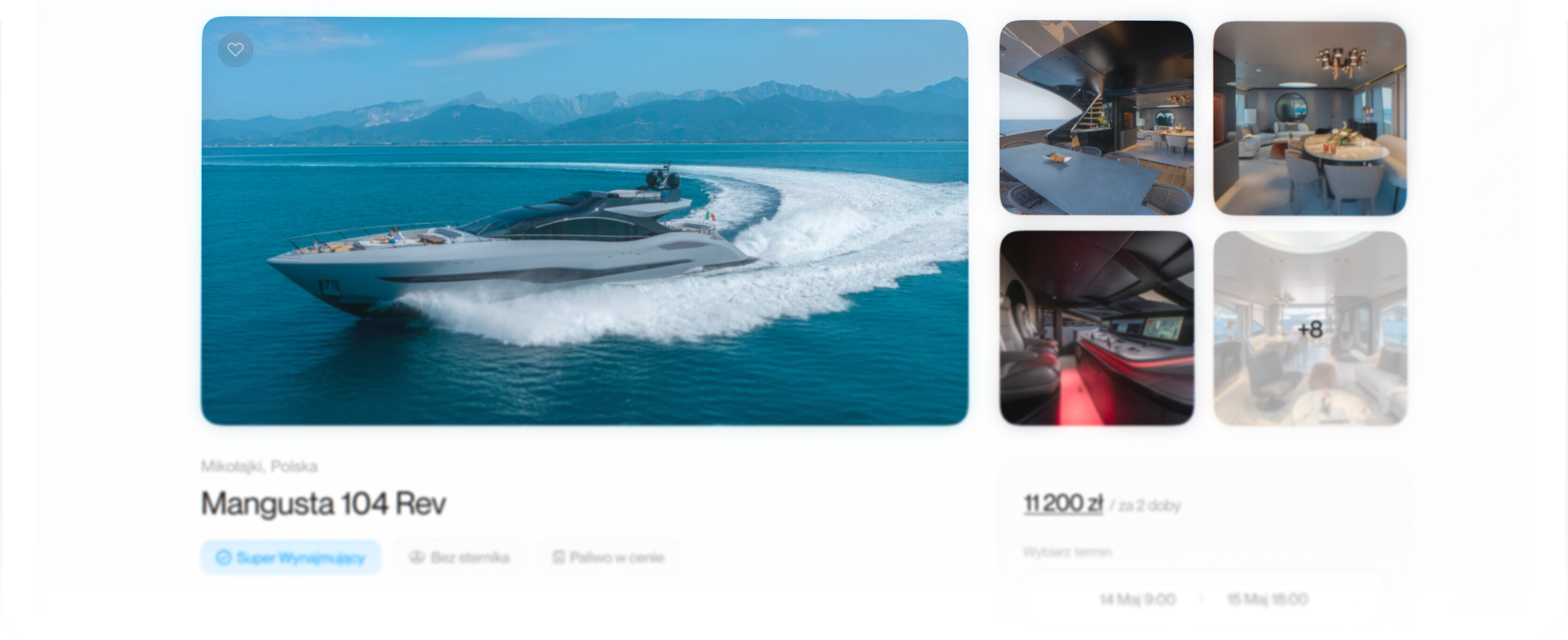
A good website shows everything a customer needs to decide before they even ask: the base's location, the boat's type and size, its equipment, previous customers' reviews and the available dates. Booking itself is the last step, not the first point of contact. The same availability the customer sees on the site has to be synced with OTA channels, so no one books the same date twice. We cover how that sync works in our article on channel managers for charter companies.
Marketing and repeat customers
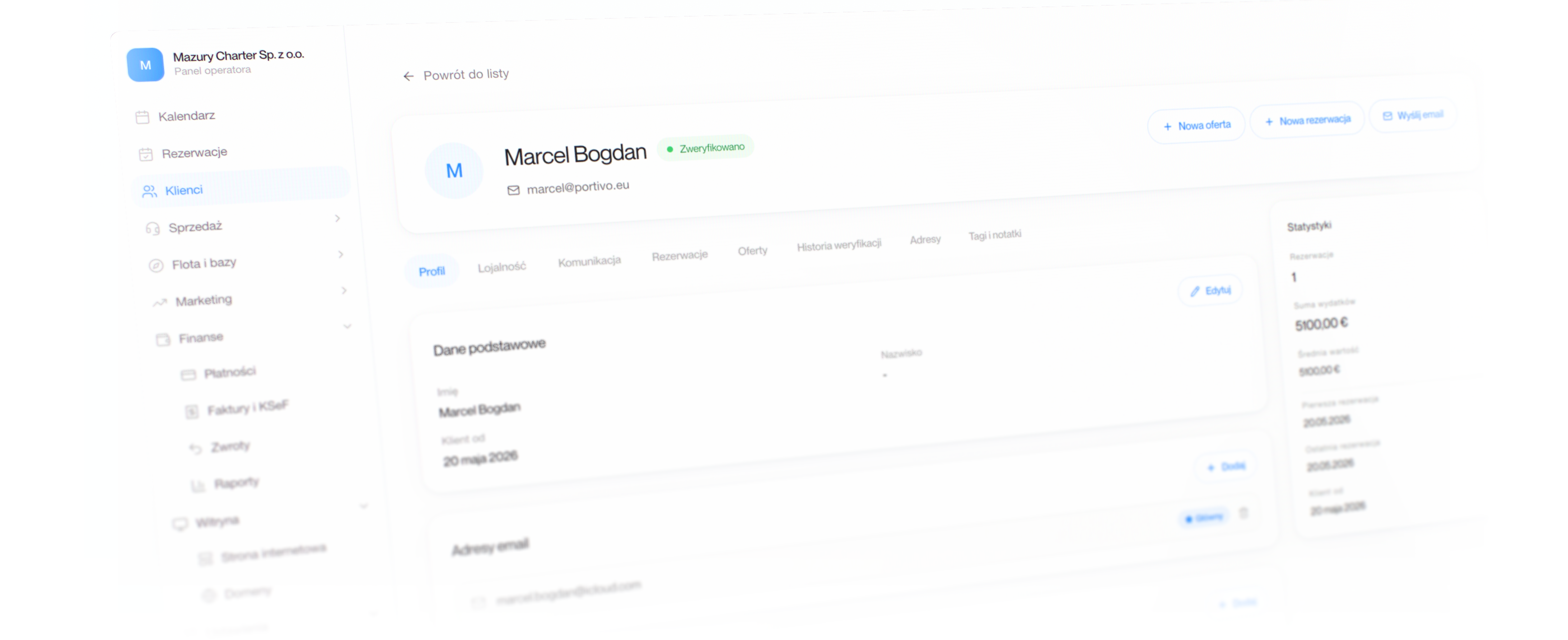
A website that collects contact details as part of the booking builds a customer database with no extra work. That database is what lets you later send a reminder about next season's open dates, instead of paying again to acquire the same customer through ads or an OTA. More on turning one-off customers into repeat ones is in our article on marketing for a charter company.
Being bilingual is an advantage
Most Polish charter companies have a website in Polish only. That closes the door on foreign tourists and operators looking for boats in Poland, and search traffic in English exists and is growing along with the popularity of Polish waters abroad. A website in two languages, with the same availability and the same booking process, opens a sales channel that most of the competition simply does not have.
That is also a simple argument when a customer is comparing several offers at once: a site where you can see availability and book a date right away looks more credible than a listing on a classifieds portal or a single social media post. Trust is built from exactly these details, before the first phone call even happens.
If your current website ends at a contact form, book a meeting and see what a storefront with online booking and payment looks like. Pricing depends on fleet size, details are on the pricing page, and the operator website module itself is described on the product page.
Frequently asked questions
Does a website replace being listed on OTAs?
No, it is an extra sales channel alongside OTAs, not a replacement. The difference is that a booking from your own site costs no commission, and you have full control over how the listing looks.
What matters more: a nice-looking website or online booking?
Online booking. A website that only looks good but ends at a contact form loses customers who have already decided and want to book a date right away.
Is it worth having a version of the site in a language other than Polish?
Yes, if even part of your customers search for offers in English. A foreign-language version with synced availability opens a channel where most local competitors do not appear.
How does an operator's website avoid double bookings with OTAs?
Through one shared fleet availability that both the operator's website and OTA channels read from. A date booked in one place locks everywhere at once.