DAC7 for charter companies: what platforms report to the tax office
DAC7 covers charter too: booking platforms report your transactions and revenue to the tax administration. See exactly what the office sees and how to prepare.
DAC7 is an EU directive that obliges digital platforms to report sellers and their transactions to the tax administration, and the rental of means of transport, including boats and yachts, is explicitly one of the reported categories. In Poland the rules have been in force since 1 July 2024, so the bookings your company collects through portals and marketplaces are passed to the National Revenue Administration every year. Here is exactly what gets reported, who it affects and how to prepare sensibly.
Where DAC7 comes from and who it affects
DAC7 is the common name of EU Council Directive 2021/514, which extended the cooperation of member states' tax administrations to data from digital platforms. The operator of a platform you sell through must once a year hand the tax administration information about you and your transactions, by 31 January for the previous year. The first reports in Poland also retroactively covered 2023 and 2024.
The reported categories of activity are the sale of goods, personal services, the rental of immovable property and the rental of means of transport. Chartering a yacht, houseboat or motorboat is the rental of a means of transport, so a charter company selling through booking platforms falls squarely under the reporting rules.
The exclusion for small sellers, below 30 transactions and up to 2000 euro a year, applies in the directive to the sale of goods. For the rental of means of transport there is no such threshold, so even the first booking taken by a platform is reported.
Exactly what the tax office sees
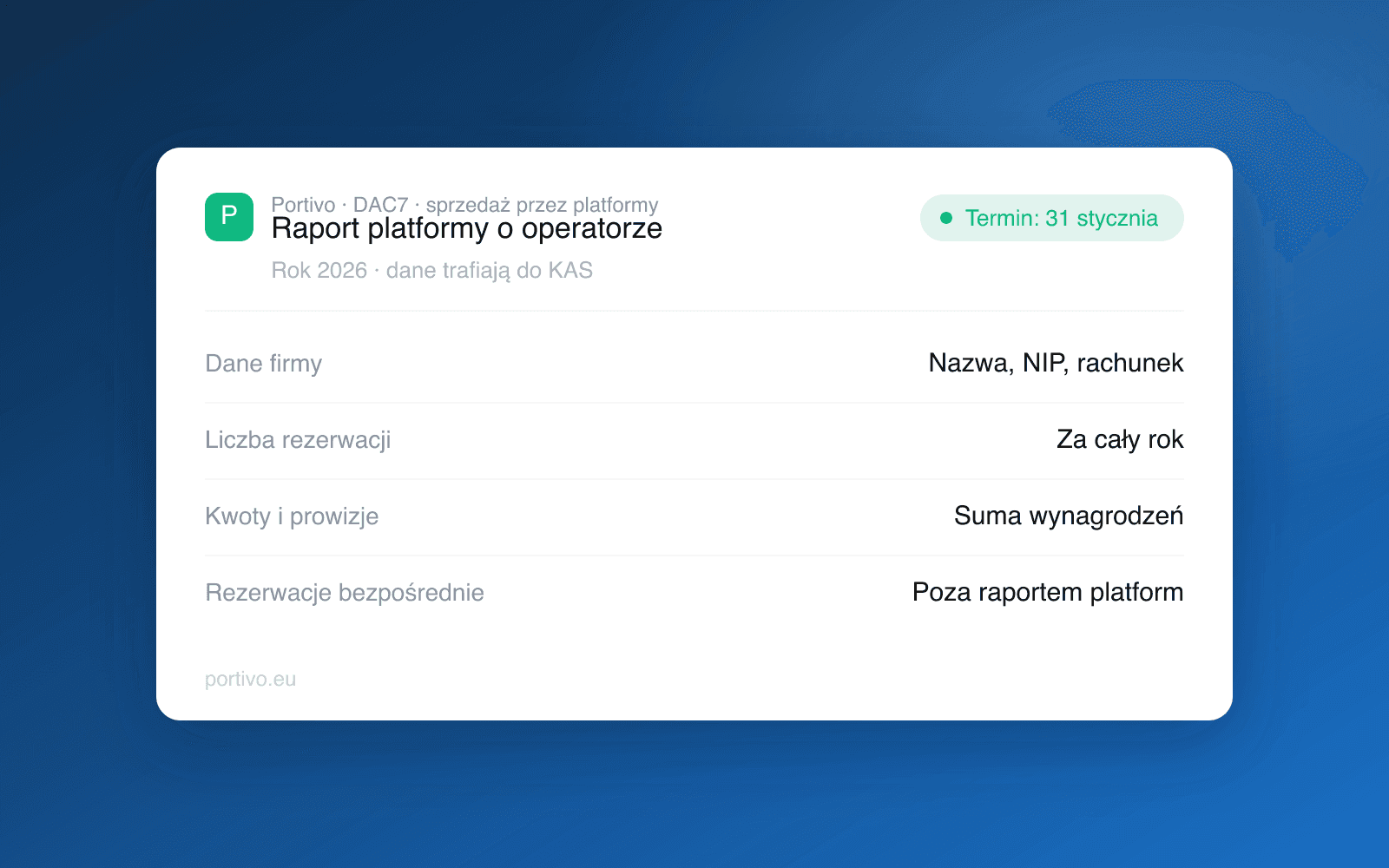
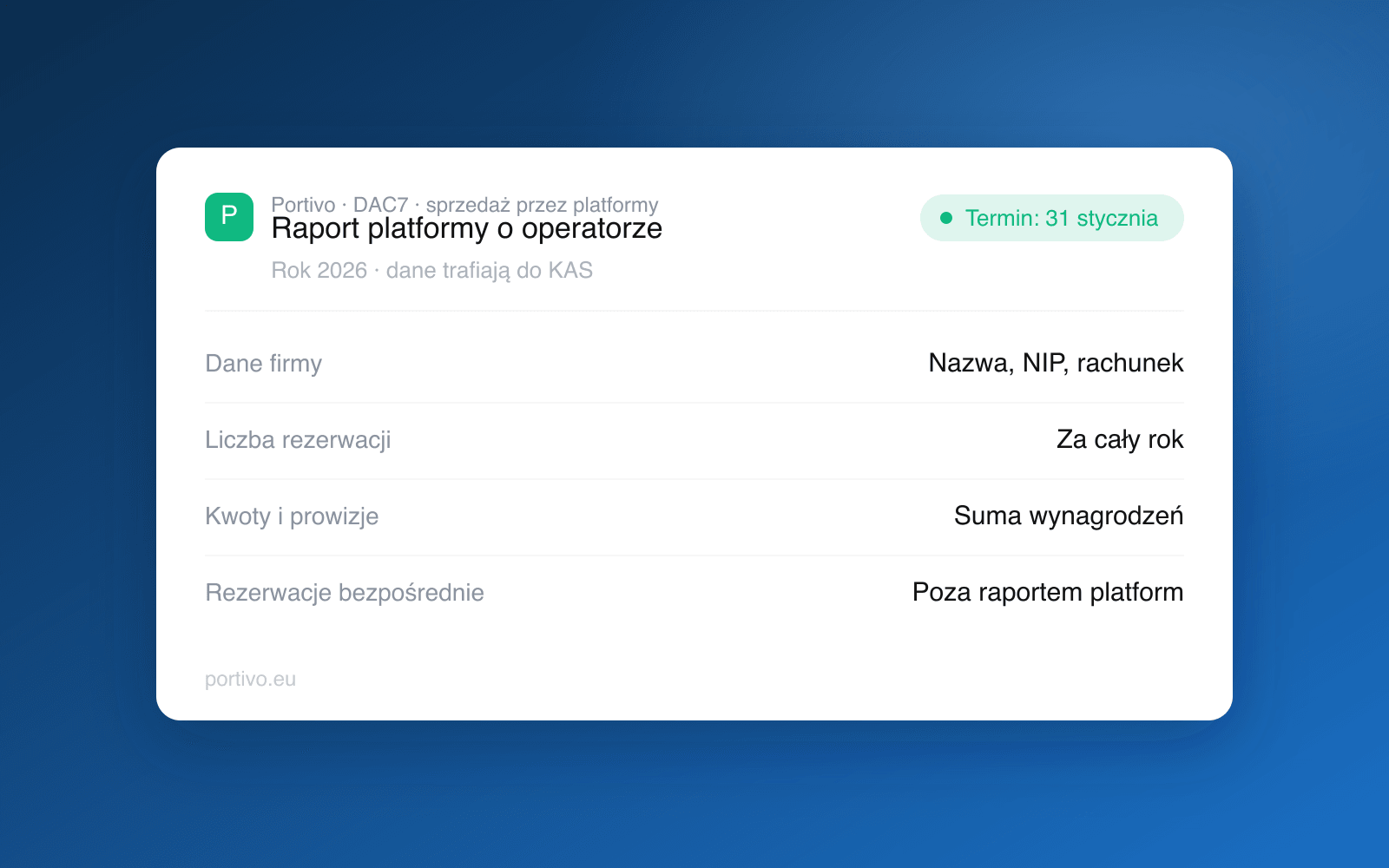
| Data | Scope |
|---|---|
| Company identification | Name, address, tax ID, bank account number |
| Sales volume | Number of transactions in each quarter of the year |
| Amounts | Consideration paid or credited by the platform |
| Platform costs | Commissions and fees charged by the portal |
In practice this means the tax administration gets a source of data about your platform-channel revenue that is independent of you, broken down by quarter. The platform files the report, but you are the one responsible for keeping your own accounts consistent with what that report will show.
What this changes in running a charter company
DAC7 imposes no new tax. It changes one thing: visibility. A gap between the revenue platforms report and your own records is the shortest path to questions from the tax office, so the foundation is solid, complete sales records from every channel in one place. How to set them up is covered in our guide to taxes and accounting in a charter company.
The second practical point: platforms collect identification data from sellers, including the tax ID and bank account, and are obliged to verify it. Fill it in everywhere you sell, because a platform that cannot verify a seller may block payouts or the account. It is also worth remembering that digital obligations do not end with DAC7: we cover e-invoicing and data protection in our article on KSeF and GDPR in a charter company.
Direct bookings: fewer intermediaries, full control of your data
Bookings taken on your own website with online payment do not pass through a platform operator, so they do not appear in anyone else's reports: you record, invoice and document them yourself, and the customer data stays with you. This is not a way to avoid anything, you account for the revenue all the same. The difference is that with direct sales your own records are the single source of truth, with no reconciling gaps against intermediaries' reports and no commission. How to build that channel is shown in our article on direct bookings without OTA commission, and you will find a ready-made website with booking and online payment in the Website module.
If you want to organize multi-channel sales and your records for DAC7 in one system, book a meeting: we will show you how operators combine platform sales with their own channel without doing the work twice.
Frequently asked questions
Does DAC7 apply to a small charter company with a few boats?
Yes, if it sells through digital platforms. For the rental of means of transport the directive provides no volume or amount threshold, every scale of sales is reported.
Does DAC7 mean a new tax on charter?
No. DAC7 does not change how you are taxed, it only hands the tax administration data about your platform sales. You settle your taxes as before, the office simply has more data to compare.
Who files the report: me or the platform?
The platform. Your duty is to give it correct identification data and to make sure your own records are consistent with what the platform will report.
Are bookings from my own website reported under DAC7?
No, DAC7 reporting covers sales through digital platform operators. Direct sales you record and account for yourself, like any other sales of the company.