e-Delivery at a Charter Company: What Changes in October 2026
e-Delivery for charter companies: the deadlines, how to set up an electronic delivery address and who should watch the inbox during peak season.
From 1 October 2026, companies registered in the Polish CEIDG business register before 2025 must have an active electronic delivery address. For a charter company this is the kind of change that stays boring until it hurts: official letters stop arriving by post at the marina base and start landing in an electronic inbox that somebody has to check, including in the middle of the season. This article sorts out the deadlines, the formalities and what is worth agreeing internally before the obligation kicks in.
What e-Delivery is
e-Doręczenia, Poland's e-Delivery service, is a public registered electronic delivery service: the electronic equivalent of a recorded letter with proof of receipt. Instead of a delivery notice and a trip to the post office, you have an electronic delivery address (ADE) and an inbox where correspondence from public authorities arrives. The address is entered into the electronic address database (BAE), a public register kept by the minister for digital affairs, from which authorities pull your company's address. The key difference from ordinary email: delivery has legal effect and is recorded, so deadlines run exactly as they do with a recorded letter.
| Who | Obligation from | Notes |
|---|---|---|
| Companies in the KRS register from before 2025 | 1 April 2025 | deadline already passed |
| Businesses in CEIDG from before 2025 | 1 October 2026 | applies to most charter operators |
| Businesses registered from 2025 onwards | from the date of registration | address set up with the entry |
| CEIDG businesses updating their entry after 30 June 2025 | when filing the application | a data change forces the address earlier |
| Lawyers, tax advisers, notaries | 1 January 2025 | applies to your representatives |
Why this is a real problem in charter specifically
At a charter company the season and the administrative calendar do not line up. Peak workload falls in July and August, when the team handles handovers and returns and the owner is physically at the base from morning to night. A paper letter gave you a natural buffer: it sat in the company mailbox and somebody eventually opened it. An e-Delivery inbox works differently, because as a rule a letter counts as delivered even if you do not open it, once the statutory period counted from its arrival has passed. The deadline to respond therefore runs regardless of whether anyone at the company looked into the inbox between one charter and the next.
How to set up the address step by step
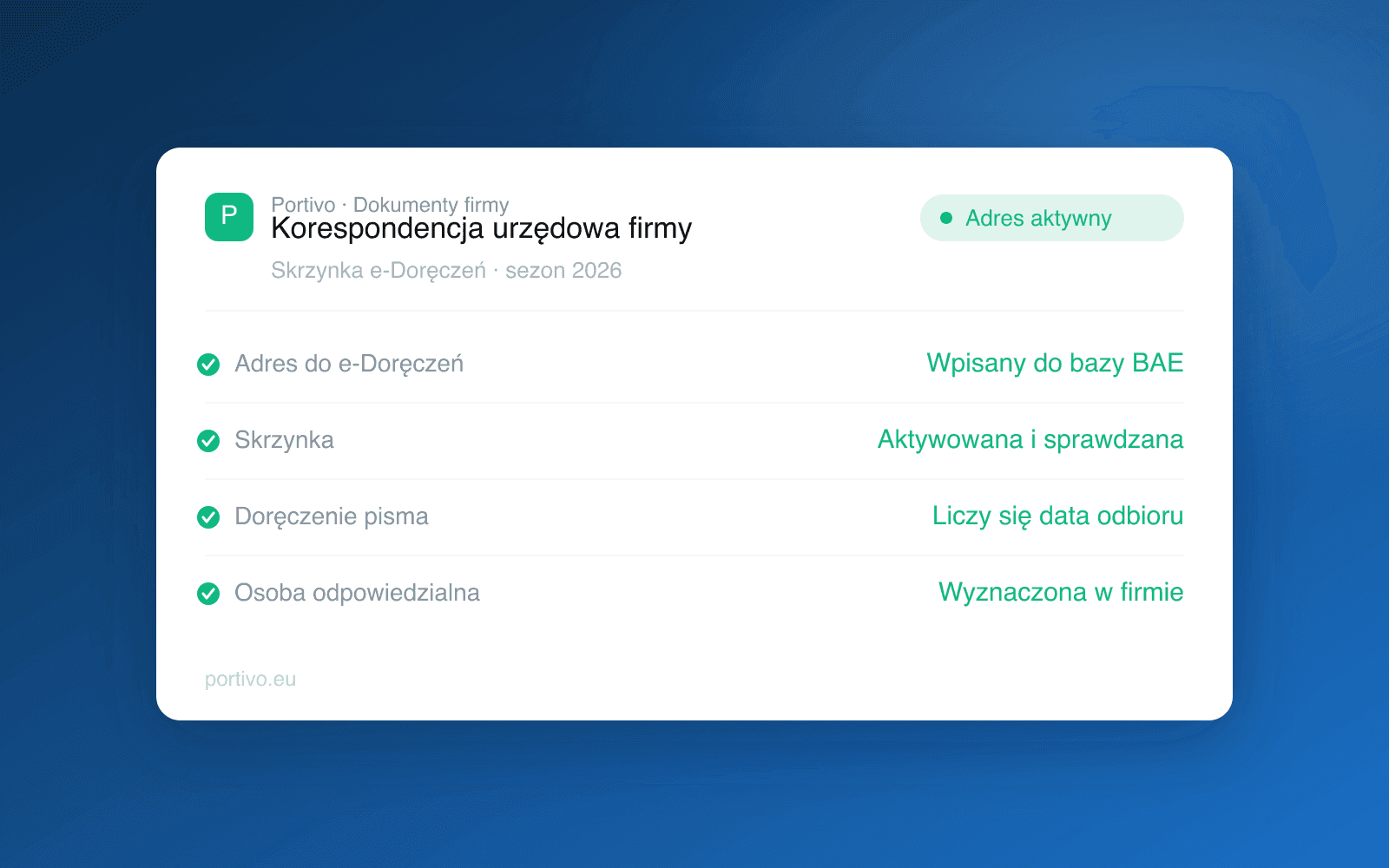
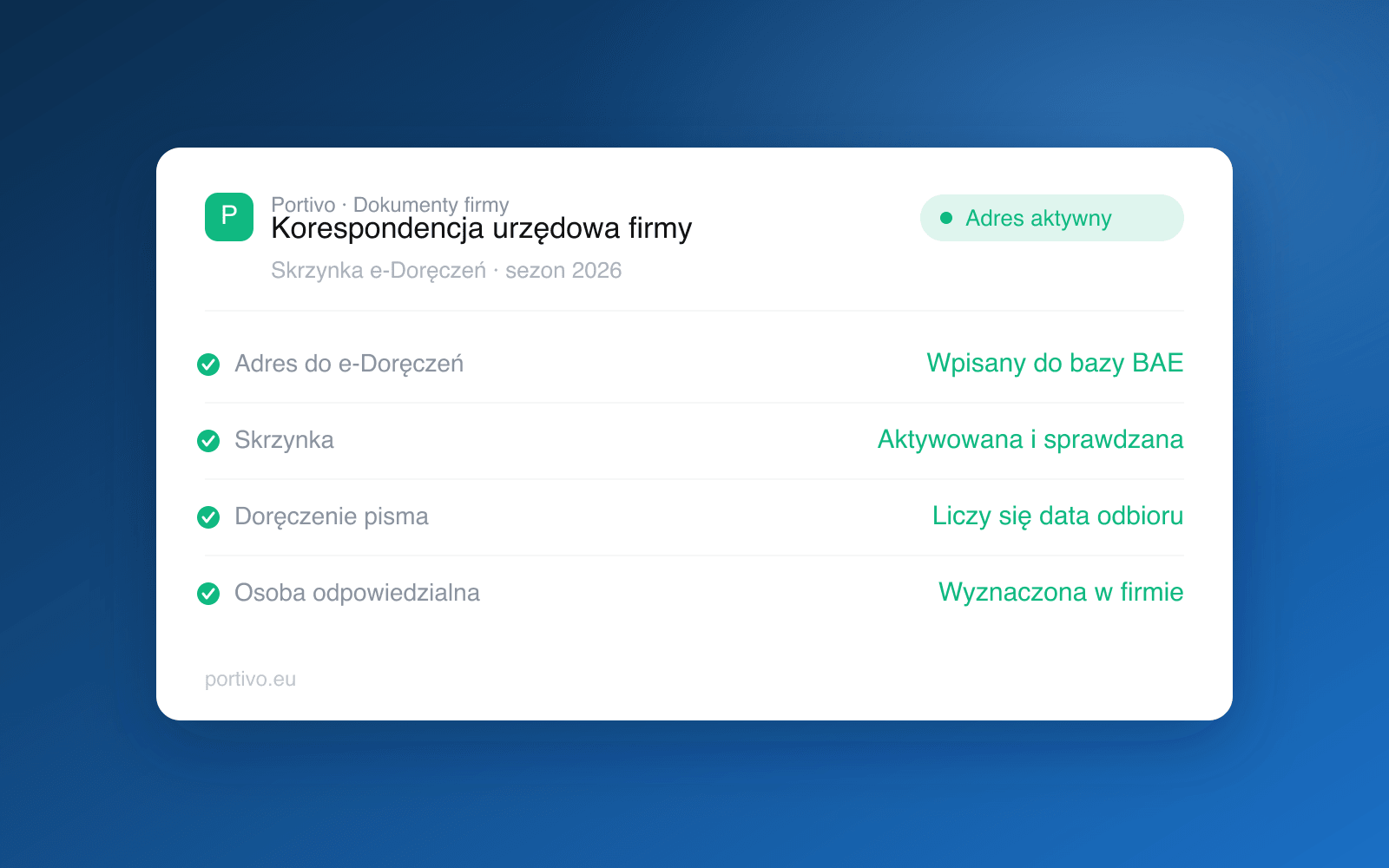
You apply for an electronic delivery address through the biznes.gov.pl portal, signing in with a trusted profile, a qualified signature or an e-ID. In the application you give your company details and name an inbox administrator, the person who will manage it. The address alone is not the end of it: the inbox still has to be activated, because only activation switches on delivery to that address. This is the most common slip, because companies set up an address "just in case", never activate it, and are left believing the matter is handled.
Do not leave the application to late September 2026. If you file through a representative, or the company has several partners, you will need electronically signed attachments, and that takes more than one evening.
Who at the company should watch the inbox
This is an organisational question rather than a legal one, and in practice it decides whether the obligation is neutral or expensive. Two arrangements work. First: the owner as inbox administrator, with a fixed checking slot, for example every morning before handovers. Second: a designated office person with access rights and clear instructions on what to escalate and what to file. We cover splitting roles in a seasonal team in our guide to the team at a charter company, and hygiene around data and account access in our guide to protecting customer data in charter.
e-Delivery and the rest of your digital obligations
e-Delivery is the third piece of the operator's digital puzzle, alongside electronic invoicing and information duties towards customers. None of them replaces the others: the delivery address handles official correspondence, invoices run on their own track, and customer documents stay in the booking system. We gathered the tax and GDPR context in our guide to KSeF and GDPR at a charter company, and seasonal settlements in our guide to taxes and accounting in charter. If you are only now setting up a business, the delivery address is created together with the registration, which we cover in our guide to starting a charter company.
In Portivo we keep booking-related documents: contracts, handover forms, payment confirmations. The e-Delivery inbox is a separate, state-run tool and no booking system replaces it. What is worth doing is keeping the two document flows apart inside the company: official correspondence to the ADE inbox, customer documents to the system.
Frequently asked questions
Does a sole trader also need e-Delivery?
Yes. Businesses registered in CEIDG before 1 January 2025 must have an electronic delivery address from 1 October 2026. Businesses registered from 2025 onwards set up the address together with their entry.
Does setting up an electronic delivery address cost anything?
Setting up an address within the public registered electronic delivery service is free for a business. Commercial qualified providers may charge, if you choose one instead of the designated public operator.
What happens if I do not collect a letter from the inbox?
As a rule the letter counts as delivered once the statutory period counted from its arrival in the inbox has passed, much like an uncollected recorded letter. Response deadlines run regardless of whether anyone opened the inbox.
Is having the address enough to meet the obligation?
No. The inbox still has to be activated, and the company should name an administrator. An entry in the electronic address database without activation does not switch delivery on.
Can a booking system collect e-Delivery mail for me?
No. It is a separate state service tied to your company data in CEIDG or KRS. A booking system handles customer documents: contracts, handover forms and payments, not official correspondence.
Want to get customer documents in order before the next digital obligation lands? See how Portivo's handover and documents module works, check pricing that depends on fleet size or book a meeting.