The team in a charter company: roles and a season without chaos
A charter season is too much work for one person. How to split roles in the team, onboard seasonal staff fast and give everyone one shared fleet calendar.
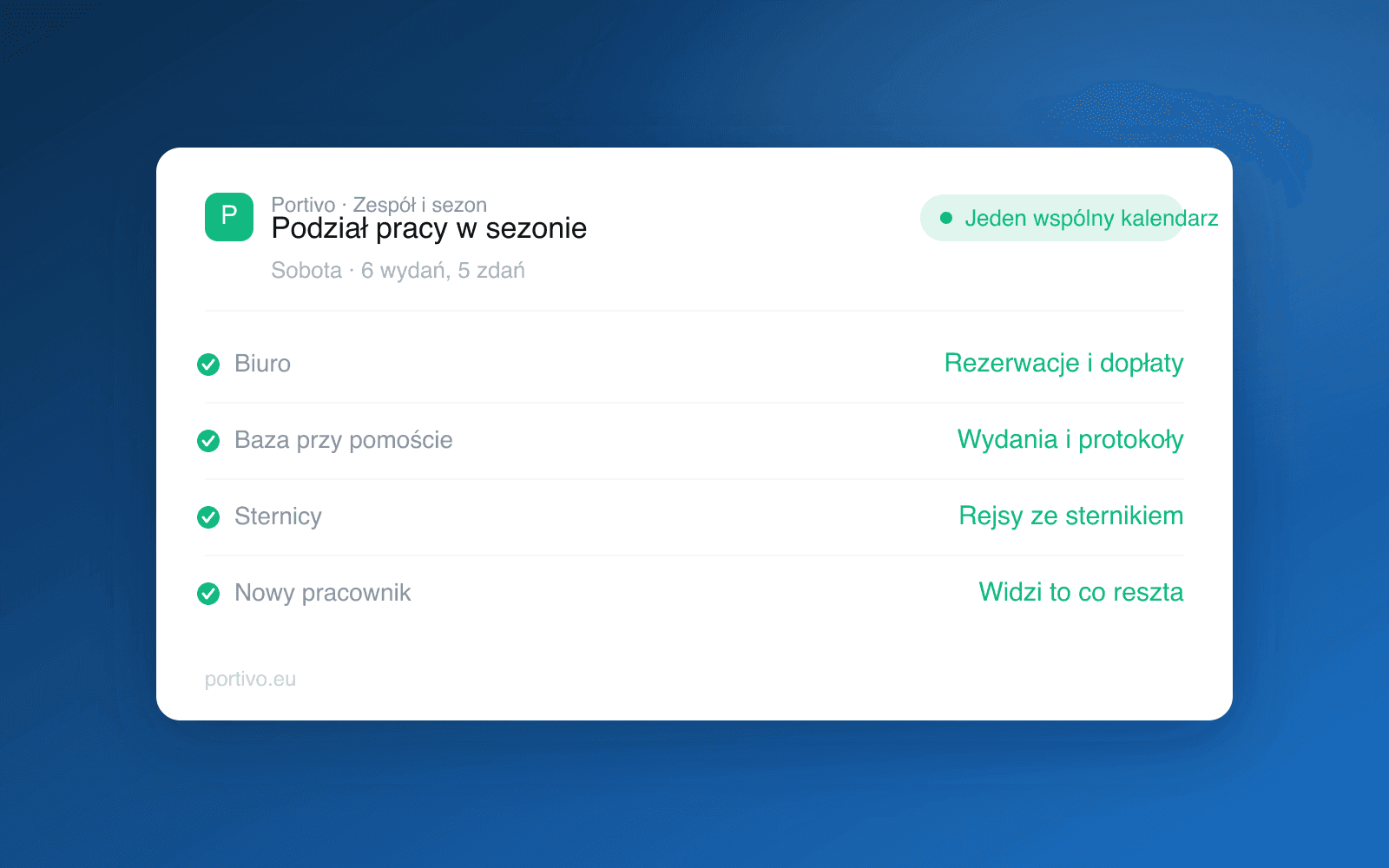
A charter company grows until the owner can no longer handle everything alone, and that moment usually arrives in mid-July. A well-organized seasonal team comes down to three things: a clear split of roles, procedures written down outside the boss's head, and one shared fleet calendar everyone can access. Below is how to set it up before Saturday handovers turn into chaos.
Who you need in season
Job titles are secondary, what matters is covering four areas of work. In a small fleet one person combines two areas, in a bigger one each area has an owner.
| Role | Responsible for |
|---|---|
| Office / bookings | Inquiries, offers, bookings, balance payments, documents |
| Dockside base | Boat handovers and returns, protocols, fueling, cleaning |
| Service | Faults, inspections, boat readiness between charters |
| Skippers | Skippered cruises, training, emergency boat transfers |
The owner in this setup is not another operational role, but the person who watches the whole: prices, occupancy and quality. If you still personally hand over every yacht and answer every phone call, you do not have a charter company, you have a seasonal job with no holidays. What a well-organized operation looks like from inquiry to boat return is covered in our complete guide to charter fleet management.
Saturday: the bottleneck of the whole week
The real test of a team is turnaround day, when several boats come back in the morning and the next ones go out in the afternoon. In that window everything happens at once: protocols, fueling, cleaning, minor faults and customers who arrived too early. What saves you is an order planned in advance and a procedure for every station. Who receives which boat, who inspects it, who cleans it, who hands it over: if those answers exist only in your head, every absence of yours stops the dock.
A handover protocol done in an app, with photos and a fixed checklist, levels the quality of work between people: a new person at the base inspects the boat against the same list as your most experienced employee. How that works in practice is shown in our article on the digital handover protocol.
A seasonal worker productive from day one
A seasonal employee should be independent in days, not weeks. That takes three things: simple written procedures, a system that guides them by the hand, and a clear boundary of authority, meaning what they may do on their own and what requires a call to the boss. The one-shared-shift rule works well: the new person walks through a full turnaround day with someone experienced, and from the next day works alone following the checklists.
The biggest enemy of fast onboarding is tribal knowledge, the things all the old hands know and the new ones discover through mistakes: that the Antila has a temperamental bow thruster, that the toilet key hangs in the box, that the customer with the Friday handover always arrives early. Write it down. An hour of writing procedures in September saves dozens of phone calls in July.
One calendar instead of a notebook and a group chat
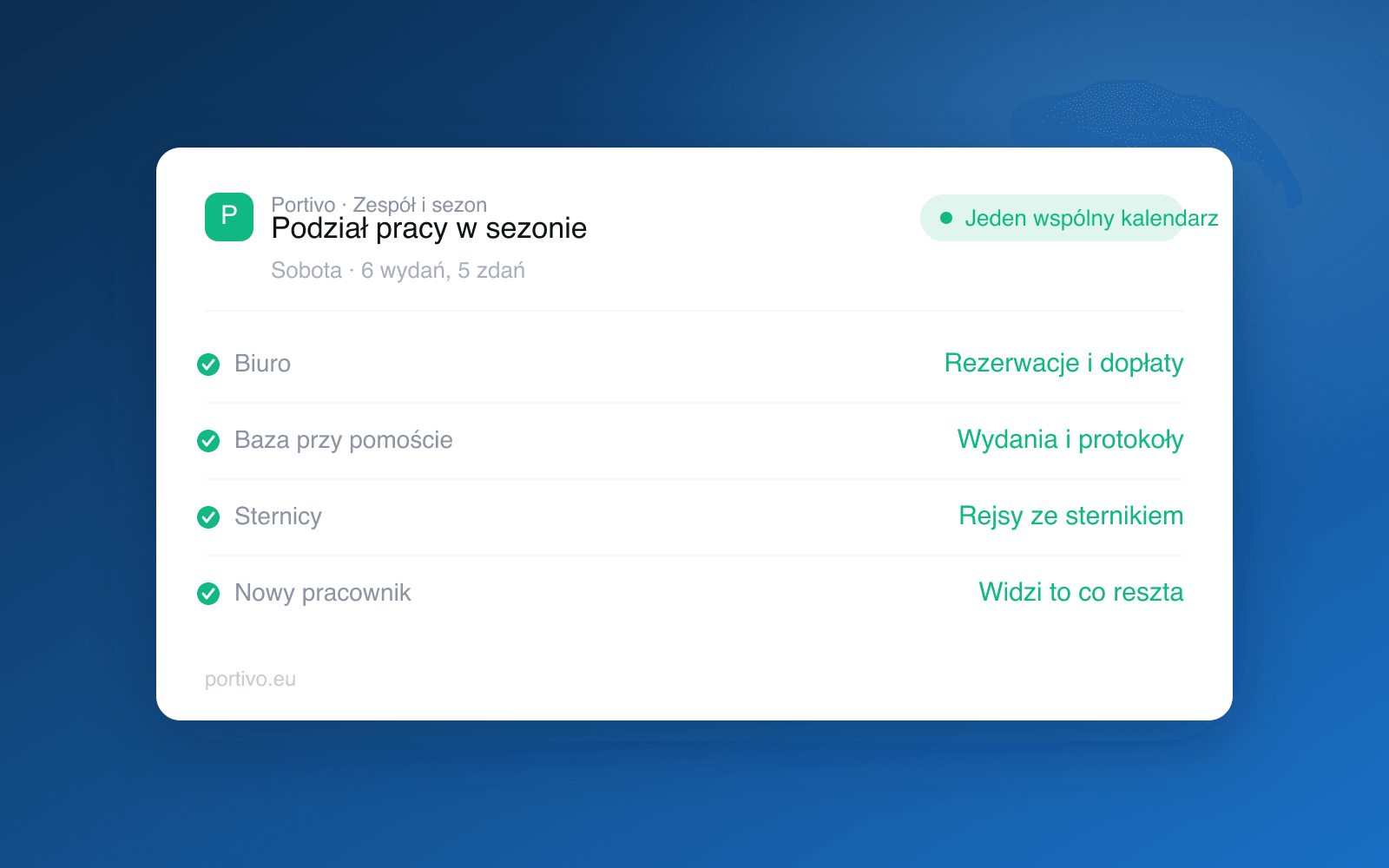
The office notebook, the hangar whiteboard and the group chat share one flaw: each shows a different state of the world. The results are double bookings, handovers without the balance paid and boats cleaned in the wrong order. In a booking system there is one fleet calendar: the office sees the same thing as the dockside base, and a change made on a booking is instantly visible to everyone. Why scattered information ends in date conflicts is dissected in our article on double bookings.
In Portivo the team's whole operation, from bookings through payments to protocols, happens in one panel with six modules, so a new person learns one tool, not five. See the bookings module, then book a meeting: we will show you how to set the system up for your team before the season ends.
Frequently asked questions
From how many boats do I need a team?
There is no fixed threshold, the signal is turnaround day: when returns and handovers overlap so much that one person cannot do the protocols properly, it is time to split roles or bring in seasonal help.
How do we split duties in a two-person company?
The office-and-dock split usually works: one person runs bookings, payments and customer contact, the other runs handovers, returns and service. A shared fleet calendar then matters more than anything else, because it replaces constant asking around.
What should a seasonal worker get on day one?
Handover and return checklists, access to the system with the fleet calendar, an emergency contact list and one full shift with an experienced person. That is enough to work independently from day two.
How do I stop the company depending on one person?
Move knowledge from heads into procedures and the system: protocols with checklists, notes on bookings, written rules for prices and deposits. A company that anyone on the team can run from a phone is also easier to scale.