Yacht handover protocol: how to run it digitally
A yacht handover protocol without disputes: what it must contain, how to run it digitally with photos and e-signature, and how to tie it to the deposit.
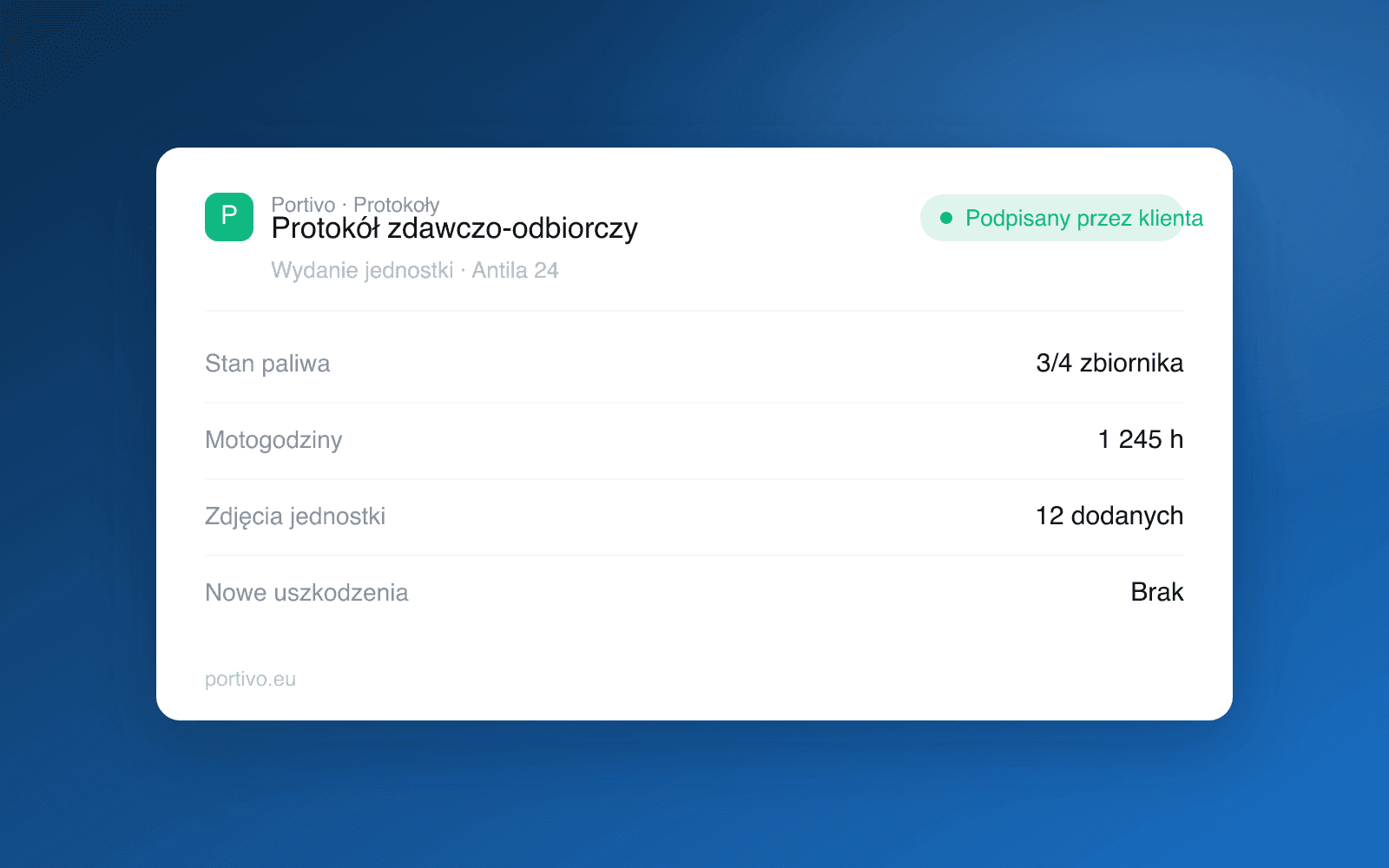
A handover protocol is the document that records a vessel's condition at handover and return: fuel, engine hours, equipment, damage. In a charter company it is not a formality; it is the only hard evidence in any deposit dispute. A paper protocol on a clipboard works while the season is small. With a dozen handovers every Saturday it starts losing photos, signatures and versions. Here is how to run the process digitally.
Why the protocol settles disputes before they start
A typical charter dispute goes like this: the customer returns the boat, the operator finds a scratch on the hull, the customer claims it was there at pick-up. Without a documented initial condition it is word against word, and both sides lose: the operator deducts from the deposit "by feel", the customer leaves a one-star review. A protocol with a date, photos and both signatures closes the topic in a minute: the damage is either new or it is not.
Competing rentals publish protocol templates as .doc attachments to print out. It is a step in the right direction, but paper has three flaws: the photos live elsewhere (on the boatswain's phone), the archive needs a binder, and the vessel's history never adds up. After the season you cannot answer when the railing crack appeared and who was chartering then.
What a good protocol must contain
| Section | What you record |
|---|---|
| Identification | vessel, booking, date and time, people present |
| Technical state | fuel, water, batteries, engine hours, engine |
| Equipment | lifejackets, anchor, mooring lines, dinghy, galley gear |
| Damage | existing scratches and faults, each with a photo |
| Photo documentation | both sides, bow, stern, cockpit, interior: the same frames at handover and return |
| Signatures | operator and customer, at handover and at return |
The key rule: the same fields and the same photo frames at handover and at return. You then compare two symmetrical records, not a pick-up note against the boatswain's memory.
What a digital protocol looks like in practice
In Portivo, protocols are one of the system's six modules, alongside bookings, payments, offers, the website and marketing. The protocol is pinned to the booking: the boatswain opens it on a phone, walks through the technical state fields, adds photos of the vessel straight from the camera and collects the customer's signature on screen. The return works the same way, on the same fields, so differences are visible immediately. The vessel's whole history, protocol to protocol, stays in the system.
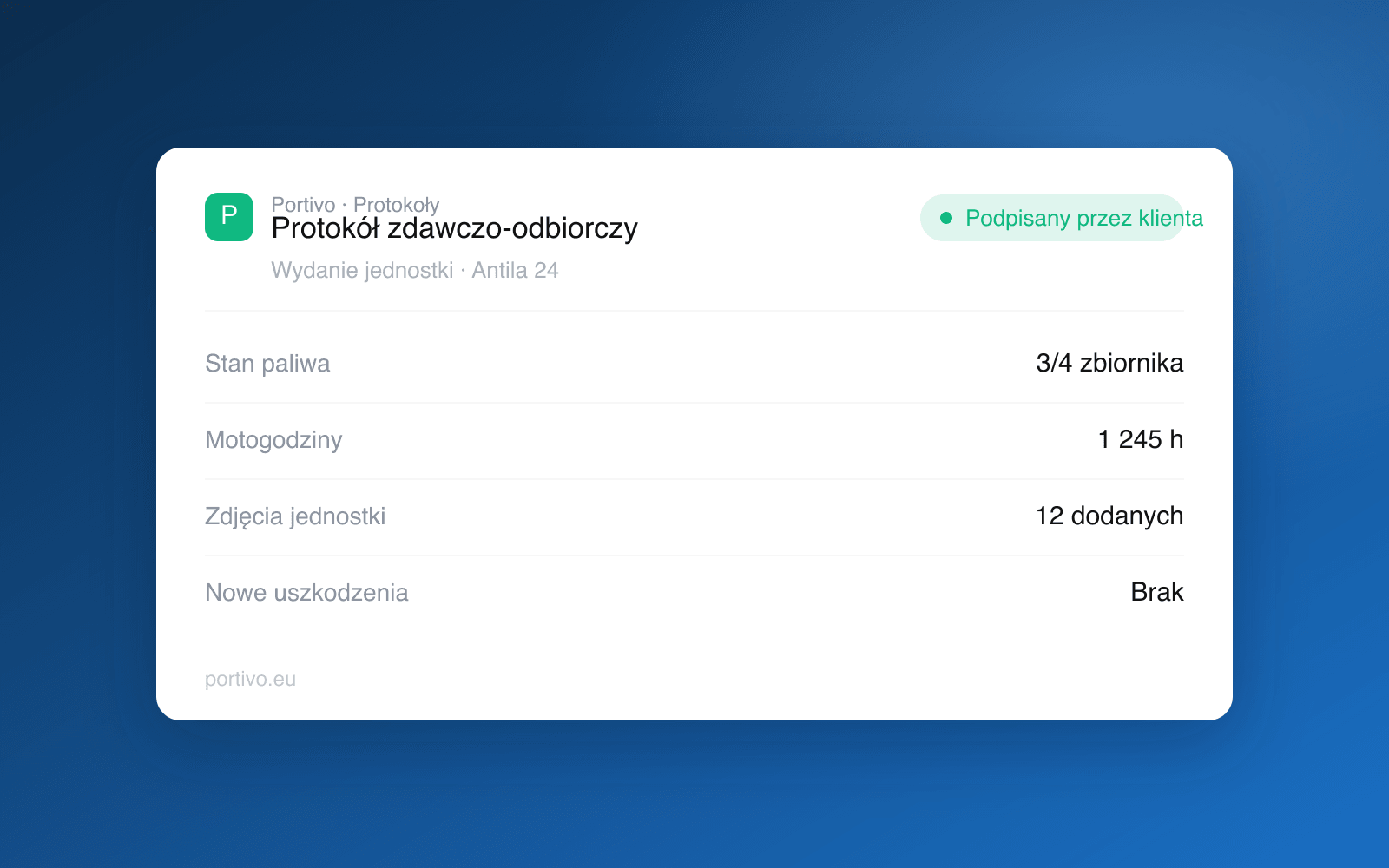
Because the protocol lives in the same system as payments, settling the deposit stops being a separate process. You record the damage in the return protocol, document it with a photo and settle the appropriate part of the deposit, and the customer sees the basis for the deduction instead of a vague claim. How to set up the deposit itself, from the hold form to the refund deadline, is covered in our guide to the charter security deposit.
Protocol, contract and verification: one chain of documents
The protocol works best as the last link of a digital chain: the customer books online, goes through identity verification and signs the contract electronically, and at the quay only the handover protocol remains. All documents of one booking, from the contract to the return protocol, sit in a single record. That is the difference you feel on a Saturday morning with six handovers in a row: no searching, no printing, next crew.
Portivo promises up to 70% less time spent on admin thanks to this automation: it is a product promise from our landing page, not an audited metric, but the mechanism is plain to see. Every document is created once, in the right place, and lands where it will be needed. How to wire this together at fleet level is described in our guide to charter fleet management.
Where to start in your company
You do not need a revolution mid-season. Start by unifying the protocol template for the whole fleet: the same fields, the same order of photo frames. Then move it into the system your bookings live in, so the vessel's history builds itself. Details of the module are on the handover protocols page.
Frequently asked questions
Is a handover protocol legally required?
The law does not mandate it, but without one, settling damage and deposits rests on someone's word. In market practice a protocol at handover and return is the standard of every professional rental.
Does a digital protocol carry the same weight as paper?
Yes. What counts is the content, the date and both signatures, not the medium. A protocol with an electronic signature and photos with metadata is stronger evidence in a dispute than paper without photo documentation.
How many photos should a handover include?
The minimum is a set of frames covering the whole boat: both sides, bow, stern, cockpit and interior, plus a separate photo of every existing damage. A dozen or so photos suffice if the frames are repeatable.
What if the customer disagrees with the return protocol?
The customer's remarks are written into the protocol, and the dispute is settled by comparing handover and return photos. That is exactly why symmetrical frames and dates in metadata matter more than the length of the form.
Want to see how protocols, deposits and contracts work in one system? Check the pricing or book a meeting.