How to start a charter company: paperwork, fleet and the system that holds it together
How to start a boat charter company in Poland: paperwork, boat registration, insurance, pricing and online sales. A practical checklist before your first season.
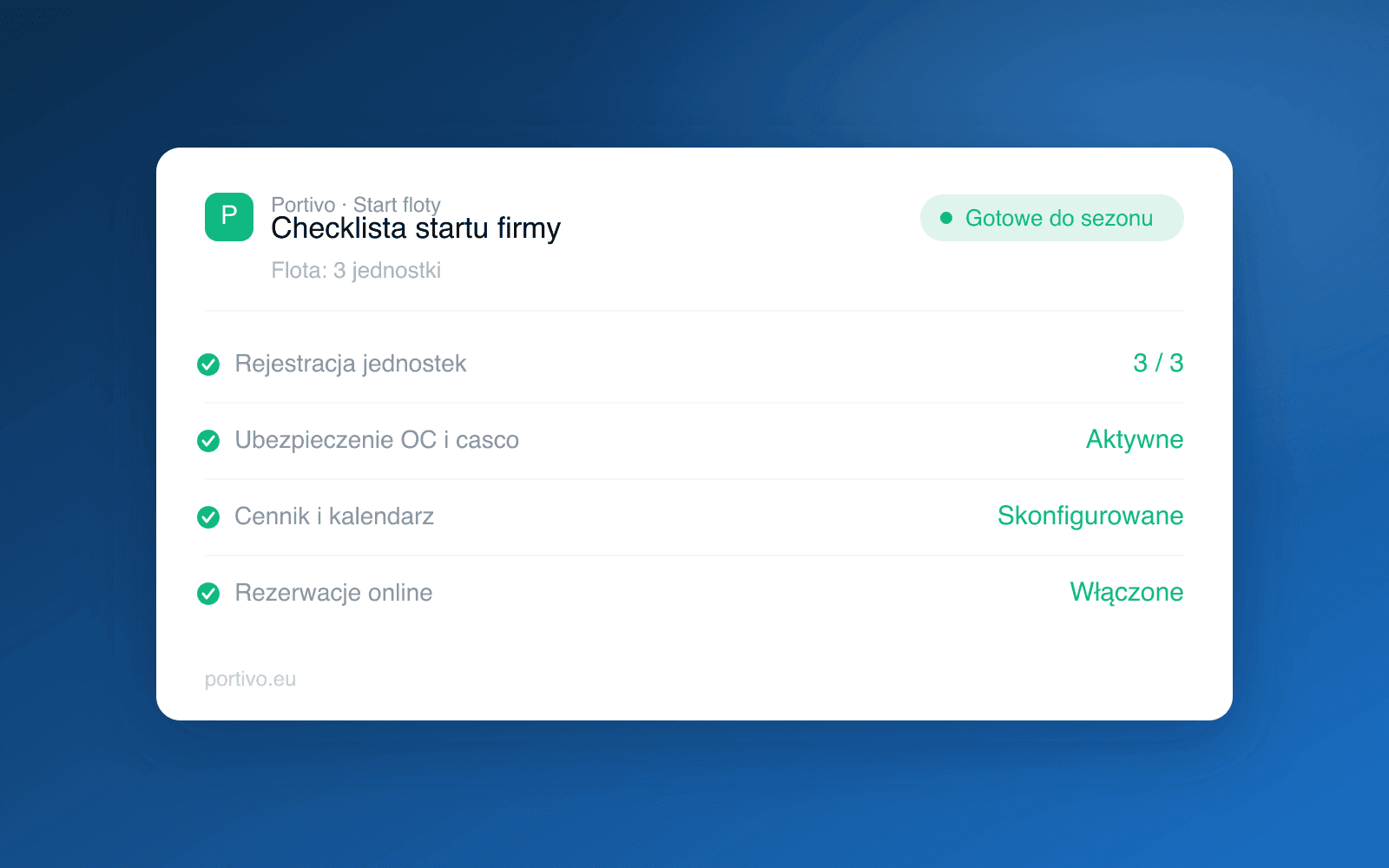
Registering a charter company is faster than filling its booking calendar. The paperwork can be closed in a few weeks, but whether the business earns money is decided by preparation: a thought-through model, an insured and registered fleet, sensible pricing and sales that do not end at a phone number. Here is a practical launch map: from the first boat to a working booking system.
Step 1: choose your business model
Before you buy the first unit, decide what you are actually selling:
- Daily and weekly charter (sailing yachts, houseboats): higher revenue per booking, a season concentrated from May to September, the customer takes the unit over for days.
- Hourly rental (motorboats, small boats): many short transactions, higher rotation, location matters more. We compare both models in hourly vs daily rental.
The model determines everything downstream: the fleet, the prices, the staff and how hard your calendar has to work.
Step 2: paperwork and boat registration
To start, a sole proprietorship or a limited liability company is usually enough, with business activity codes covering recreational equipment rental. Then come the waterside obligations:
| Area | What needs to be covered |
|---|---|
| Boat registration | sailing yachts over 7.5 m and units with engines over 15 kW are subject to registration |
| Technical condition | surveys, rescue equipment compliant with regulations, fire extinguishers, means of communication |
| Insurance | business liability, hull insurance for the units, personal accident cover for crews |
| Customer contracts | terms and conditions, the charter contract, a cancellation policy, handover protocols |
Regulations and registration thresholds change over time, so verify the current requirements for your type of units before launch. This article is a map, not legal advice.
Liability and hull insurance is not a cost you can postpone to the second season. One serious collision of an uninsured unit can eat a young company's yearly revenue.
Step 3: a fleet that earns its keep
The first decision: buy or manage? Besides buying your own units, a popular model is managing boats entrusted by private owners in exchange for a revenue share. It lets you grow without freezing capital, but demands iron operational discipline: the owner wants to see occupancy and settlements in black and white.
Count the full cost of keeping a unit too: marina berth, winter storage, surveys, small repairs after every charter. The full process of running a fleet season after season is laid out in our guide to charter fleet management.
Step 4: seasonal pricing from day one
The most common rookie mistake is one rate for the whole year. Charter demand is extremely seasonal: July sells itself, the May long weekend and September need encouragement. Set up price seasons right away, minimum booking lengths in the peak and weekend rules outside it. How to structure it step by step is shown in our post on dynamic pricing.
Step 5: sales, or where the bookings will come from
This is where most new companies lose. Being listed on classifieds portals and having a maps profile is not enough if every booking requires a phone call and a bank transfer. The minimum plan for the first season:
- Your own site with a calendar and online payment: the customer checks availability, books and pays immediately, also in the evening and at the weekend.
- External channels (portals, aggregators) as an occupancy booster, with availability synchronised from one calendar so you never risk double bookings.
- Direct bookings as the long-term goal: every commission you do not hand to an intermediary stays in the company. The strategy for building your own channel is described in our post on direct bookings without OTA commissions.
Step 6: a system instead of a notebook
A notebook and a spreadsheet work exactly until two people book the same yacht for the same weekend. That is why it pays to run on a system that combines the calendar, bookings, payments and documents from day one.
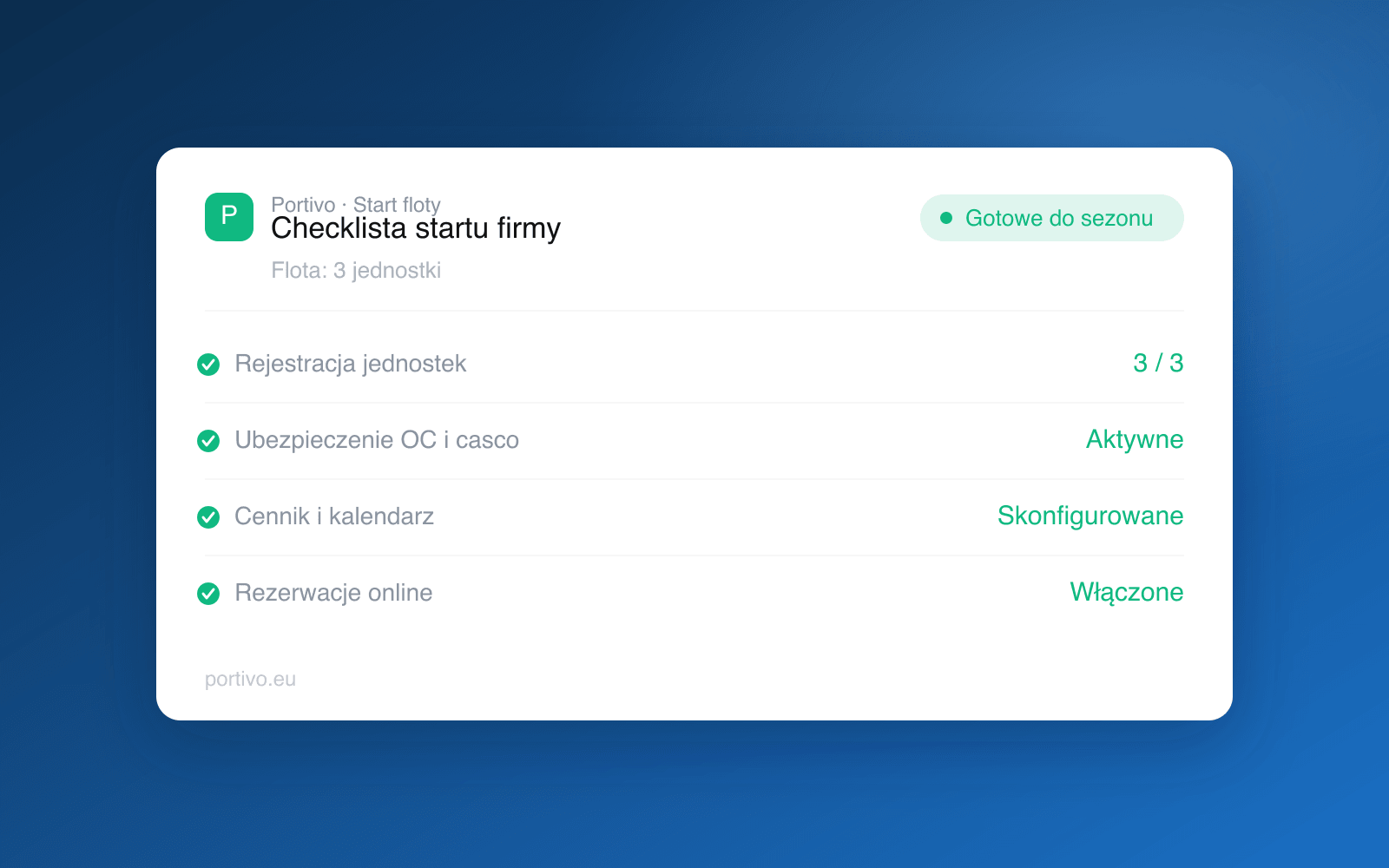
Portivo ties together 6 modules in one dashboard: bookings, payments, offers, a customer site with online booking, marketing and handover protocols. The customer pays by card, BLIK, Przelewy24 or bank transfer, and documents and deposits stop being manual work. Pricing depends on fleet size; the details are on the pricing page.
Frequently asked questions
How many units do you need to start?
There is no magic number: there are profitable companies with two hourly boats and ones that launch with five yachts under management. Occupancy matters more than the count: three units sailing all season beat eight standing at the dock.
Does the owner of a charter company need a sailing licence?
No; the qualifications must be held by the person skippering the yacht, that is your customer or a hired skipper. It still pays to know sailing: it is easier to assess a unit's condition after a charter and to talk to customers.
Start with portals or with your own site?
In parallel. Portals bring the first customers fast, but commissions hurt and the customer is not yours. Your own channel with online booking builds slower, but every booking stays entirely with you.
How much does a charter management system cost?
In Portivo the pricing depends on fleet size and is confirmed at a meeting. The fastest route: book a short call, we will show the system on your case and price the variant for your fleet.