Consumer law in chartering: withdrawal, terms and the operator's obligations
An online charter booking is a distance contract. Check when the customer has no right of withdrawal, what your terms must contain and which consents to collect.
A customer who books a charter over the internet concludes a distance contract with you under the Polish Consumer Rights Act. That triggers specific information duties on your side and one exemption crucial for the industry: handled well, it protects you from "I changed my mind" cancellations, handled badly, it can cost you the whole booking revenue. Here is how it works and what must be part of your booking process. This article organises the rules, but it is not legal advice for your specific situation.
Can the customer withdraw from a booking within 14 days
The general rule says a consumer may withdraw from a distance contract within 14 days without giving a reason. Charter, however, falls under the exemption of art. 38 point 12 of the Consumer Rights Act: the right of withdrawal does not apply to services related to leisure, if the contract specifies the day or period of the service. A yacht booking for specific dates meets both conditions, so the customer cannot simply "return" a charter like shoes bought online.
This exemption does not work in your favour automatically, though. You must handle it correctly: inform the customer before the contract is concluded that no right of withdrawal applies, and be able to prove you did. Missing that notice is the simplest road to a dispute the operator is positioned to lose.
What the online booking process must contain
| Element | When | Why |
|---|---|---|
| Terms with the charter conditions | Visible before payment | The basis of the contract: prices, deposit, cancellation rules |
| Notice about no right of withdrawal | Before the contract is concluded | Effective exclusion of the 14 days under art. 38 point 12 |
| A specified service date | In the contract and confirmation | A condition of applying the exemption |
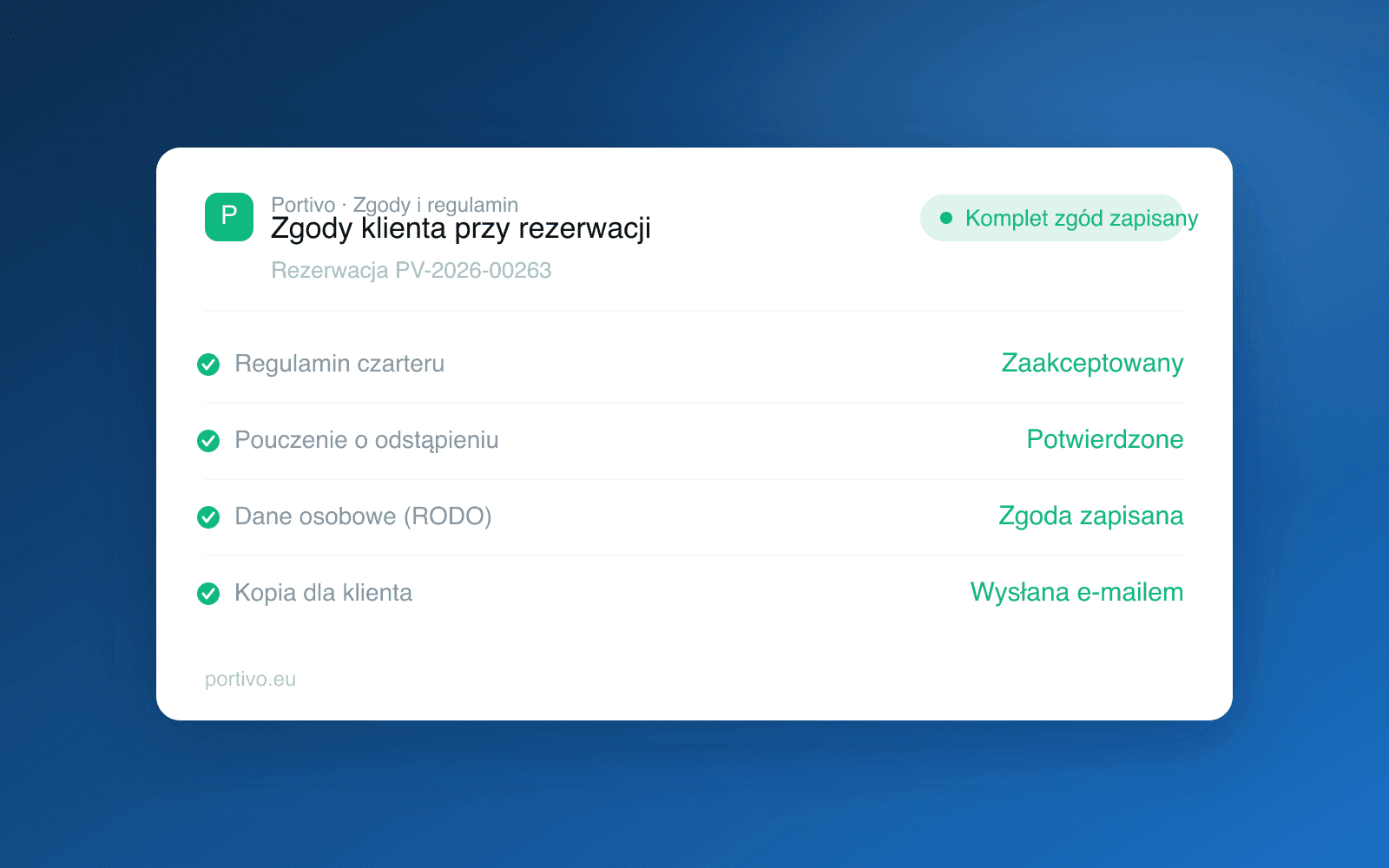
| GDPR consents | When data is provided | Lawful processing of customer data |
| Confirmation of the contract | Right after booking, durable medium | A statutory duty, e.g. an e-mail with the full terms |
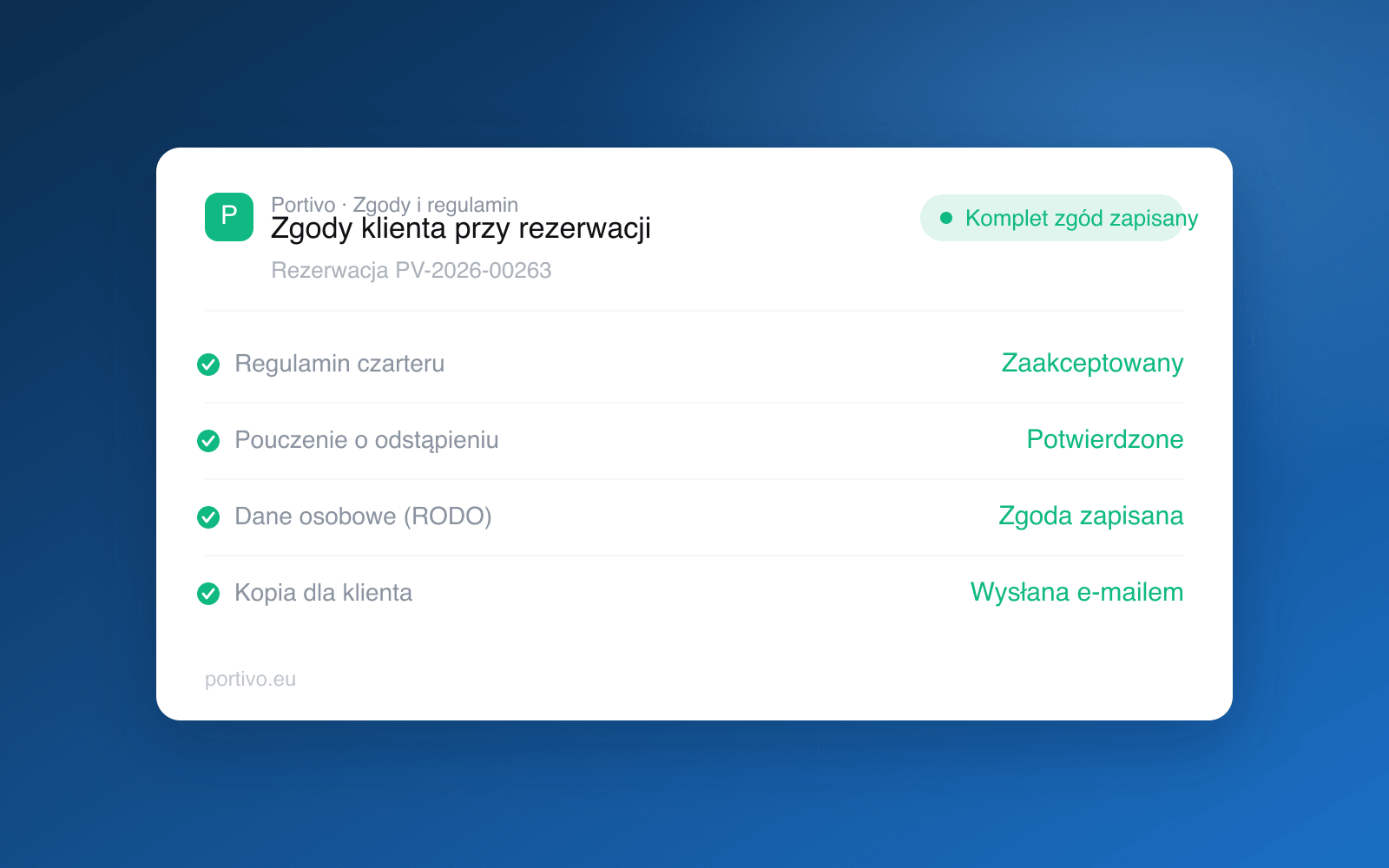
The key word is "prove". A year later, at complaint time, being convinced the customer "surely saw the terms" is not enough: you need a record of which version of the document they accepted, when, and with which booking.
Cancellations: deposit, advance and contractual terms
Since statutory withdrawal does not apply, cancellation rules are set by your contract. Market practice works in layers: the closer to the date, the smaller the refund, because the harder it is to resell the slot. Design those thresholds deliberately and name the payment unambiguously: under Polish law a "zadatek" (forfeitable deposit) and a "zaliczka" (refundable advance) have different legal effects on cancellation. The differences and good practice are covered in cancelling a charter booking, and designing the whole payment schedule in our guide to payment policies in chartering.
Cancellation terms must not be abusive: a clause like "the payment is forfeited in full regardless of the cancellation date" can end up in the register of prohibited clauses. Thresholds should reflect your real loss, meaning the chance of reselling the slot.
Personal data and documents
At booking you collect a full set of personal data, sometimes also document data for the charter contract. GDPR requires a basis for processing, information for the customer and reasonable retention: do not copy ID cards "just in case" and do not keep scans in your mailbox. How to organise data and invoices in a charter company is covered in KSeF and GDPR, and the contract itself in the charter contract guide.
Put it in a system, not a binder
The duties above sound scary only when handled by hand. In a booking system they are configuration, not daily work: the terms and notices display at checkout before payment, consents are recorded with the booking together with the date and document version, the confirmation with full terms goes out automatically, and the contract with the specified dates is signed electronically. That is how the Portivo bookings module works: the customer walks through a lawful process without printing anything, and you keep full proof with every booking.
FAQ: consumer law in chartering
Can the customer withdraw from a charter booking within 14 days?
No, if the contract concerns a leisure-related service and specifies the dates, and the customer was informed about the lack of the right of withdrawal before concluding the contract. That is the exemption of art. 38 point 12 of the Consumer Rights Act.
Do I have to refund the payment when the customer cancels?
It depends on your terms and the nature of the payment: a forfeitable deposit (zadatek) is in principle kept on cancellation, an advance (zaliczka) is settled and returned. Refund thresholds must be set upfront and must not be grossly unfair to the consumer.
Are website terms enough as a contract?
Terms are the basis, but the process matters: the customer must be able to read them before payment, accept them consciously, and after booking receive a confirmation of the conditions on a durable medium, for example by e-mail.
What about phone bookings?
A contract concluded by phone is also a distance contract with the same information duties. The simplest way is to close it electronically: send a payment link with the terms and consents, so the customer goes through the same documented process as when booking from the website.
Want consents, terms and confirmations handled automatically with every booking? Book a short meeting: we will show how Portivo walks the customer through a lawful process from the calendar to a signed contract.