Provisioning a yacht: shopping list and a menu for a week aboard
What to buy for a week on a yacht, how much water to take and how to cook on two burners. A ready shopping list, a day by day menu and galley packing rules.
On a yacht you usually have two burners, a fridge the size of a drawer and six people who are ravenous after a day on the water. Good provisioning is not about culinary talent, it is about a plan: what to buy before the cruise, what to top up along the way and what can be cooked in one pot while the boat heels. Below is a ready shopping list, a menu for a week and the rules that save space, water and nerves.
The three layer rule
Provisions for a week fall into three layers. The first is shelf stable food bought before departure: pasta, rice, groats, tinned fish and beans, tomato passata, olive oil, spices, crispbread, nuts and dried fruit. The second is fresh food for the first two or three days: vegetables, eggs, hard cheese, cured meat. The third is topping up along the route, because practically every larger harbour on the trail has a shop with bread, dairy and fruit.
This split makes sense both financially and logistically: you do not block the whole fridge on day one, you do not throw out spoiled food mid week, and you can react to the weather. When planning the route it pays to mark the harbours with shops, using our week long Masuria itinerary and the overview of harbours and marinas in Masuria.
Water, gas and the fridge: three galley constraints
- Tank water is not drinking water. It is fine for washing, boiling pasta or making tea, but take bottled water for drinking. Count on roughly 2 litres of drinking water per person per day, more in the heat.
- The fridge is smaller than you think. On smaller boats it is a cool box running off the battery, which loses power quickly when you are moored without charging. Do not plan for frozen food at all.
- Gas is shared for the whole cruise. Two burners and a cylinder replaced by the operator. One pot meals are not a fashion, they are the bill for gas and space.
- The sink has a drain, but the lake is not one. Food scraps, fat and cleaning products do not go overboard, and rubbish goes ashore in a harbour.
A week's menu that needs no kitchen
| Day | Breakfast | Lunch or dinner |
|---|---|---|
| 1 | Sandwiches with whatever is fresh | Pasta with tomato sauce and tuna |
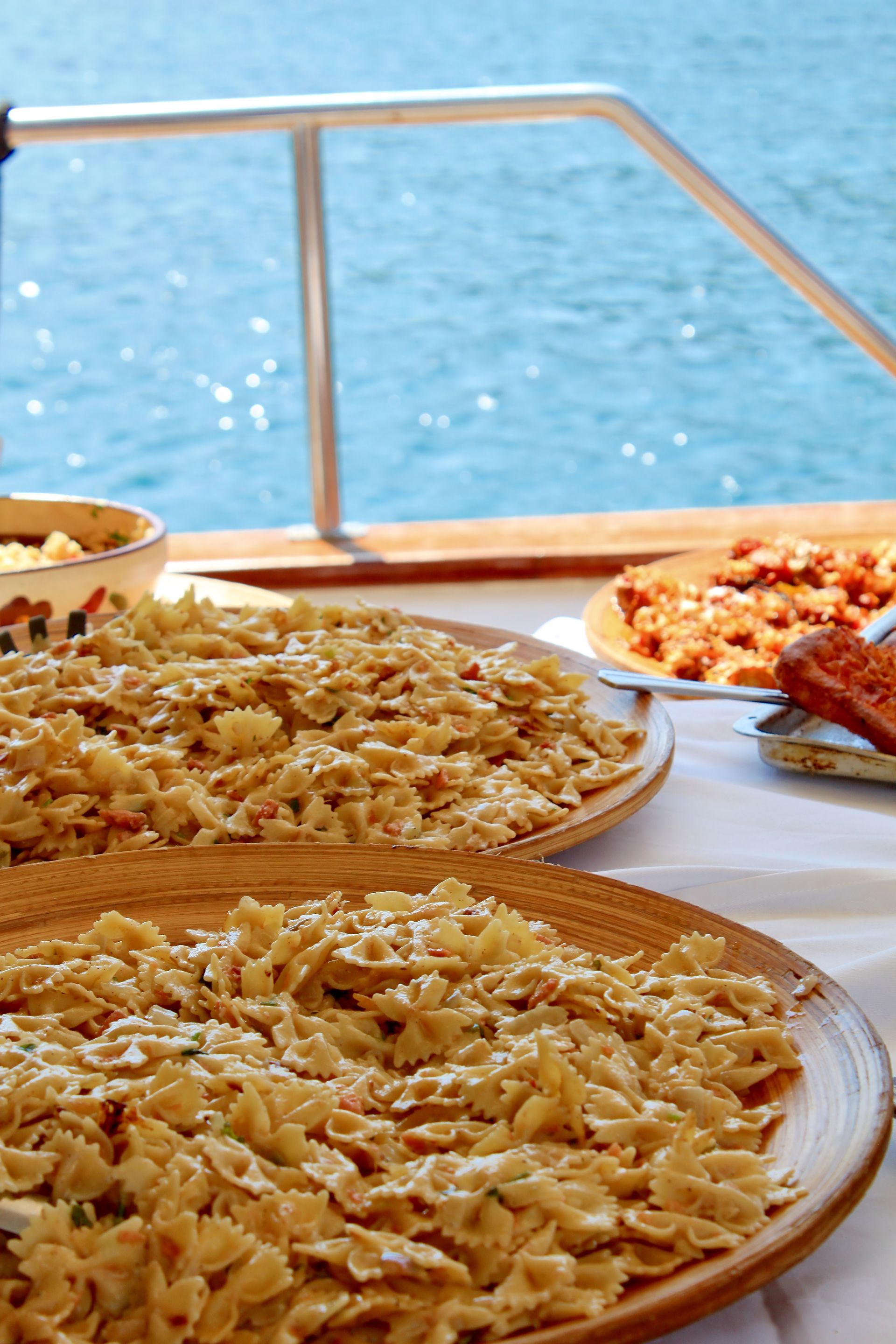
| 2 | Scrambled eggs with bread | Pasta salad with vegetables and feta |
| 3 | Porridge with dried fruit | Rice with vegetables and tinned chicken |
| 4 | Sandwiches with cheese and egg spread | Soup bought in a harbour plus bread |
| 5 | Pancakes or flour fritters | Groats with mushroom sauce and sausage |
| 6 | Yoghurt with granola and fruit | Barbecue in the harbour or a meal ashore |
| 7 | Leftovers, sandwiches, coffee | Eating out after handing the boat back |
This is a skeleton, not a verdict. The rule that saves every cruise: one hot meal a day, the rest served cold. Experience suggests a second one: always cook one portion too many, because yesterday's cold pasta salad is the best breakfast there is while you are hoisting sails.
A shopping list for four people for a week
Treat this as a starting point and scale it with the number of people:
- Dry base: 1.5 kg pasta, 1 kg rice, 4 to 6 sachets of groats, 1 kg flour, 500 g oats, 2 packs of crispbread.
- Tins and jars: 4 tins of tuna or mackerel, 3 tins of beans and chickpeas, 2 tins of sweetcorn, 2 packs of tomato passata, jam, peanut butter.
- Fresh for the start: 20 eggs, 500 g hard cheese, cured meat, tomatoes, cucumbers, peppers, onions, garlic, lemons, apples.
- Drinks: 2 litres of drinking water per person per day, coffee, tea, something sweet to drink for the children.
- Spices and staples: salt, pepper, paprika, oregano, stock cubes, olive oil, vinegar, sugar.
- Not obvious, but cruise saving: aluminium foil, bin bags, kitchen roll, biodegradable washing up liquid, a spare lighter, a tin opener.
Before you shop, ask the operator what the galley is equipped with. Pots, a frying pan, a chopping board, knives, a sieve and crockery are usually there, but the sets differ between boats. While you are at it, check whether bed linen and towels are included in the price or sold as an extra: we cover this in the article on charter extras.
Packing: fewer wrappers, more space
The galley loses against every cardboard multipack. Before you leave, move the food into soft, resealable containers and label them. Keep bottles and tins low, because they help stability, and cut glass down to a minimum. Eggs carried in a plastic box will survive a wave, in a cardboard tray they may not. Pack the first day's food separately so you do not have to unpack the whole store before casting off. The rest of the packing list for a cruise is collected in our guide to what to take on a charter, and the wider planning context is in the guide to holidays on the water.
FAQ: provisioning a yacht
How much water should I take on a cruise?
Count on roughly 2 litres per person per day for drinking and top up in harbours, because the tank water on a yacht is for washing and cooking rather than drinking. In hot weather and with children on board, plan a surplus.
Can you cook in the harbour on the pontoon?
Barbecuing and cooking off the boat is governed by the marina rules, so ask the harbour master. Many harbours have designated barbecue spots, while open flames alongside the boat are usually forbidden.
What should you eat in bad weather when cooking is impossible?
Go for food that is ready to eat without a kitchen: crispbread, tins, cheese, nuts, bars and fruit. A thermos of tea made in the morning saves an entire rainy day.
How do you store food without a working fridge?
Buy little and often, use the harbours along the route, and keep sensitive items in the lowest and coolest part of the boat. Cured meats, hard cheese, eggs and root vegetables last far longer on board than fresh dairy and meat.
Do you run a charter company and want to sell bed linen, cleaning or a starter provisioning pack without manual work? Book a short meeting: we will show you how to attach extra services to a booking in Portivo and settle them together with the charter.