Sailing etiquette in port: the rules that make marinas like you
Sailing etiquette in practice: quiet hours, helping with mooring lines, a tidy deck and manners on the quay. The rules that make a crew welcome guests.

Sailing etiquette is not drawing-room manners but a set of practical rules that let dozens of crews share one pontoon without conflict. Most of them are written down nowhere, yet a port instantly recognises a crew that knows them. We collected the rules that make the biggest difference: on arrival, while mooring, in the evening and when leaving the next day.
Arriving in port: harbour office first, quay second
In an unfamiliar port you do not moor "wherever is free" but where the harbour master directs you. Some berths are rented permanently, some are reserved for cruise boats, and guest berths are often marked. The standard order: call the harbour office by phone or come alongside the guest quay, report your boat's length and draught, ask for a berth and which side to moor on. In busy traffic rig fenders and lines on both sides before entering between the pontoons; last-moment manoeuvres are covered in our guide to mooring a yacht step by step.
When the port is full, rafting alongside another yacht is standard on popular trails. Before throwing your lines, ask the neighbouring crew for permission, and when crossing their deck later, cross over the bow, not through the cockpit.
Helping with lines: a reflex, not a favour
You see a yacht approaching the quay? Take the line. It is the oldest rule of port etiquette and it works both ways: today you stand on the pontoon, tomorrow your crew comes in against a crosswind. When helping, follow the instructions of the approaching helm: they know their manoeuvre plan, you are their hands ashore. Take a turn with the received line on a cleat or bollard and wait for instructions instead of hauling the yacht by force.
Quiet, power and shared space
A port in the evening is a bedroom for dozens of people separated by centimetres of laminate. Hence a few iron rules:
| Time | What is fine | What to avoid |
|---|---|---|
| Afternoon | conversation, music kept to the cockpit | speakers at full volume on deck |
| Quiet hours | low voices in the cockpit | parties, a running generator, a slamming boom |
| Early morning | quiet preparation for departure | morning tidying with halyards slapping the mast |
| All day | halyards tied off the mast | shining torches into other cockpits |
Shore power and water are shared goods: do not unplug other crews' cables, do not occupy two sockets with one boat, and coil the hose after use. Rubbish goes to the port bins, and bilges and chemical toilets are emptied only at dedicated stations; pouring anything into the harbour basin is the shortest path to a conversation with the harbour master and the neighbours at once.
A tidy boat: the crew's calling card
Tidiness on deck and around it signals to the whole port how you treat the boat and its surroundings. Coiled lines, evenly hung fenders and an empty pontoon along your side say more about a crew than the ensign.
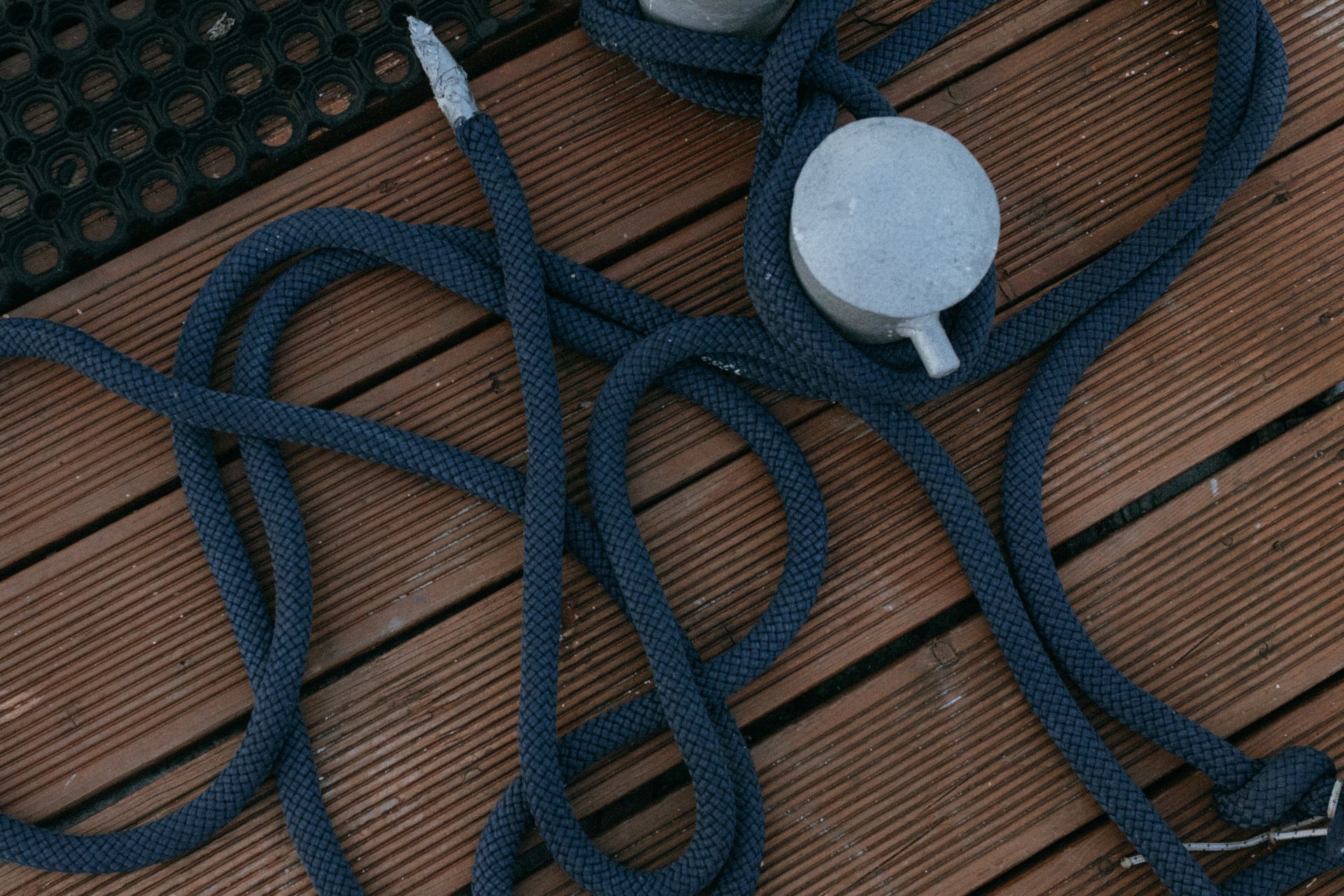
You leave nothing on the pontoon along your side: no lines, buckets, water toys or drying laundry. Everything that is not a working mooring line goes back on deck or into a locker. On charter, tidiness has one more dimension: you hand the boat back in the state you would want to receive it, and any differences will surface at the yacht return after charter anyway.
Etiquette on charter: you are a guest twice over
On a chartered yacht you represent not only yourself but also the operator whose flag the boat flies. Harbour masters know the local fleets perfectly and after one season they know which crews come back with class. A few charter-specific rules:
- Learn the home port's rules at handover: where to refuel, where to berth on return, how the port treats early arrivals. Good handover practice is collected in our first charter guide.
- Report damage immediately, including damage done to another boat while mooring. Exchanging contacts and calling the operator settles things fairly; slipping out of the port does not, because there is never a shortage of witnesses on a pontoon.
- Do not change the berth assigned by the harbour master without telling them, even if the neighbouring one looks more comfortable: it may be reserved for a boat arriving in the evening.
Leaving port: leave the berth better than you found it
The morning departure tests all the etiquette at once: quiet preparation, efficient casting off, no blocking of the quay. If you are rafted in the second row, agree the departure hour with the inside crew the evening before, not at 6:00 through their cockpit. Once clear of the quay, take in the fenders and coil the lines so they do not trail in the water. Rules for moving safely in port traffic are described in our guide to safety on the water.
FAQ: sailing etiquette
Does rafting alongside another yacht require permission?
Yes, always ask the crew you want to lie alongside. Refusals are rare and usually have a reason: an early departure, a breakdown, a small boat. For a longer stay in the second row, share your planned departure time too.
When do quiet hours start in marinas?
Most often between 22:00 and 6:00, but every port sets its own rules, posted at the harbour office. The practical rule: after dark, conversation volume stays within your own cockpit.
Do I have to help other crews moor?
There is no formal obligation, but it is the strongest unwritten port norm. Taking a line costs half a minute and can be the difference between a calm approach and damage to someone's hull.
What does etiquette look like at the fuel quay and slipway?
The fuel quay and slipway are operational spots: you come in, do your business, leave. Shopping, lunch and tidying happen at your berth, because a queue is waiting at the fuel station.
Heading out on a cruise and want to sail with operators who care for ports as much as for boats? See who Portivo is for. And if you run a charter company and want your crews to receive clear port rules together with their booking, get in touch.