Returning a yacht after a charter: how to pass check-out and get your deposit back
The yacht return decides whether your deposit comes back in full. Here is the last-morning checklist, the fuel and cleaning rules and how to report damage.
Returning the yacht, the check-out, is the shortest and most underrated stage of a charter: it usually takes under an hour and it decides whether your deposit comes back in full. The operator compares the state of the boat against the protocol signed at handover, so it all comes down to one question: are you giving the boat back in the condition you received it. Below we set out exactly what gets checked, how to prepare for the last morning and what to do if something did break.
What happens at the return
The check-out is built on the handover protocol. That document says how much fuel there was, what the hull looked like, what equipment was on board and which damage already existed. At the return, the operator or someone from the base walks the same list again, point by point, usually together with you.
In practice four things are checked: the technical condition of the boat and its gear, the completeness of the equipment, cleanliness and tank levels. On sea waters an inspection of the underwater hull is added, sometimes by a diver. On inland waters a look from the pontoon and an engine test is normally enough.
Ask for a copy or a photo of the handover protocol on day one and keep it on your phone. At the return it is the only document that settles an argument about whether that scratch on the hull was already there.
The last-morning checklist
| Area | What to do | Common mistake |
|---|---|---|
| Fuel and water | Top up to the level in the handover protocol | Filling up "roughly", with no receipt |
| Waste tanks | Empty at the designated point | Leaving a full tank for the next crew |
| Equipment | Put everything back in place, check the set | A forgotten kedge anchor or hatch key |
| Cleanliness | Clean the interior, take out rubbish, rinse the deck | Assuming end cleaning covers everything |
| Personal items | Check lockers, berths, fridge | A power bank or food left in the fridge |
Plan the last morning with a margin. Agree a return time and get back to the base early, because in peak season the same boat leaves the same day with a new crew, and a late check-out delays everyone.
Fuel, cleaning and heads
Fuel is the most common reason for a surcharge at the return. The rule is simple: you give back what you got, and it is worth keeping the fuel receipt. If the contract offers fuel settlement by the operator, check the rate, because it tends to be higher than at the pump.
End cleaning is usually a paid service covering the interior, but it does not free you from tidying the boat: taking out rubbish, emptying the fridge and stowing equipment. The heads are a separate subject, checked especially carefully, because a blocked system is the most expensive and most frequent post-charter fault. If something stopped working during the trip, do not try to fix it yourself right before the return: report it, as we described in the guide to a breakdown during a charter.
Damage: say it straight
The worst check-out scenario is damage the operator finds on their own. Reported immediately and honestly, it is usually settled cheaper and more calmly, because it gives the operator time to repair before the next charter. Hidden, it normally surfaces within hours and costs more, because the repair comes with the boat standing idle.
The rules of liability, the excess and what a policy actually covers are described in the guide to insuring a charter yacht. It is worth knowing them before the trip, because then you know what you are talking about at the return.
The deposit: when and how it comes back
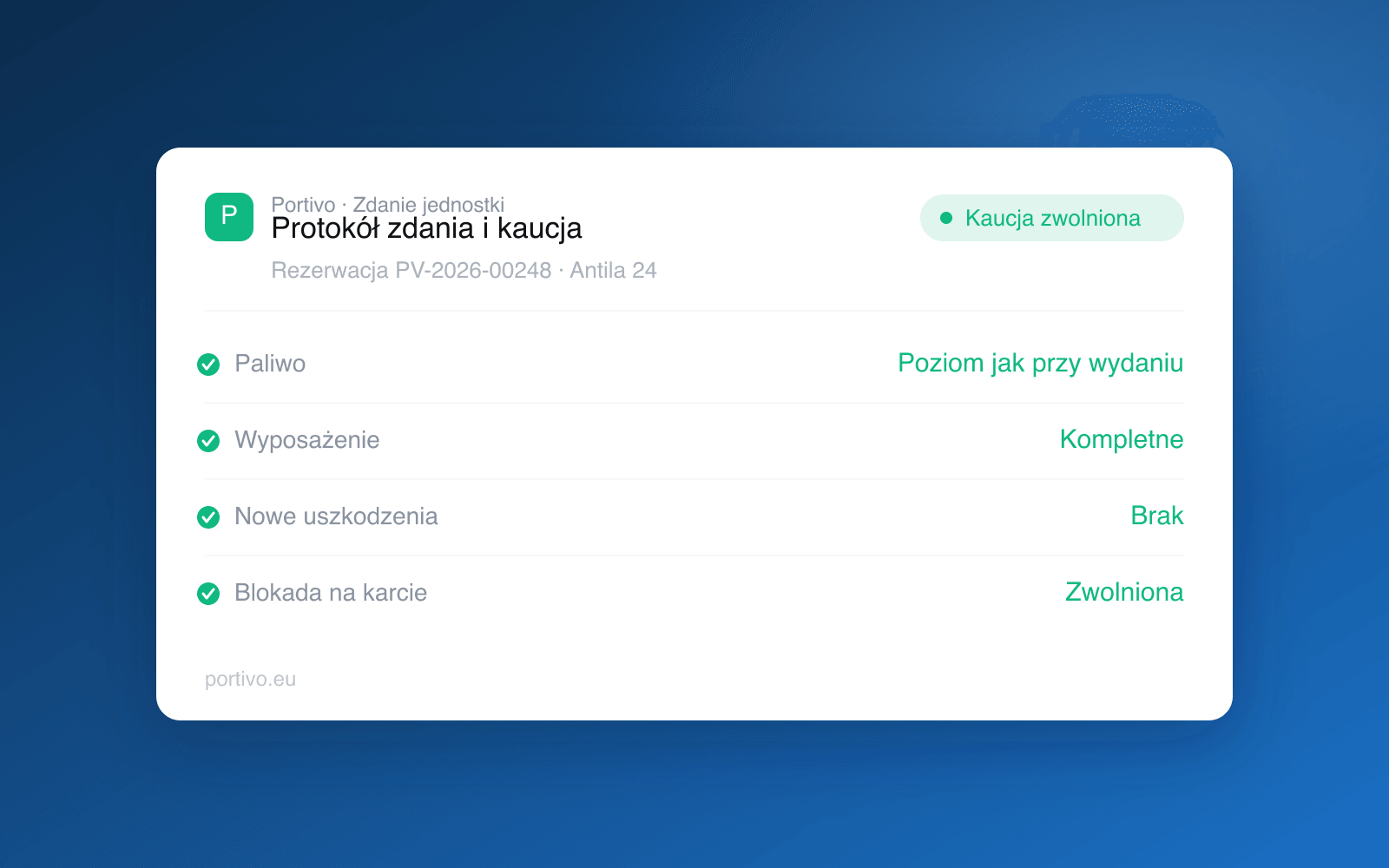
The deposit is settled once the return protocol is signed. With no damage and nothing missing, it comes back in full. If there is damage, the operator deducts the agreed amount and should show the basis for it: the protocol entry, photos and a valuation.
The form of the refund depends on how the deposit was taken. A hold on a card is simply released and the money returns to your card limit, usually within a few working days depending on the bank. A deposit paid by transfer comes back by transfer, so it takes longer. How both forms work and how much a deposit usually is, we set out in the guide to the charter deposit. Refund deadlines should be written into the contract, so check them before signing along with the other points from the guide to the charter contract.
What speeds up check-out
It goes fastest where the protocol is digital. The operator has the handover photos on a phone, compares them on the spot, and you sign the protocol on screen and get it by email. There is no hunting for a piece of paper from a week ago and no argument about what a photo showed. From the operator's side we described the same mechanism in the guide to the digital handover protocol, and charter companies will find it in the Protocols module.
Frequently asked questions
How long does returning a yacht take?
Usually between fifteen minutes and an hour, depending on the size of the boat and whether the protocol is digital. In peak season it is worth arriving at the base early, because the boat leaves the same day with a new crew.
When will I get the deposit back?
After the return protocol is signed with no remarks. A card hold is normally released within a few working days, a deposit paid by transfer comes back by transfer, so it takes longer. The exact deadline should be in the contract.
Do I have to refuel the yacht before returning it?
Yes, if the contract requires the same fuel level as at handover. Keep the receipt. Letting the operator settle the fuel can be more convenient, but it is usually more expensive than filling up yourself.
What if something broke through no fault of mine?
Report it during the trip and document it with photos. Normal wear and faults not caused by the crew usually do not touch the deposit, but the protocol and the contract terms decide.