Charter yacht insurance: liability, hull cover, the deductible and what a policy really pays for
Charter yacht insurance works differently from a private policy. See what liability and hull cover pay for, what a deductible is and how to document damage.
Charter yacht insurance is a policy for a boat used commercially, that is handed over to customers who do not own it. It usually has two parts: liability cover for damage caused to third parties and hull cover for damage, destruction or theft of the boat itself. The key difference from a private policy is simple: you must tell the insurer that the boat works in rental. Below we go through what such a policy really pays for, where its protection ends and the security deposit begins, and how to document damage so a claim does not stall.
A private policy versus a charter policy
Insurers price risk on the basis of who uses the boat and how. A yacht sailing a dozen weekends a year with its owner at the helm is a different risk from a boat handed to a new crew every week for a whole season. That is why the application asks about the region, the way the boat is used and whether it is rented out commercially.
This is not a formality. Hiding commercial rental is the most common reason a claim is refused, because the policy covered a different risk from the one that actually materialised. If you are just starting out and putting the paperwork together from scratch, we set out the order of steps in our article on how to start a charter company.
What liability cover pays for and what hull cover pays for
| Item | Liability | Hull |
|---|---|---|
| Damage caused to another boat or port infrastructure | yes | no |
| Injury to a third party | yes | no |
| Damage to your own hull, engine or gear | no | yes |
| Theft of the boat or its equipment | no | usually yes, subject to security conditions |
| Wear and tear and failures caused by missed servicing | no | no |
| Damage caused by gross breach of the rules by the crew | depends on the terms | usually excluded |
Two things are worth remembering. First, hull cover is not a guarantee that every scratch will be paid for: wear and tear and the effects of neglected servicing are excluded almost always. Second, liability limits often run into millions of euros, but the exact scope, exclusions and territory depend on the terms of the specific contract, so you read them before the season, not after the damage.
The deductible, or where the policy ends
The deductible is the amount below which the insurer does not pay, and above which it pays the excess. For an operator it is the most important number in the whole contract, because it sets the real cost of minor damage. Most incidents in inland charter are exactly that: scuffs against the quay, a torn fender, a damaged propeller, lost equipment. Almost none of them exceed the deductible.
That is why the charter security deposit and the deductible are linked. The deposit covers what the policy will not touch, which is why its amount usually mirrors the deductible in your insurance contract. How to set it so it is clear to the customer and effective for the company is covered in our guide to the charter security deposit.
Do not set the deposit lower than the deductible unless it is a conscious business decision. Every incident that falls into that gap is a cost to your company, not to the insurer and not to the customer.
Documentation decides whether a claim is paid
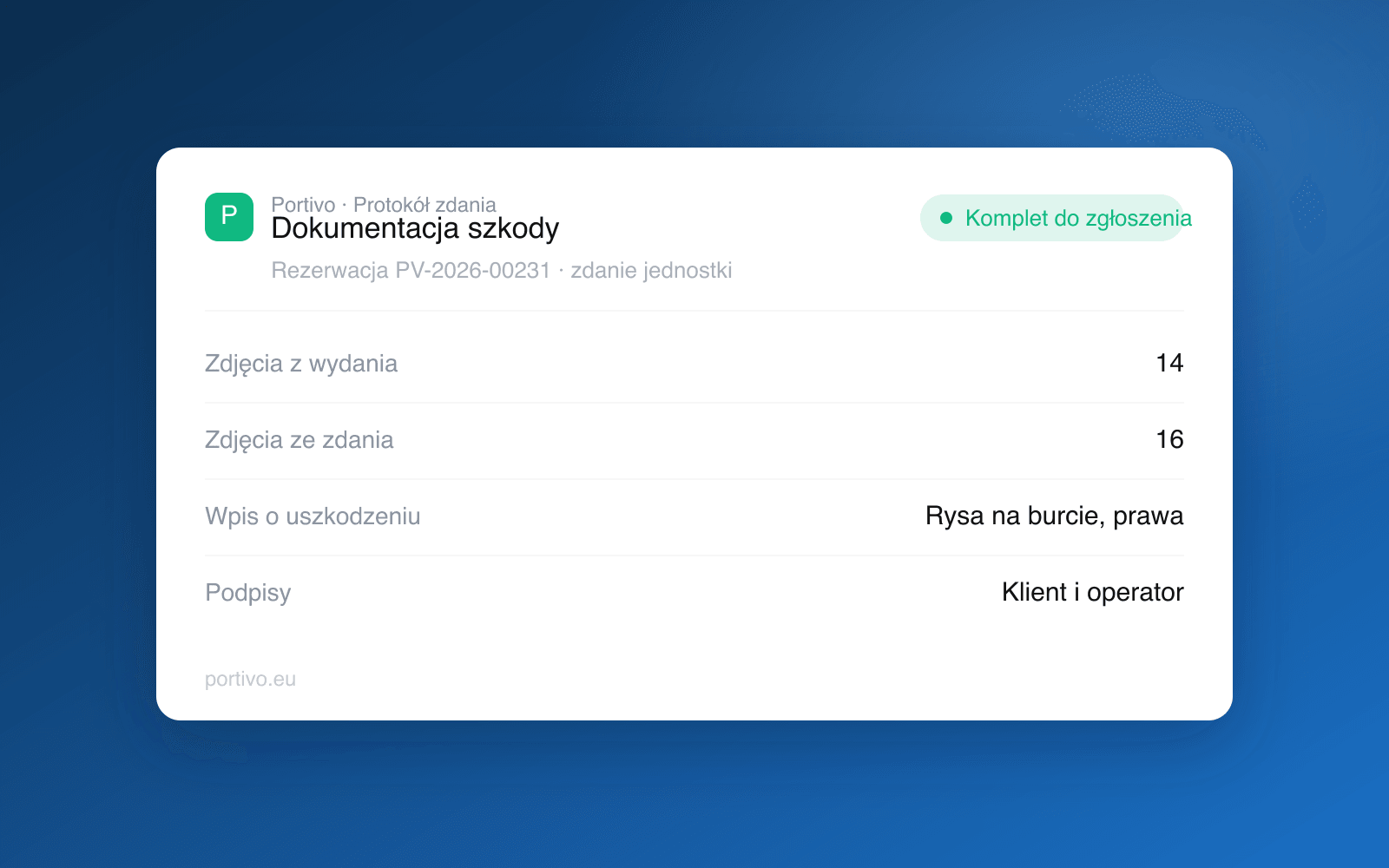
A dispute about damage is almost never about whether the damage exists. It is about when it happened. Without proof of the condition before the charter you cannot show that the scratch was not already there in May, and that is exactly the question asked both by the insurer and by the customer whose deposit you want to draw on.
Effective proof has three parts: photos of the boat at handover, photos at return and signatures from both sides on the report. In Portivo, handover reports are one of the six modules of the system, and every report records the fuel level, engine hours, damage entries and photos in one place, linked to a specific booking. What such a report looks like step by step is covered in our article on the yacht handover report, and the feature itself is described on the handover reports page.
A practical rule: always take the photos, even when the customer is a familiar face and the boat looks flawless. The documentation costs five minutes at handover and decides whether you have an argument or just an impression when damage occurs.
Policy dates across the whole fleet
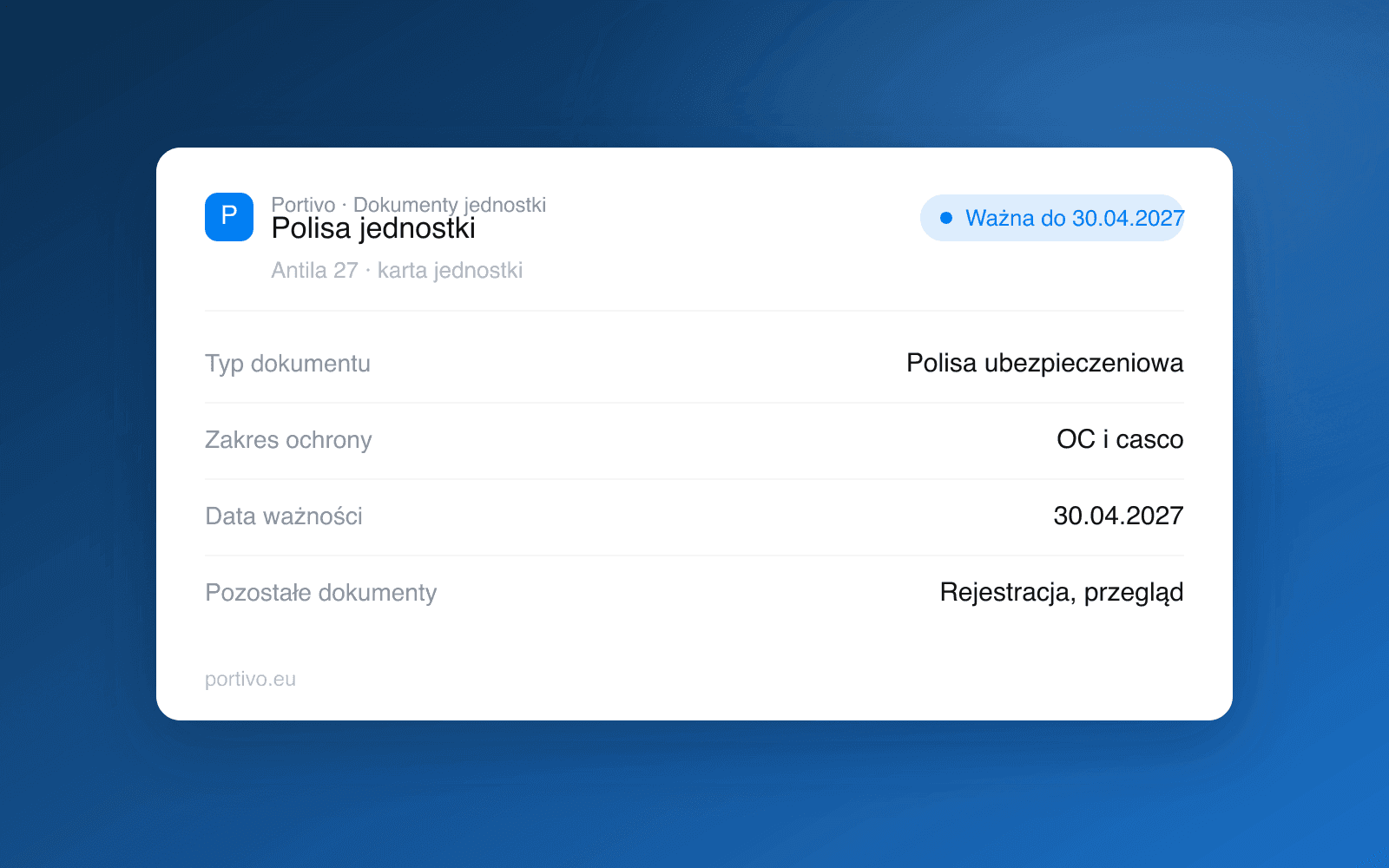
With three boats you keep the expiry dates in your head. With ten, someone will eventually send out a yacht whose policy lapsed in April. The consequence is twofold: no cover when damage happens, and a real risk that an inspection or a claim reveals the company was operating without the required insurance.
That is why boat documents, including the policy, the registration and the survey, belong on the boat record together with their expiry date, not in a binder in the office. Then before the season you check one list instead of ten folders. It is the same logic we apply to the rest of fleet operations and expand on in our guide to charter fleet management.
How to talk to customers about cover
Customers ask about insurance only after something breaks, and by then it is too late for explanations. Three sentences in the contract and one in the pre-departure email settle most disputes: what the policy covers, how much the deductible is and what the crew is responsible for. It is worth writing it in the same language you use for the deposit, so the customer does not feel two documents contradict each other. What else belongs in the contract is collected in our article on the charter contract.
If you want policies, reports and deposits in one system instead of three places, book a meeting. Pricing depends on fleet size and we confirm it in that conversation, details are on the pricing page.
Frequently asked questions
Is charter yacht insurance compulsory?
Liability cover for a yacht is not universally required by law in Poland, but it is often demanded by ports, marinas and contract terms, and for commercial activity it is the market standard. Hull cover is voluntary, though with a rental fleet it is hard to justify going without it.
What is the difference between a deductible and a security deposit?
The deductible is a threshold in your contract with the insurer below which you pay for the damage yourself. The deposit is security taken from the customer, out of which you cover exactly that kind of minor damage. They are usually set so the deposit matches the deductible.
Will the policy cover damage caused by a customer without a licence?
Only if the boat did not require a licence or the customer held one. Handing a yacht to someone without the required licence is a classic reason for a claim to be refused. We cover the limits in our article on chartering without a licence.
What should you do immediately after damage occurs?
Make the boat and the people safe, take photos, write down the circumstances with the crew, complete the return report and file the claim within the deadline set in the contract. The later the claim, the harder it is to prove what happened.