Sleeping on a yacht or in a hotel: costs, comfort and when each one wins
Sleeping on a yacht versus a room ashore: what it really costs, what comfort you give up and at what crew size the water beats a hotel.
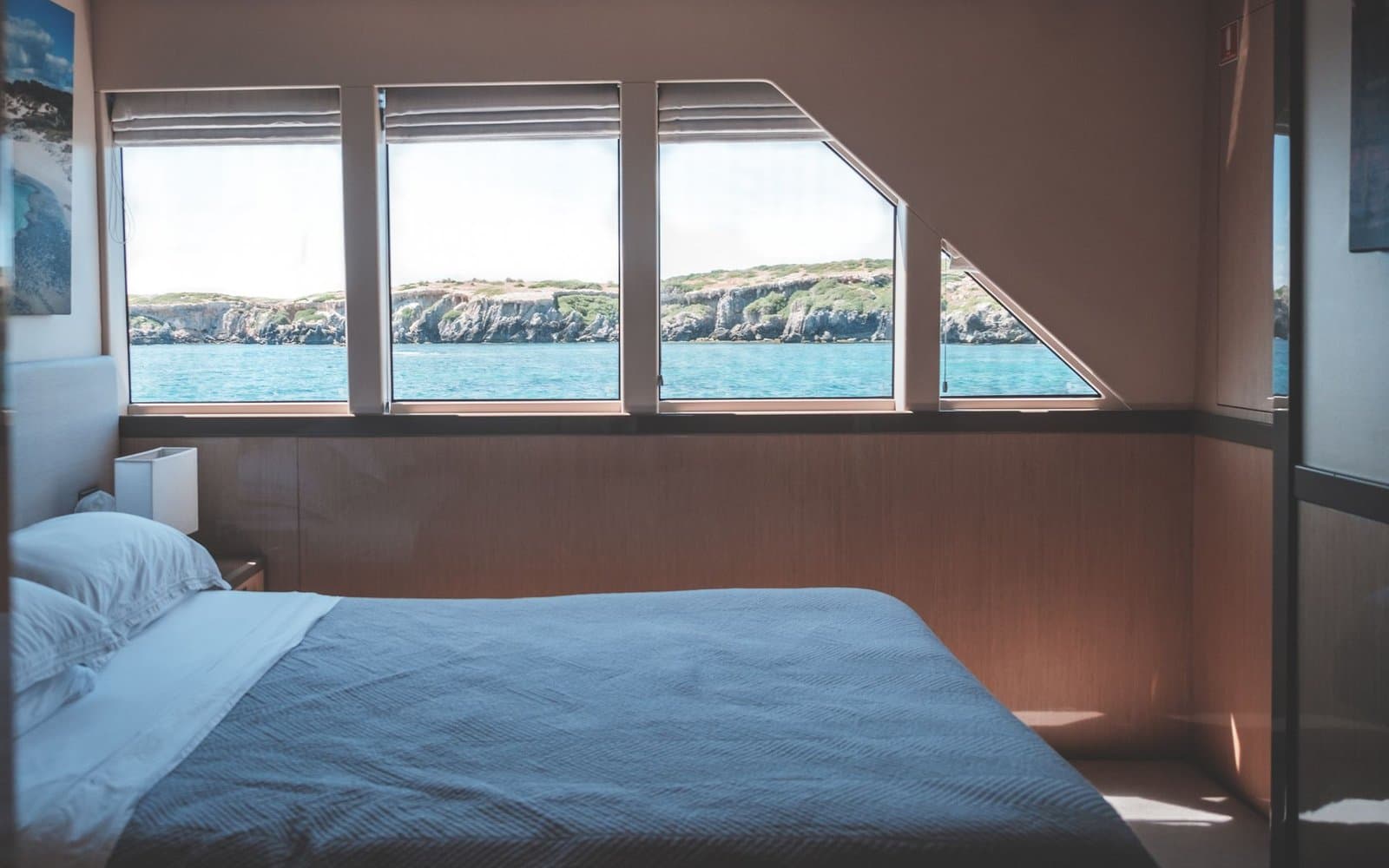
Sleeping on a yacht is transport, accommodation and the plan for the day all at once. Instead of going back to a room, you sleep where you stopped sailing and decide in the morning where you are heading next. A hotel gives you predictability in return: your own bathroom, a steady temperature and no chores after arrival. Below we compare both options the way a crew actually does: by cost per person, real comfort and how much work the night itself takes.
Cost: when the water wins
The basic difference is arithmetic. A hotel charges per room, so the cost grows with every pair of people. A yacht charges per boat, so the same rate is split across the whole crew. With two people on a large boat a hotel usually comes out cheaper. With four to six people the proportion flips, because you pay once for everyone.
| Item | Sleeping on a yacht | Sleeping in a hotel |
|---|---|---|
| Unit of billing | the whole boat, split across the crew | a room, usually for two |
| Transport between places | included, you sail your accommodation | separate, car or transfer |
| Mooring fees in ports | added to the bill | none |
| Fuel | added to the bill | none |
| Food | galley and shopping | restaurant or breakfast included |
| Refundable deposit | yes | usually not |
So the budget for a trip includes fuel, mooring fees, final cleaning and the deposit, not just the daily rate. How those items add up and what market ranges to expect is set out in our article on how much a yacht charter costs. The deposit itself is a separate topic, covered in our guide to the charter security deposit.
Comfort: what you actually give up
On a yacht you give up space, acoustic quiet and full freedom in the bathroom. Berths are narrower than a hotel bed, the partitions between cabins are thin, and the fresh water supply is limited, so a shower has its ration. In the morning you hear every move the neighbouring crew makes in port.
In exchange you get things a hotel cannot offer: you wake up on the water, in a spot you chose the evening before, and the view from your berth changes every day. Houseboats and larger motor boats bring that comfort closer to what you get ashore, with wider berths, separate cabins and a full bathroom. We break down the differences between boat types in our article on choosing between a yacht, a houseboat and a motorboat.
If someone in the crew sleeps badly in a tight space, check the cabin layout before booking, not on arrival. The same number of berths can mean two separate cabins or a bunk in the saloon that gets made up every evening.
Marina or anchor
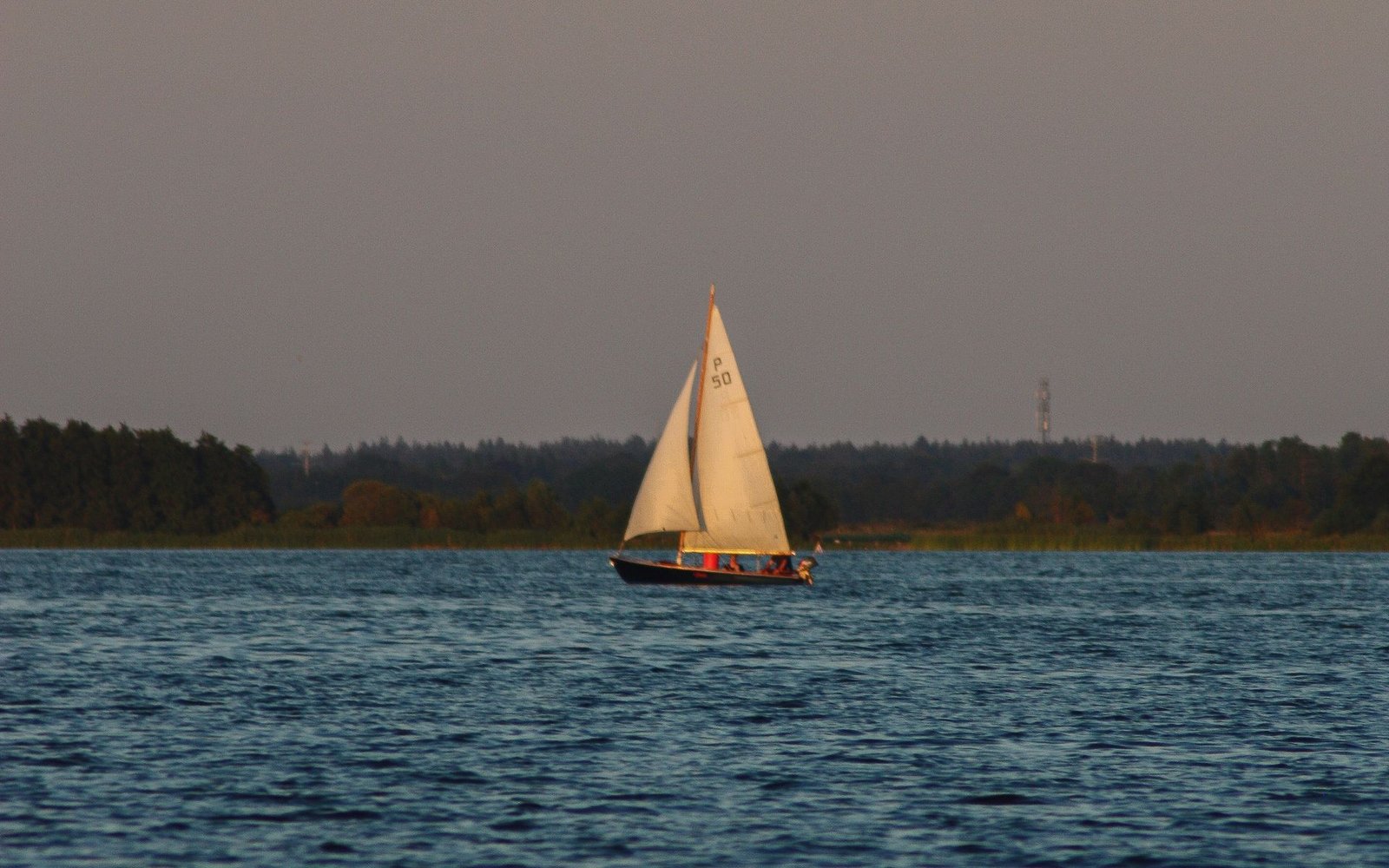
Sleeping on the water comes in two versions that differ more than two hotels do. In a marina you pay for the berth, but you get power, water, sanitary facilities and peace of mind. At anchor in a bay you pay nothing and get silence, but you take on choosing the spot, checking the bottom, carrying enough rode and staying alert when the wind shifts overnight.
The practical compromise for most crews looks like this: the first and last night in port, midweek at anchor. That gives you facilities for the start and the finish, and in between you pay less and sleep in quiet. How to pick ports along the way is shown on the example of ports and marinas in Masuria.
With children and with pets
With small children a yacht is often more convenient than a hotel, because everything is within reach, naps happen under way and nobody has to be transported anywhere in the evening. In exchange it calls for firm rules on board and life jackets worn without discussion. The details are collected in our guide to chartering with children. With pets it is simpler than with hotels, because more charter operators allow a dog on board than accommodation providers allow one in a room, but it always requires agreement in advance. We cover the rules in our article on chartering a yacht with a dog.
When a hotel is the better choice
- When there are two of you and comfort matters more than the sailing itself. Then the daily cost of a boat is hard to justify.
- When someone in the crew does not cope with motion. A port is calm, but in strong wind you feel movement even at the quay.
- When the trip is short and the weather uncertain. Two days is not enough to wait out a front on the water.
- When nobody wants to look after a boat after arriving. Mooring, cleaning and topping up water are work a hotel does not ask of you.
What to pack for a night on the water
Soft bags rather than suitcases, because hard cases do not fit in the lockers. A sleeping bag or your own bedding if it is not included, a warmer layer for the night, because temperatures drop more over water than ashore, and a head torch for evening manoeuvres. The full list is collected in our guide on what to pack for a charter, and a broader plan for a holiday on the water is in our guide to holidays on the water. You will find operators with available dates and online booking on Portivo.
Frequently asked questions
Is sleeping on a yacht cheaper than a hotel?
With four to six people usually yes, because you pay for the whole boat rather than for rooms. With two people a hotel often comes out cheaper, especially once fuel and mooring fees are added.
How many people really sleep on a charter yacht?
The number of berths is usually higher than the number of people who will sleep comfortably for a week. A safe assumption is one person fewer than the stated capacity if the trip lasts longer than a weekend.
Is there a bathroom with a shower on board?
On most cabin boats yes, but the fresh water supply is limited and gets refilled in ports. A longer shower is something you plan for a stop in a marina.
Can you sleep at anchor outside a port?
Yes, provided the spot is permitted and safe. You pick a bay sheltered from the forecast wind direction, check the depth and the type of bottom, and keep an anchor watch when the weather changes.