Putting a yacht into charter: how managing an entrusted boat works
The owner hands over the yacht, the operator runs it. See the settlement models, contract clauses, owner's own dates and how monthly reporting should work.
A yacht sitting at the pontoon costs its owner exactly as much as a yacht that sails: mooring, insurance, surveys, winter storage. That is why more and more private owners look for a company that will take the boat under management and rent it out. For an operator this is a chance to grow the fleet without buying boats, but also a risk: someone else's boat, someone else's expectations, and a monthly settlement that has to add up to the last zloty. Here is how the model works in practice and what to put in writing before the first customer steps aboard.
What managing an entrusted boat means
The owner stays the owner, the operator takes over sales and operations. In a typical arrangement the charter company handles the listing and pricing, the calendar and bookings, customer contact, handover and return, cleaning, minor servicing and payment settlement. The owner receives a share of the revenue and usually a pool of their own dates for private cruises.
For the operator one thing matters: the entrusted boat must sit in the same fleet and the same calendar as your own boats. If it lives in a separate spreadsheet or in the harbour master's head, the double booking problem comes back, and on someone else's boat it costs you not only money but the relationship with the owner. The rules for running a fleet as a whole are covered in our guide to charter fleet management.
Settlement models with the owner
| Model | How it works | Who carries the season risk |
|---|---|---|
| Revenue split | A set percentage of every charter for the owner, the rest for the operator | Both sides, proportionally |
| Fixed seasonal fee | The operator pays the owner a set amount and keeps the revenue | The operator |
| Fee per rented day | The owner receives a rate for every rented day | Mostly the operator |
| Mixed model | A lower fixed part plus a percentage above an occupancy threshold | Shared, with a performance bonus |
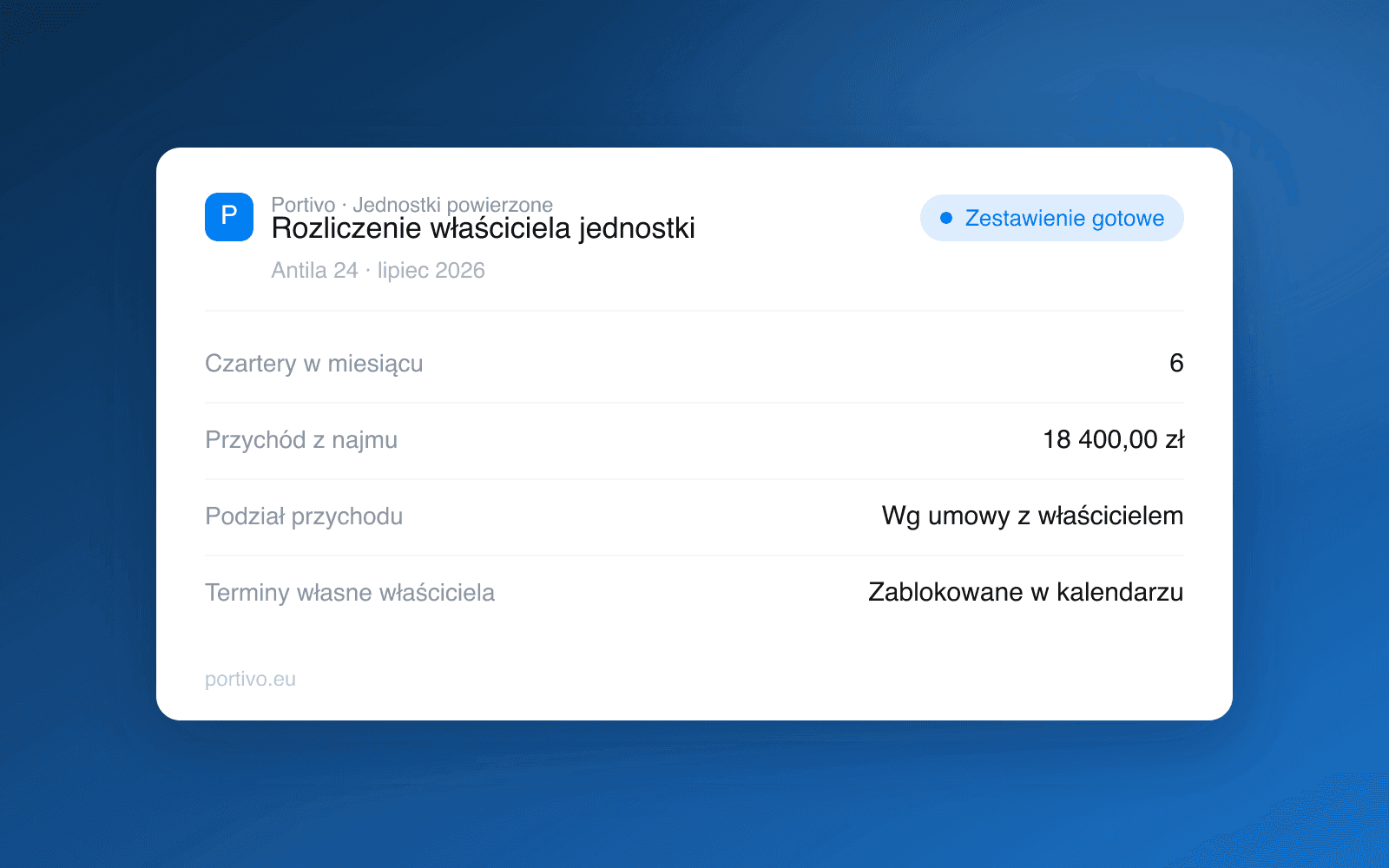
There is no single right answer here. A revenue split is the fairest for a new boat with unknown demand. A fixed fee gives the owner peace of mind and the operator full control over pricing, so it pays off when you can genuinely forecast fleet occupancy. Whatever you choose, write down how the base is calculated: whether the percentage applies to the gross or net amount, whether it comes before channel commissions, and whether extras such as bed linen or cleaning count towards the split.
What the contract must contain
- Scope of the operator's services: sales, customer support, cleaning, minor servicing, seasonal preparation. Anything not on the list stays with the owner.
- Revenue split and payout date: a specific day of the month and the document the payment is based on.
- The owner's own dates: how many days, how far in advance they are declared, whether peak season is excluded.
- Insurance and deductible: whose policy covers charters and who pays the excess after damage. We break the details down in the article on insuring a charter yacht.
- Wear and servicing: the threshold above which a repair needs the owner's approval, and who pays for normal use.
- Reporting: a monthly statement of charters, revenue and costs.
- Termination: what happens to bookings already taken for the next season when the contract ends.
The most common flashpoint is not money, it is the condition of the boat. Agree from day one that every charter starts and ends with a handover report including photos, and that the owner can see them. Without that, every scratch turns into an argument about who caused it.
Owner dates and one shared calendar
The owner almost always wants to sail their own boat. That is fine, as long as their dates sit in the same calendar as customer bookings and block sales automatically. A practical setup looks like this: the owner declares dates before sales open for the season, receives a confirmation, and the system treats them like a regular booking, only without a payment. Changing them mid-season is possible only while the date is still free.
A settlement that ends the arguments
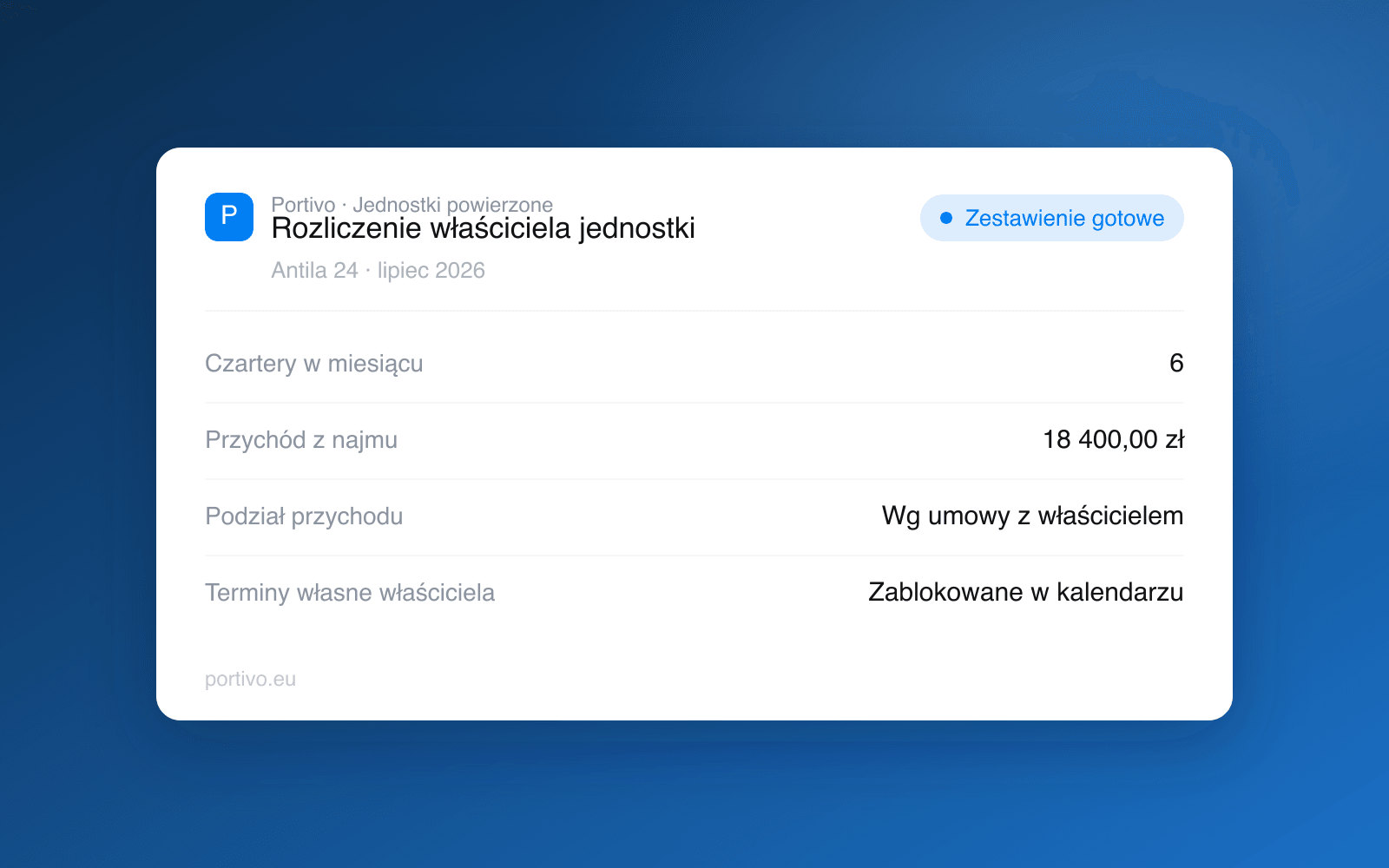
Every month the owner of an entrusted boat asks the same questions: how many charters were there, how much came in, what did you deduct and why. If the answer takes an evening with a spreadsheet, sooner or later something will drift. The statement should be generated from the same bookings you already handle: a list of charters with dates, revenue, the agreed split, costs to be recharged and the balance to be paid out. Customer payments are best kept in one place so that the payment date is a fact rather than a memory, which is why it pays to build the process on online payments and the Bookings module. We cover the tax side of renting out boats in the article on taxes and settlements in a charter company.
When not to take a boat under management
Not every boat is fit for commercial charter. Walk away when: the boat does not meet registration requirements or its documents are out of date, the owner expects revenue but will not release peak season dates, the technical condition needs investment nobody wants to make, or the model is so unusual that you have no customers for it. An entrusted boat is supposed to add margin, not occupy a berth and your team's time.
FAQ: putting a yacht into charter
What revenue split is standard?
The market has no single rate: it depends on who covers mooring, insurance, cleaning and servicing. The more duties the operator takes on, the larger the share that stays on their side. Always write into the contract which base the percentage applies to.
Can the owner sail their own yacht during the season?
Yes, if the contract says so. Most often the owner gets a pool of days declared before sales open, and peak season is either excluded or capped. The key point is that these dates block the calendar immediately.
Who is liable for damage caused by a customer?
Towards the customer it is the operator: they sign the charter agreement, take the deposit and run the handover reports. Towards the owner, the risk split written into the management contract applies, including who covers the policy excess.
Can an entrusted boat have different pricing from the rest of the fleet?
It can, but it rarely pays off. Customers compare boats in one list, and inconsistent pricing depresses sales across the whole fleet. It is better to set consistent seasonal rates and vary them by the boat's parameters, not by its owner.
Want to take on entrusted boats without chaos in the calendar or the settlements? Book a short meeting: we will show you how to run a mixed fleet in Portivo, and we will match the scope and the pricing to your fleet size.