Locking a yacht step by step: how to pass a canal lock safely
Locking without stress: signals, entry order, mooring inside the chamber and the most common crew mistakes. See how to prepare your yacht for its first lock.
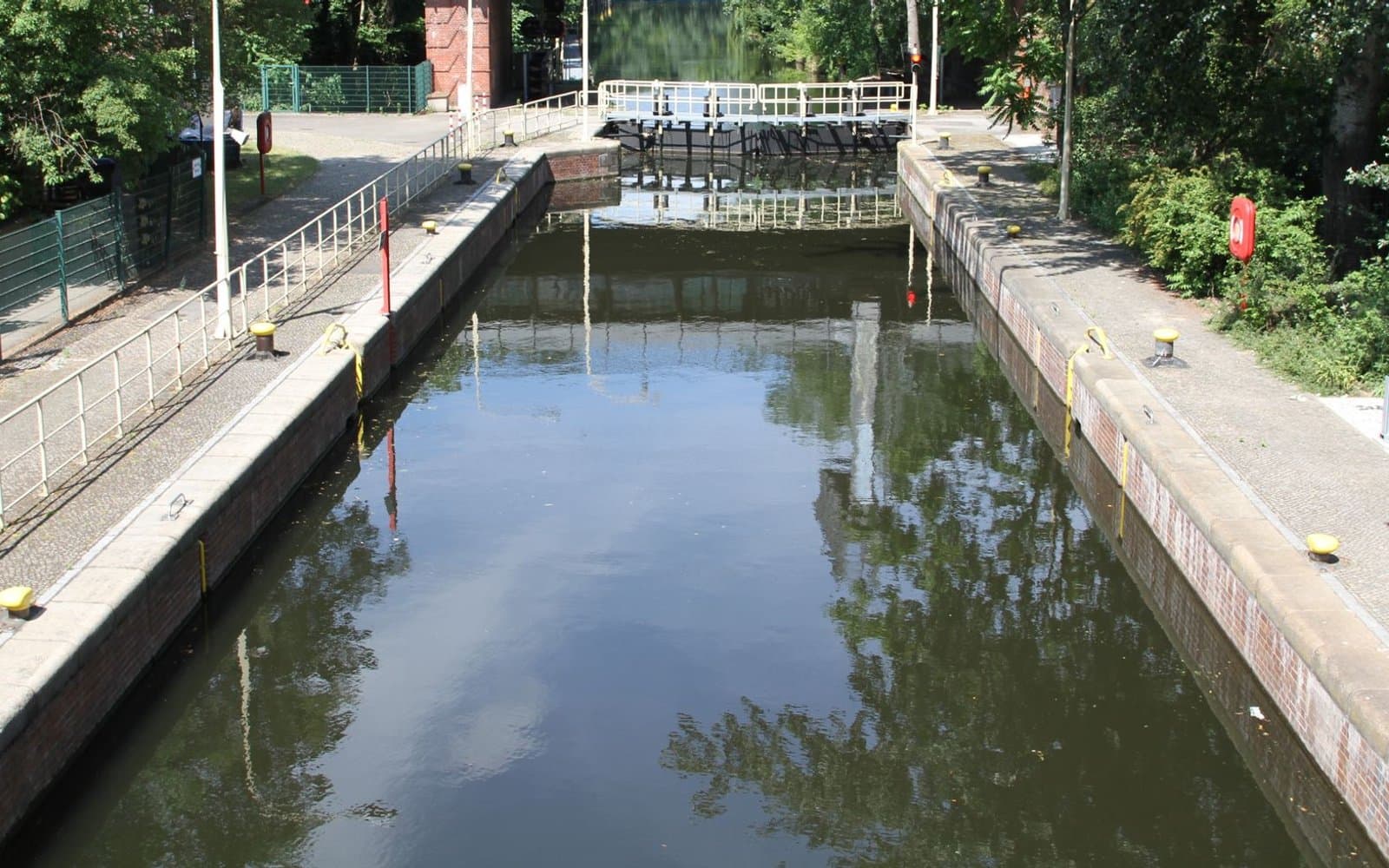
A lock looks intimidating only the first time: a concrete chamber, gates, light signals and the feeling that everyone is watching your manoeuvres. In practice locking is one of the simpler operations on a waterway, as long as you know the order of events and brief the crew before the bow enters between the walls. Here is how it works, step by step, and what not to do.
How a lock works
A lock is a lift for boats. A chamber closed with gates on both ends is filled with or emptied of water, letting a boat overcome the level difference between two stretches of a waterway. Going "up", you enter an emptied chamber and the water lifts you; going "down", you enter a full one and sink with it. Filling itself usually takes several minutes, but with the queue and mooring allow about an hour for the whole operation.
In Poland you will meet locks on the most popular tourist trails: on the Augustów Canal, covered in our guide to chartering on the Augustów lakes, on the Great Loop of Wielkopolska and the Noteć river, described in the guide to chartering the Noteć Valley, and on the Elbląg-Ostróda waterway, where inclined planes replace some of the locks, described in the article on chartering the Elbląg Canal.
Before you enter: preparing the boat and the crew
Locking is won before you enter the chamber. Five minutes of preparation saves all the stress inside:
- Fenders on both sides, set low, at the height of the chamber walls. In a lock you rub against concrete, not a pontoon.
- Two lines ready to hand: one at the bow, one at the stern, no knots at the ends, led through the cleats.
- Lifejackets fastened on the crew, especially on children. In a tight chamber falling in happens faster than on open water.
- Roles assigned: who steers, who works the bow line, who the stern line. The helm does not leave the wheel until the boat sits on its lines.
- Engine reliable in reverse: in the chamber you brake with the engine, not with your neighbour's fender.
Signals and order: who decides about entry
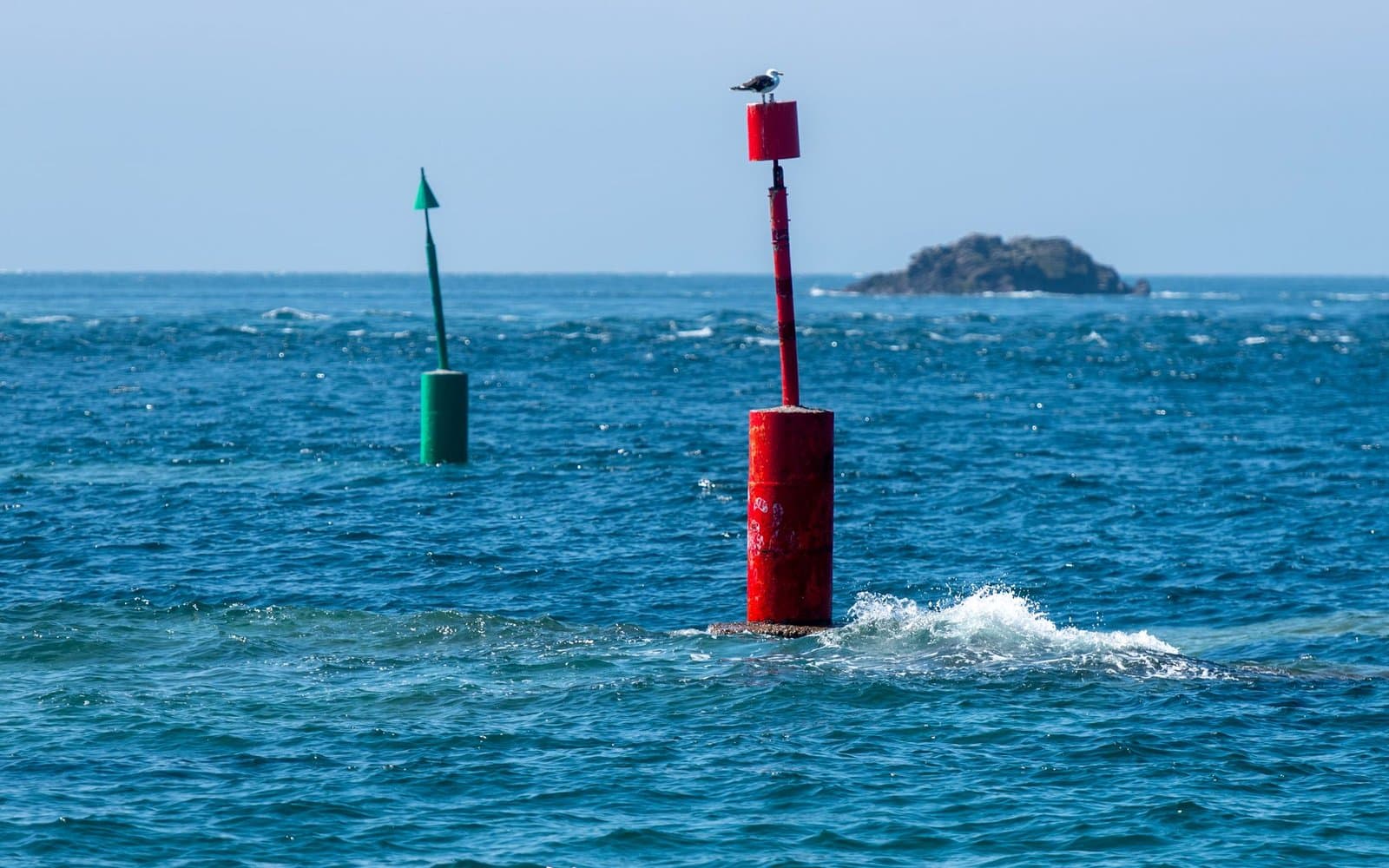
You enter the chamber only on the keeper's instruction or a green light. A red light means: wait at a safe distance from the gates, clear of the current flowing out of the lock. On staffed waterways like the Augustów Canal the lock keeper sets the order and points out your spot in the chamber; passenger vessels usually have priority over recreational boats.
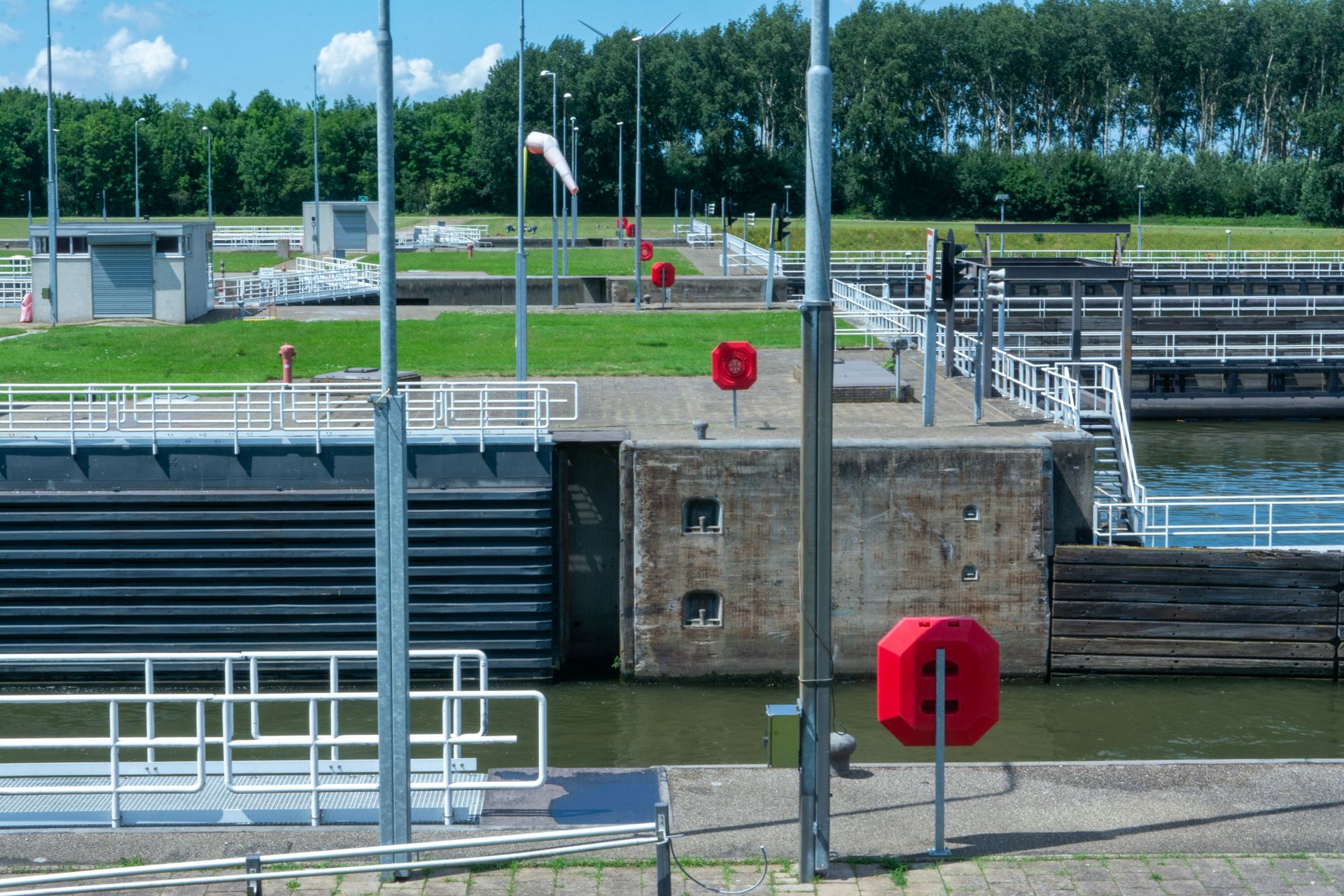
While waiting, stay clear of the gates and do not block boats leaving from the opposite direction. First everyone locking before you leaves the chamber, only then does your group enter.
Locking step by step
- Enter slowly, at minimum steerage speed, in the order given by the keeper.
- Moor to the bollards or ladders in the chamber: bow and stern line, led around once, held in hand, never tied off permanently.
- Switch off the engine if the keeper requires it, and do not overtake neighbours inside.
- Work the lines as the level changes: take in slack when rising, ease out gradually when descending. The boat should sit parallel to the wall.
- Wait for the gates to open fully and for the exit signal. Only then cast off and leave in order, calmly, without racing to the gate.
Manoeuvres in tight spots rely on the same technique we described in the guide to mooring a yacht step by step: little throttle, plenty of anticipation and crew communication instead of last-second shouting.
The most common mistake in a lock is a line tied off hard to a bollard. On falling water it hangs the yacht on its side, and on rising water it can rip out a cleat. A line is always held by a person, with a single turn around the bollard, ready to be eased at any moment.
Fees and opening hours
Locks on Polish waterways charge a fee, and rates and opening hours differ between trails and seasons; some sites take cash only, so keep small change in the cockpit. Current price lists and hours are published by the waterway authorities, and in season it is worth checking them a day ahead: the last locking of the day is often earlier than your plan assumes.
| Element | What to expect | What to watch |
|---|---|---|
| Opening hours | fixed hours in season, shorter off season | last locking before closing time |
| Fee | a small charge per boat | cash-only payment at some sites |
| Queue | traffic in waves, weekend peaks | passenger vessels have priority |
| Duration | several minutes in the chamber | with the queue allow about an hour |
A lock on a chartered yacht
On charter there is one more layer: you are sailing someone else's boat. Scratches from chamber walls are the classic minor damage settled from the deposit, so before the cruise check how the operator treats them in the contract and document the hull's condition in the handover protocol. How the security works is explained in our article on the charter deposit. It is also good practice to ask the operator at handover about locks on your planned route: local knowledge of hours and queues beats many a guidebook.
FAQ: locking a yacht
Do I need a licence to pass a lock?
There is no separate licence for locking: the same rules apply as for skippering your boat on that waterway. What counts is technique and knowing the signals, not an extra document.
Do you switch the engine off in a lock?
At many sites the keeper requires the engine off once moored, mainly because of fumes and safety. The practical rule: the engine runs until you are moored, then you follow the keeper's instructions.
What if the chamber is crowded?
Keep fenders low, lines short and talk to your neighbours. You enter in the order given, stop where directed, and on exit let the boats ahead of you go first. Hurrying in a chamber does not shorten the locking by a single minute.
Is locking with children on board safe?
Yes, provided lifejackets are fastened and one rule is clear: during locking children sit in the cockpit, do not run on deck and keep their hands from between the hull and the wall. More rules are collected in our guide to safety on the water.
Planning a cruise through locks and looking for proven operators on trails with real waterway infrastructure? See who Portivo is for, and if you run a charter company on such a trail and want your bookings and protocols in order, book a call.