Charter vouchers: how to sell cruises off-season and improve cash flow
A charter voucher means revenue in winter and new customers in summer. See how to design the voucher, handle VAT and sell online without manual work.
A charter company earns for four, maybe five months a year, and pays costs for twelve. A gift voucher is one of the few tools that reverse this rhythm: the money arrives in November and December, and the cruise happens in July. On top of that, a voucher bought as a gift almost always brings in someone who has never sailed with you before. Here is how to design vouchers, what to watch in accounting, and how to sell them online without extra work at the office.
Why vouchers work in chartering
Three reasons. First, cash flow: pre-sales in the gift season (Christmas, Valentine's Day, Father's Day) fund the surveys and insurance you pay before the season. Second, new customers: the recipient is usually someone outside your base who, after a first cruise, may stay for years, and returning customers are the cheapest marketing. Third, occupancy outside the peak: vouchers make it easy to push traffic towards June and September, where fleet occupancy has the most to gain.
How to design the voucher
| Decision | Variants | What works |
|---|---|---|
| Form | Value-based or package (e.g. a weekend on a yacht) | Value-based is simpler to settle, a package looks better as a gift |
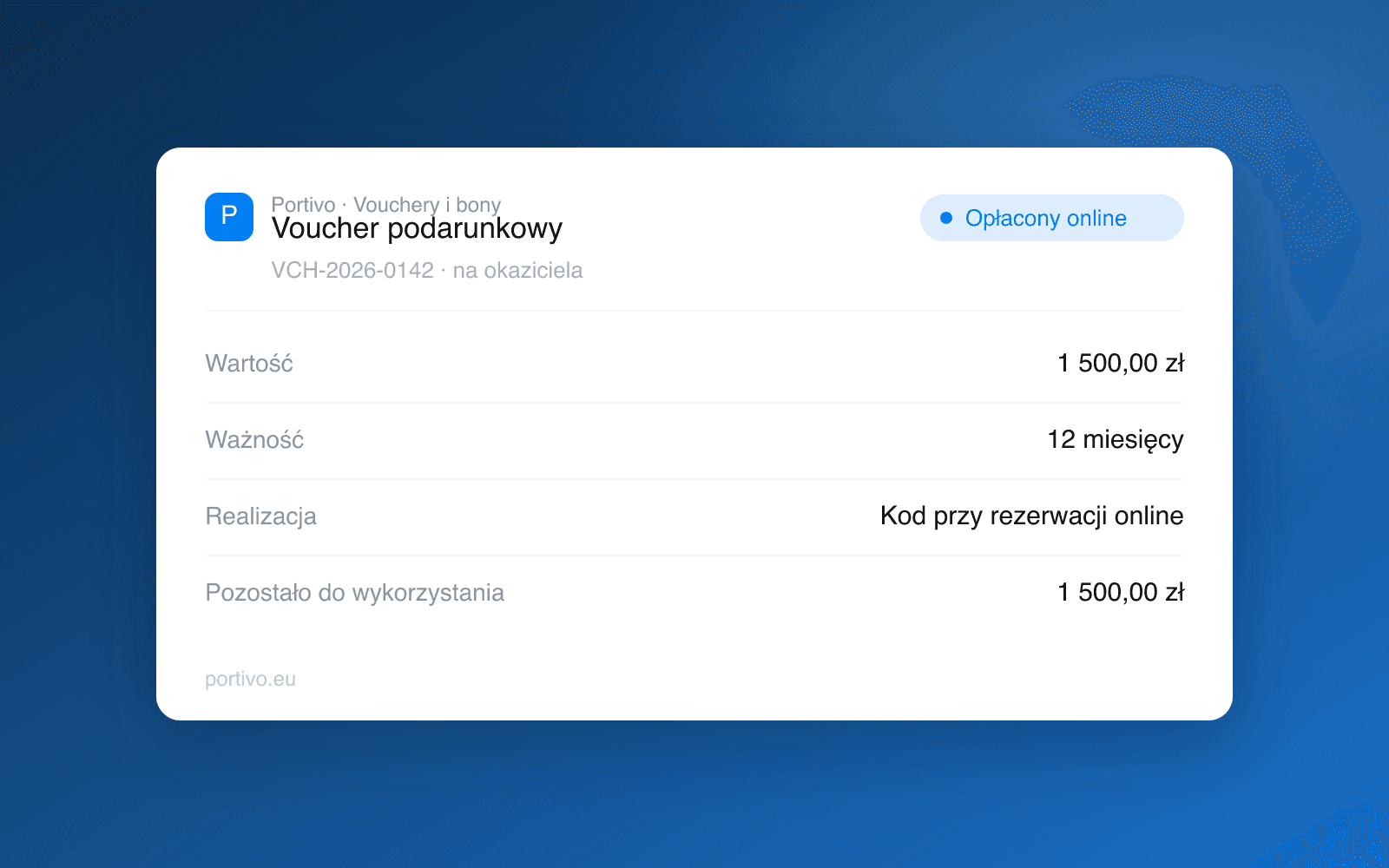
| Validity | Usually 12 months | Covers a full season, motivates booking |
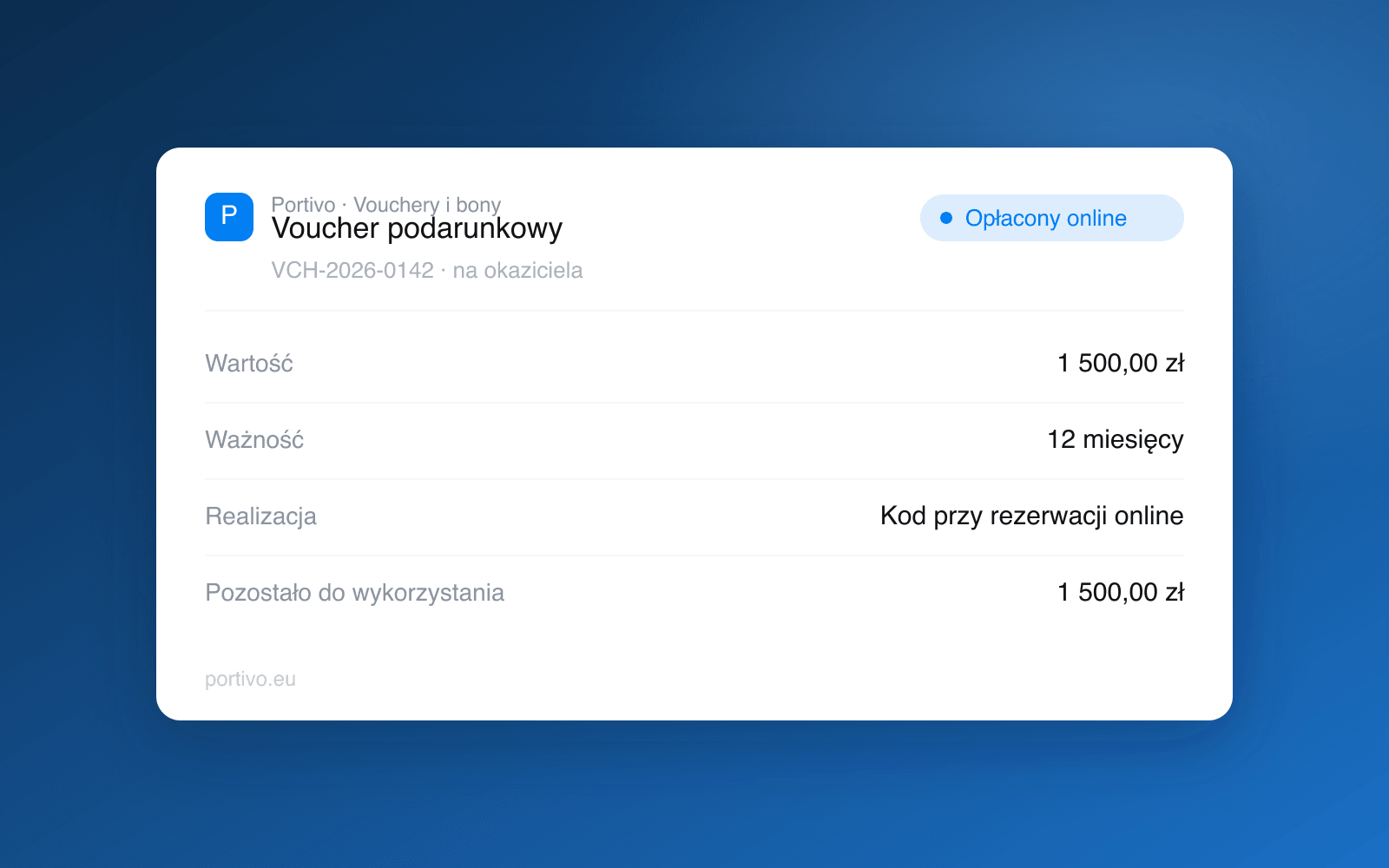
| Redemption | A code at online booking | Zero manual handling, usage tracking |
| Partial use | Yes or no | "Yes" raises basket value: the customer tops up for a bigger boat |
| Personalisation | Recipient's name, dedication | Raises perceived value, discourages resale |
The overriding rule: the voucher must be easy to buy in 3 minutes by someone who knows nothing about yachts. The gifting aunt will not pick a boat model, she will pick an amount and a pretty PDF with a dedication.
VAT and accounting: not every voucher is equal
For tax purposes a voucher is a "bon" under the VAT rules, and the key distinction is between single-purpose (SPV) and multi-purpose (MPV) vouchers. In short: if at the moment of sale the place of supply and the VAT rate of the service are known, the voucher is single-purpose and you account for VAT at the sale. If the voucher can be spent on differently taxed services, VAT is due only at redemption. The voucher's design therefore decides the tax moment: settle it with your accountant before you sell the first one, and the rules for documenting sales in a charter company are covered in taxes and settlements.
Plan the "voucher expired unused" scenario too: do you refund, extend validity for a fee, or keep the amount. Each variant has different tax and reputational effects, and customers ask about it surprisingly often.
Selling online instead of e-mails and transfers
A voucher handled by e-mail costs you more than it earns: producing PDFs by hand, chasing the transfer, a notebook with codes and "is my voucher still valid" questions. Sales should work like a good direct booking: the customer buys the voucher on your website, pays by card, BLIK or Przelewy24, gets the PDF with a code automatically, and you see the balance and status of every voucher in the system. At booking the recipient enters the code, the system checks validity and settles the amount against the cruise price. Your own website with payments is the foundation of this process: see the Website module and the Payments module.
When and how to promote vouchers
The voucher sales calendar mirrors the charter season: the peak falls in November and December, a second spike at Valentine's Day, a third before Father's Day. These are exactly the months when your competition goes quiet, and you have a ready-made reason for a campaign: a newsletter to your customer base after the season, posts with an early-booking code and a website banner from November. Recipients who redeem the voucher join your base as full customers: ask them for a review after the cruise, as we advise in collecting customer reviews.
FAQ: charter vouchers
What voucher validity is optimal?
Twelve months. Shorter validity frustrates recipients who cannot make one season fit, longer validity postpones redemption indefinitely. Validity counted from the purchase date always covers at least one full season.
A value voucher or one for a specific cruise?
For gift sales the value-based one is better: the buyer does not need to know yachts, and the recipient picks the boat and dates. Treat packages (e.g. "a weekend for two") as a marketing variant with the same redemption mechanics.
What about VAT on selling a voucher?
It depends on the voucher's design: with a single-purpose voucher you account for VAT at the sale, with a multi-purpose one only at redemption. The range of services the voucher can be spent on decides this, so settle the design with your accountant before launching sales.
Won't vouchers block my best weeks?
No, if redemption runs through the normal online booking: the recipient books from the same calendar as everyone else, so vouchers create no separate queue. You can also exclude peak weeks from redemption, stating it in the voucher terms.
Want to sell vouchers without manual handling? Book a short meeting: we will show how Portivo connects vouchers with your website, online payments and the booking calendar.