Chartering on Lake Solina: the Bieszczady Mountains seen from the water
A charter on Solina means sailing a reservoir ringed by Bieszczady hills. See the bases, the routes, the conditions on the water and the paperwork.
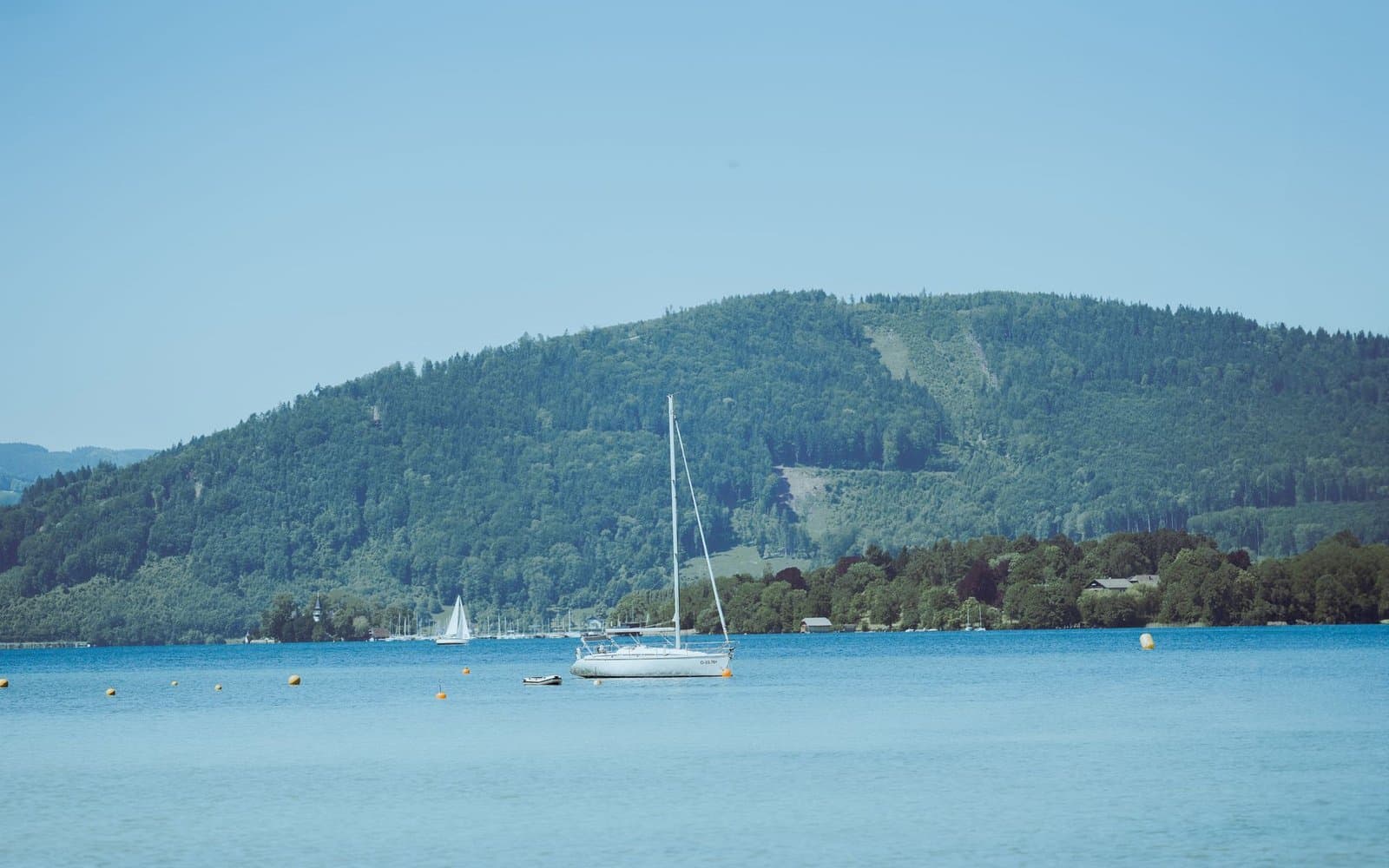
Lake Solina is a man-made reservoir on the San river in the Bieszczady Mountains, covering about 20 square kilometres with a deeply indented shoreline of more than a hundred kilometres. For a sailor that means something you will not find on the lowland lakes: water enclosed by hills, dozens of bays to slip into and wind that can change direction behind every headland. It is a small body of water compared with the Great Masurian Lakes route, but harder to navigate and considerably more spectacular.
Where the trip starts
Charter bases cluster in a handful of villages around the reservoir, and the port you start from genuinely changes the character of the week.
| Base | Character | Who it suits |
|---|---|---|
| Polańczyk | the largest tourist base, the most marinas | a first trip, families, access to services |
| Solina | near the dam, developed infrastructure and tourist traffic | short trips, sightseeing from the water |
| Wołkowyja | the quieter part of the reservoir | crews looking for peace |
| Olchowiec | intimate, less development | experienced crews, nights at anchor |
For a first charter in this region Polańczyk is the safest bet: the most operators, the shortest drive to pick up the boat and the easiest access to supplies. How to compare marinas in general and what to look for in a port description is shown on the Masurian example in our article on ports and marinas.
What sailing on Solina is like
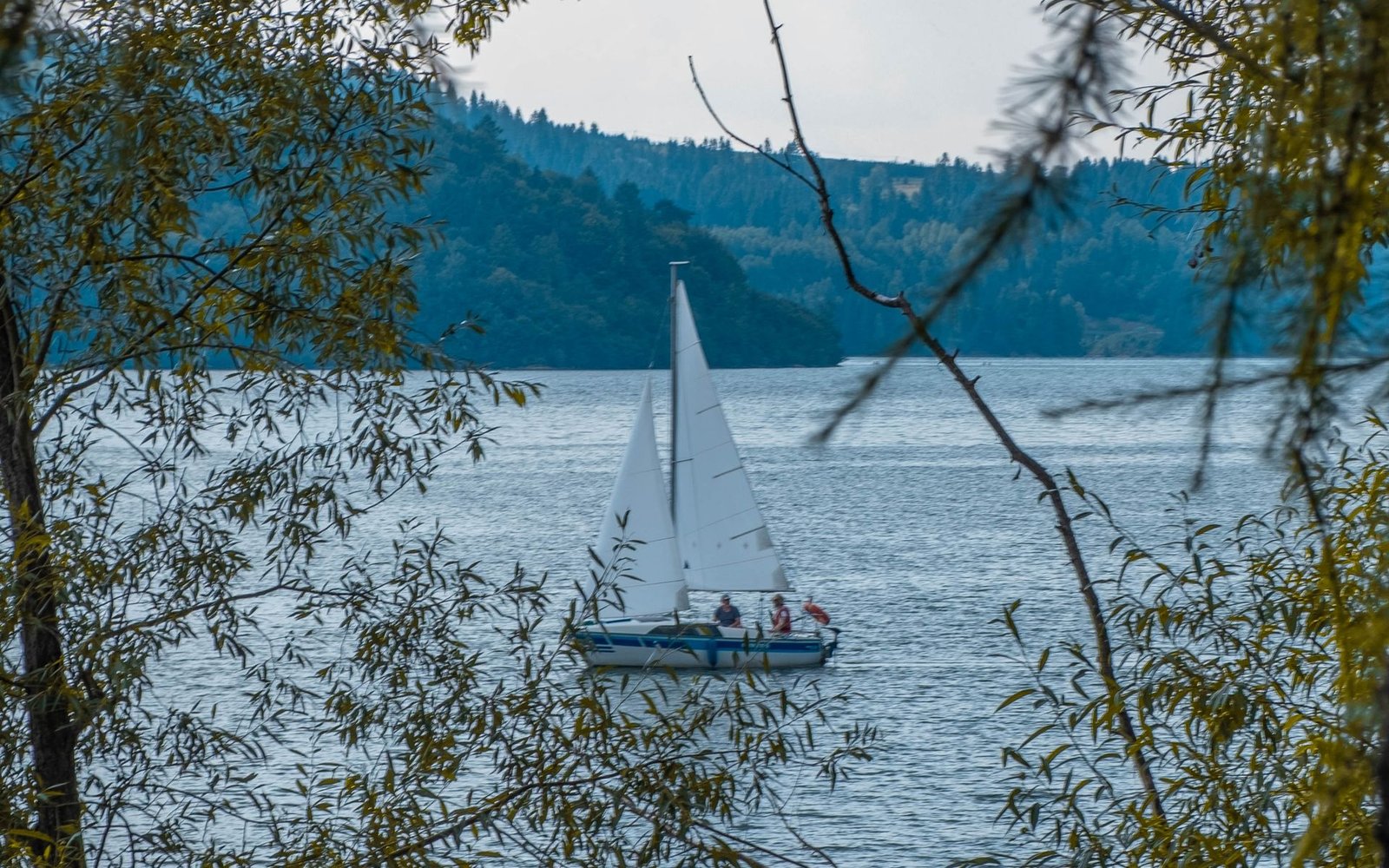
The terrain is the main navigational factor here. Hills reaching the shore create wind shadow in the bays and a funnelling effect in the narrows, so the same hour gives you flat calm under one shore and a solid heel two hundred metres further on. You plan the trip in short legs, with time in hand and an alternative place to stop.
The second peculiarity is the changing water level. Solina is a retention and dam reservoir, so the surface level varies with the season and with water management. In practice that means a wider strip of exposed shore at low water and more caution when approaching an unfamiliar bank or anchoring. Stick to marked approaches and ask the operator about current conditions when you pick the boat up.
Wind in a mountain valley can rise very quickly, and waves build over a short fetch and turn steep. When the forecast mentions gusts, shorten the leg and pick a bay sheltered from the windward side rather than counting on riding it out under way.
What you see from the deck
The reservoir is ringed by wooded slopes, and the shoreline is broken up enough that even in season you will find a bay to yourself. The most recognisable landmark is the dam at Solina, one of the largest hydro-engineering structures in Poland, seen from the water as a wall closing off the southern end of the reservoir. A marked Bieszczady sailing route runs around the lake with publicly accessible marinas, which makes it easy to plan a week without improvising.
Solina combines two worlds well: you sail in the morning, then step ashore in the afternoon and join a Bieszczady hiking trail. It is a rare combination that cannot be repeated in Masuria or on the Zegrze Reservoir. If you are after similar contrasts in other regions, we have collected them in our article on the most beautiful sailing routes in Poland.
Paperwork and choosing a boat
Solina carries sailing yachts as well as motor boats and electrically powered craft. Some of them can be operated without a licence, as long as they stay within the legal limits on engine power, speed and length. We explain the limits in our article on chartering without a licence, and if you want to go beyond them we set out the route to qualifications in our guide on how to get a sailing licence.
Three things matter when choosing a boat for this water: a reliable auxiliary engine, because wind shadow under a slope is an everyday event, sensible draught given the changing water level, and a decent cockpit cover, because rain arrives faster in the mountains. How to match size and type to your crew is set out in our article on how to choose a charter yacht.
When to go
The season on Solina is shorter than in the lowlands, because the water warms slowly in spring and the valleys cool down faster in autumn. July and August give the warmest water and the busiest traffic, June and September better wind, lower rates and empty bays. Safety on water with changeable conditions starts with the basics we cover in our article on safety on the water, and our guide to holidays on the water helps with the broader plan. You will find operators with a live calendar and online booking on Portivo.
Frequently asked questions
Can you sail on Lake Solina without a licence?
Yes, as long as the boat stays within the legal limits on engine power, speed and length. Many of the motor and electric boats offered on Solina meet those conditions, but the specific boat is what ultimately decides.
How big is Lake Solina?
It is a reservoir of about 20 square kilometres with a deeply indented shoreline of more than a hundred kilometres, full of bays and headlands. The water is smaller than the Great Masurian Lakes route but far more varied.
Where is the best place to rent a yacht on Solina?
Most operators work in Polańczyk and around Solina itself. Wołkowyja and Olchowiec are the quieter alternative for crews who want peace.
Is Solina suitable for a first charter?
Yes, provided you plan carefully. The water is small, so you are never far from shore, but the shifting wind under the slopes calls for shorter legs and careful reading of the forecast.